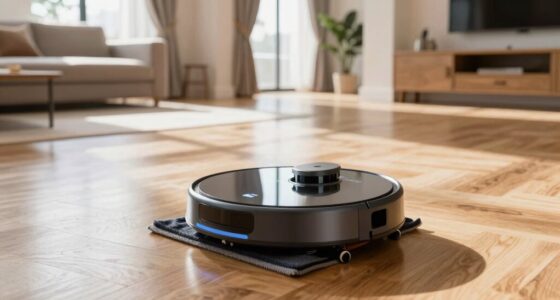
The evolution of robot mops has transformed them from basic devices that lacked obstacle detection and home mapping to highly sophisticated systems with sensors, cameras, and smart home integration. Today’s models plan ideal routes, avoid furniture, and adapt to different floor types, making cleaning more efficient and reliable. They automatically return to their charging stations and resume cleaning, reducing manual oversight. Stay with us to uncover more about how these high-tech cleaners continue to improve and become essential home companions.
Key Takeaways
- Early robot mops resembled simple, manually guided devices with limited navigation and cleaning capabilities.
- Integration of sensors and mapping technologies enabled intelligent navigation and improved cleaning efficiency.
- Modern robot mops feature advanced mapping, zone scheduling, and remote control for enhanced convenience.
- Increased reliability, dirt detection, and automatic recharging have made them more effective and durable.
- Future trends focus on smarter navigation, better home integration, and high-tech cleaning solutions.

The evolution of robot mops has transformed how you keep your floors clean, moving from basic, manual devices to sophisticated machines equipped with advanced navigation and cleaning features. In the early days, these devices were simple, often just a mop on wheels that required your constant guidance. They lacked the ability to detect obstacles or map out your living space, which limited their cleaning efficiency. Now, thanks to technology integration, modern robot mops have become highly capable tools that can handle complex cleaning tasks with minimal input from you. They incorporate sensors, cameras, and mapping technologies that allow them to navigate your home intelligently, avoiding furniture and walls while ensuring every inch is covered. This integration markedly boosts cleaning efficiency because the robot can plan the most effective routes, reduce missed spots, and optimize cleaning patterns.
With each new iteration, manufacturers have focused on enhancing these technological features. Today’s robot mops are equipped with LiDAR sensors or camera-based systems that create detailed maps of your home. This allows you to assign specific cleaning zones, set schedules, or even direct the robot to clean particular areas—making the process much more convenient. You no longer have to supervise each cleaning session; instead, the device leverages its integrated technology to adapt to different floor types and levels of dirt. Some models even feature smart home connectivity, enabling control through apps or voice commands, further streamlining your cleaning routine. This seamless technology integration not only saves you time but also ensures a more thorough and consistent clean, which was hard to achieve with older models. Additionally, technology integration has also improved the overall reliability and durability of these devices, making them more suited for everyday use.
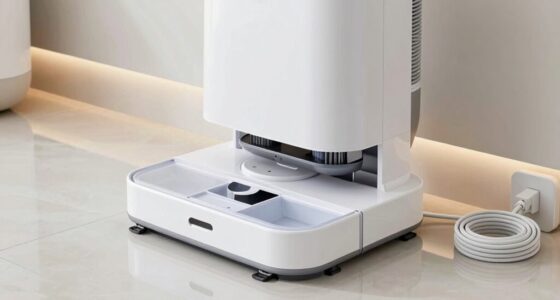
Furthermore, advancements in cleaning efficiency go hand-in-hand with smarter features. For example, newer robot mops can detect heavily soiled areas and spend more time there, or they can automatically return to their charging stations when their batteries run low and resume cleaning once recharged. These innovations mean you get a more effective cleaning process without manual intervention. As the technology continues to evolve, future robot mops will likely incorporate even more intelligent features, such as better dirt detection, improved navigation in complex layouts, and enhanced integration with other smart devices in your home. Overall, this progress has turned what was once a basic cleaning aid into a high-tech, reliable partner for maintaining spotless floors, giving you more time and peace of mind in your daily routine.

WSUANE Robot Vacuum and Mop Combo, 90-Day Self-Emptying, 10,000 Pa Suction, with dToF & Laser Navigation & Smart Mapping, Anti-Tangle, 160-Min Runtime, Ideal for Hard Floors, Pet Hair & Carpets
- Self-Emptying Dustbin: 3.5L capacity for 13 weeks of debris
- Advanced dToF LiDAR Navigation: Precise mapping and no-go zones
- Anti-Tangle Hair-Cutting Brush: Prevents hair tangles with cutting blades
As an affiliate, we earn on qualifying purchases.
As an affiliate, we earn on qualifying purchases.
Frequently Asked Questions
How Do Robot Mops Detect Dirty Areas?
You can trust robot mops to detect dirty areas using mapping sensors and obstacle avoidance technology. These sensors scan your floor, identifying areas with more dirt or stains, and map out the space for efficient cleaning. When obstacles are detected, the robot adjusts its path, ensuring thorough coverage. This combination allows your robot mop to target dirty spots precisely, giving you cleaner floors with minimal effort.
What Are the Latest Technological Features in Modern Robot Mops?
Modern robot mops feature smart navigation, allowing you to set precise cleaning paths, avoid obstacles, and efficiently cover your floors. You can also control them easily with voice commands, making your cleaning routine more convenient. These advanced features guarantee thorough cleaning, adapt to your home’s layout, and provide seamless operation. With smart navigation and voice control, your robot mop becomes a smarter, more responsive cleaning assistant that fits effortlessly into your daily life.
How Energy-Efficient Are Current Robot Mop Models?
Imagine a sleek, humming bird darting across your floors—current robot mops are surprisingly energy-efficient. You’ll notice their battery longevity keeps them running longer between charges, and their charging efficiency means less time plugged in and more time cleaning. These models optimize power use, conserving energy like a skilled chef measuring ingredients precisely, so you get thorough cleaning without draining your energy or your wallet.
Can Robot Mops Handle Different Floor Types Effectively?
Yes, robot mops handle different floor types effectively due to their surface change management and floor type adaptability. You’ll find they easily switch between hardwood, tile, and laminate floors, adjusting their cleaning modes to suit each surface. Modern models use sensors to detect floor changes, ensuring thorough cleaning without damage. This versatility makes them reliable for diverse home environments, saving you time and effort on manual floor maintenance.
What Maintenance Is Required for Robot Mops Over Time?
You need to regularly clean the brushes and empty the dustbin to maintain your robot mop’s performance. Keep an eye on battery longevity, as it can decline over time, and replace the battery if needed. Also, install software updates promptly to guarantee your device runs smoothly and benefits from new features. These simple steps help your robot mop stay effective and extend its lifespan.

ROPVACNIC Robot Vacuum Cleaner Robot Vacuum and Mop Combo with 5200Pa Suction, Personalized Cleaning Adjustments, Self-Charging Robotic Vacuum Cleaner, Advanced Obstacle Avoidance
- 2-in-1 Vacuum and Mop: Advanced electronic mopping technology with adjustable water tank
- Smart Control & Voice Commands: Multiple cleaning modes, app control, Alexa, Google Assistant
- Powerful 5200Pa Suction: Strong suction with 3-point cleaning system for thorough dirt removal
As an affiliate, we earn on qualifying purchases.
As an affiliate, we earn on qualifying purchases.
Conclusion
So, now you know how far robot mops have come— from clunky, clueless contraptions to sleek, smart cleaners. Soon, they’ll probably judge your messy floors and suggest a cleaning schedule better than your calendar. Until then, enjoy pretending you’re in control while they silently judge your dirt. Who knew that one day, your biggest cleaning assistant would be a tiny, unassuming machine with a mind of its own? Welcome to the future—where spotless floors are just a button press away.
ROPVACNIC Robot Vacuum Cleaner Robot Vacuum and Mop Combo with 5200Pa Suction, Personalized Cleaning Adjustments, Self-Charging Robotic Vacuum Cleaner, Advanced Obstacle Avoidance
- 2-in-1 Vacuum and Mop: Advanced electronic mopping technology with adjustable water tank
- Smart Control & Voice Commands: Multiple cleaning modes, app control, Alexa, Google Assistant
- Powerful 5200Pa Suction: Strong suction with 3-point cleaning system for thorough dirt removal
As an affiliate, we earn on qualifying purchases.
As an affiliate, we earn on qualifying purchases.

roborock Q10 S5+ Robot Vacuum and Mop, 10,000Pa Suction
- Long-lasting Cleaning: 70 days with self-emptying station
- Powerful Suction: 10,000 Pa for deep cleaning
- Anti-tangle System: JawScrapers and anti-tangle brushes
As an affiliate, we earn on qualifying purchases.
As an affiliate, we earn on qualifying purchases.