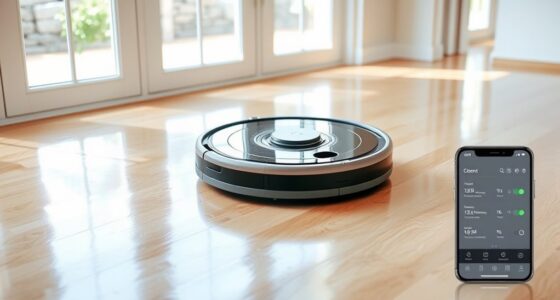
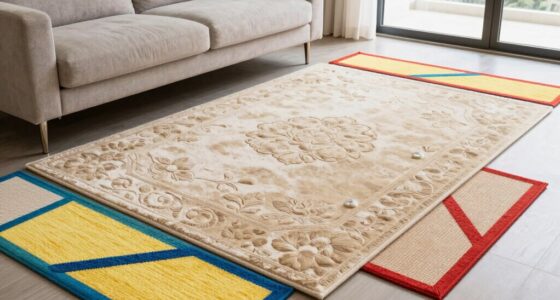
Robot mops aren’t suitable for delicate, textured, or porous floors like soft hardwood, high-pile carpets, shag rugs, and certain stone surfaces, as they can get damaged or miss spots. Floors with uneven tiles or raised patterns can cause navigation issues and take a toll on the device. If you’re curious about which surfaces to avoid and why, keep exploring the details to protect your flooring investment.

Get home appliances delivered free — and shop member deals
- Fast, free delivery on millions of items
- Access to Prime Big Deal Days deals on October 6–7
- Prime Video, Amazon Music and more included
Key Takeaways
- Unfinished or untreated hardwood floors are vulnerable to water damage and scratches from robot mops.
- Textured, uneven, or intricate tile surfaces can trap debris and hinder effective cleaning.
- Laminate and porous stone floors risk swelling, staining, or long-term damage from moisture exposure.
- Vinyl, linoleum, and raised patterned floors may suffer surface wear or scratches due to irregularities.
- High-pile carpets and shag rugs prevent proper contact and cleaning, making robot mops unsuitable.

While robot mops can make floor cleaning more convenient, they aren’t suitable for every type of flooring. Understanding the limitations of these devices helps you avoid frustration and potential damage. Robot mop limitations become evident when dealing with certain floor surfaces, especially those classified as unsuitable flooring for automated cleaning. If your floors are delicate, textured, or uneven, a robot mop might not be your best choice. For example, hardwood floors with unfinished or soft wood can be vulnerable to water damage or scratches from the device’s scrubbing pads. Excess moisture from a robot mop can cause warping or swelling in unsealed or untreated wood, making it unsuitable flooring for robotic cleaning.
Tile floors, especially those with grout lines or textured surfaces, can also pose problems. The robot’s sensors may struggle to navigate uneven or intricate tile patterns, leading to missed spots or potential damage. Moreover, textured tiles or those with uneven surfaces can trap debris or cause the robot to get stuck, highlighting the importance of choosing appropriate flooring. Laminate floors, while generally more resistant to water, are often prone to swelling, buckling, or delaminating if exposed to excess moisture. Since robot mops use water and cleaning solutions, they can accelerate deterioration in laminate flooring if not used carefully, rendering it unsuitable flooring for robotic mopping.
Vinyl or linoleum floors with raised patterns or seams may also be problematic. The robot’s suction and cleaning mechanisms might not handle these irregularities well, and the device could cause scratches or damage to the surface. Additionally, high-pile carpets or shag rugs are incompatible with robot mops, as these surfaces tend to trap debris and prevent the mop from making proper contact with the floor. The robot’s limitations in cleaning deep fibers mean that such flooring is unsuitable for robotic mopping altogether.
Porous stone floors, such as certain types of marble or natural stone, can absorb moisture from the robot mop, leading to staining or deterioration over time. Furthermore, certain flooring materials require specialized cleaning methods that robot mops cannot provide effectively. If your flooring falls into any of these categories, you’ll need to look into alternative cleaning methods. Recognizing the limitations of robot mops and understanding which flooring types are unsuitable ensures you don’t damage your floors or compromise their integrity. By choosing the right cleaning tools for your specific flooring, you protect your investment and maintain the beauty and longevity of your home’s surfaces.
best robot mop for hardwood floors
As an affiliate, we earn on qualifying purchases.
As an affiliate, we earn on qualifying purchases.
Frequently Asked Questions
Can Robot Mops Handle Outdoor Patio Flooring?
Robot mops aren’t ideal for outdoor patio floors because they’re designed mainly for indoor cleaning. They can struggle with uneven surfaces, dirt, and debris often found outside. For outdoor cleaning, you’ll be better off using a garden hose or outdoor-specific equipment. While robot mops excel at maintaining indoor floors, they’re not built to handle the challenges of patio floors, so don’t rely on them for outdoor cleaning tasks.
Are Robot Mops Effective on Textured or Heavily Patterned Surfaces?
Think of textured or heavily patterned surfaces as maze-like landscapes where robot mops struggle to find their way. Due to texture limitations and pattern challenges, these mops often miss spots or get stuck. The uneven surfaces can confuse their sensors, preventing thorough cleaning. If you want a spotless floor, stick to smooth, uniform surfaces, or manually clean textured and patterned floors where robot mops can’t reach every nook and cranny effectively.
Do Robot Mops Work on Heated or Radiant Flooring Systems?
Robot mops generally don’t work well on heated floors because the heat can damage their electronics or sensors. If you have textured surfaces, the mops might struggle to clean effectively due to uneven textures that trap dirt. You should verify your specific robot mop’s manufacturer guidelines, but for heated floors and textured surfaces, manual cleaning or specialized equipment is often a better choice to protect your floors and ensure thorough cleaning.
Can Robot Mops Be Used on Vinyl or Rubber Flooring?
Using a robot mop on vinyl or rubber flooring isn’t recommended, as it can cause vinyl damage and accelerate rubber deterioration. You might think these floors are tough, but harsh cleaning motions and moisture from robot mops can weaken their surfaces. To keep your floors pristine and intact, opt for a damp cloth and gentle cleaning methods instead. Your floors deserve careful treatment, not risking irreversible damage.
Are Robot Mops Suitable for Cleaning Epoxy or Resin-Coated Floors?
Robot mops aren’t ideal for cleaning epoxy or resin-coated floors. The harsh vibrations and excessive moisture from some mops can damage these surfaces, causing cracks or peeling of the coatings. You should avoid using robot mops on epoxy floors or resin coatings to preserve their integrity. Instead, opt for gentle cleaning methods like sweeping and damp mopping with a soft cloth to keep your floors in top condition.
robot mop for textured tile surfaces
As an affiliate, we earn on qualifying purchases.
As an affiliate, we earn on qualifying purchases.
Conclusion
If you have delicate hardwood or textured tile, a robot mop might cause damage or struggle to clean effectively. Imagine a homeowner, Sarah, who used her robot mop on her fragile hardwood floors and ended up with scratches. To keep your floors pristine, avoid using robot mops on surfaces prone to moisture damage or scratching. Always check your floor type first, so your robot can do its job without risking harm.
As an affiliate, we earn on qualifying purchases.
robot mop for porous stone floors
As an affiliate, we earn on qualifying purchases.
As an affiliate, we earn on qualifying purchases.
NFL season / tailgating Picks
team gear
As an affiliate, we earn on qualifying purchases.