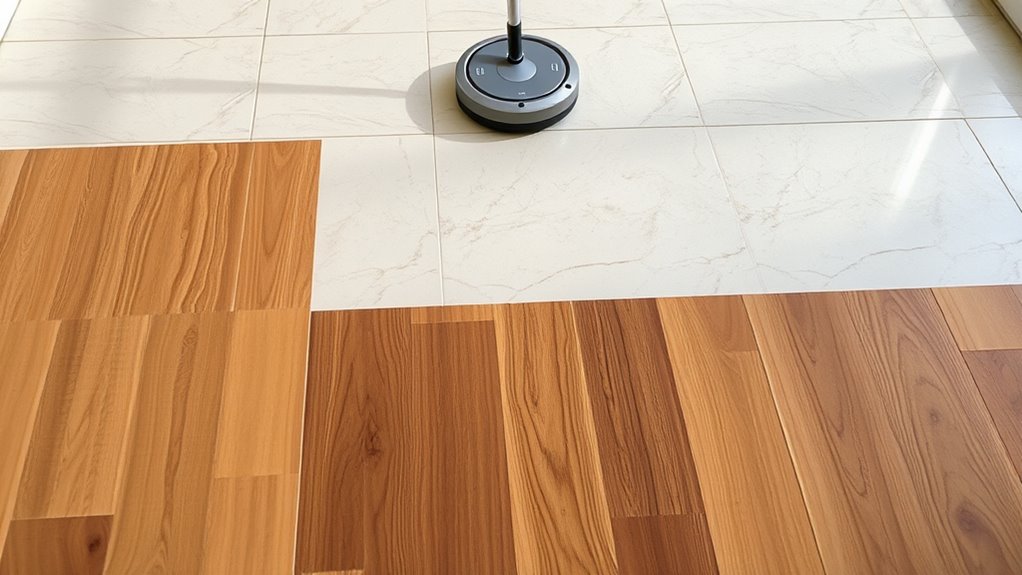

Robot mops work well on tile floors because of their flat, sealed surface that supports effective navigation and frequent cleaning. For laminate, choose models with gentle, adjustable settings to avoid damage, as moisture can cause warping. Hardwood floors require careful moisture control and gentle cleaning to prevent scratches or swelling. Each surface has its own needs, and understanding these guarantees ideal results—continue on for detailed tips tailored to your floors.
Key Takeaways
- Robotic mops are highly effective on tile floors due to their flat, sealed surface and strong sensor performance.
- Laminate floors require gentle, compatible robots to prevent moisture damage and ensure proper cleaning.
- Hardwood floors benefit from robotic mops with adjustable settings and minimal water to avoid surface warping.
- Compatibility and proper operation depend on the robot’s features, such as traction, water control, and navigation systems.
- Regular maintenance and careful selection of cleaning modes extend floor lifespan across tile, laminate, and hardwood surfaces.
Compatibility of Robotic Mops With Tile Floors

Robotic mops generally work well on tile floors because their smooth surfaces make cleaning efficient. You’ll find that robot mop sensors are highly effective on tile, helping the device navigate without bumping into obstacles or falling down stairs. These sensors also adjust cleaning patterns based on floor layout, ensuring thorough coverage. When it comes to floor sealant compatibility, most robotic mops are safe to use on sealed tile surfaces, but you should always double-check the manufacturer’s guidelines. The sealant prevents water from seeping into grout lines, protecting your floor and ensuring the mop functions smoothly. Overall, tile floors complement robotic mops nicely, thanks to their flat, sealed surface that allows for optimal sensor performance and safe operation.
Effectiveness of Robot Mops on Laminate Surfaces
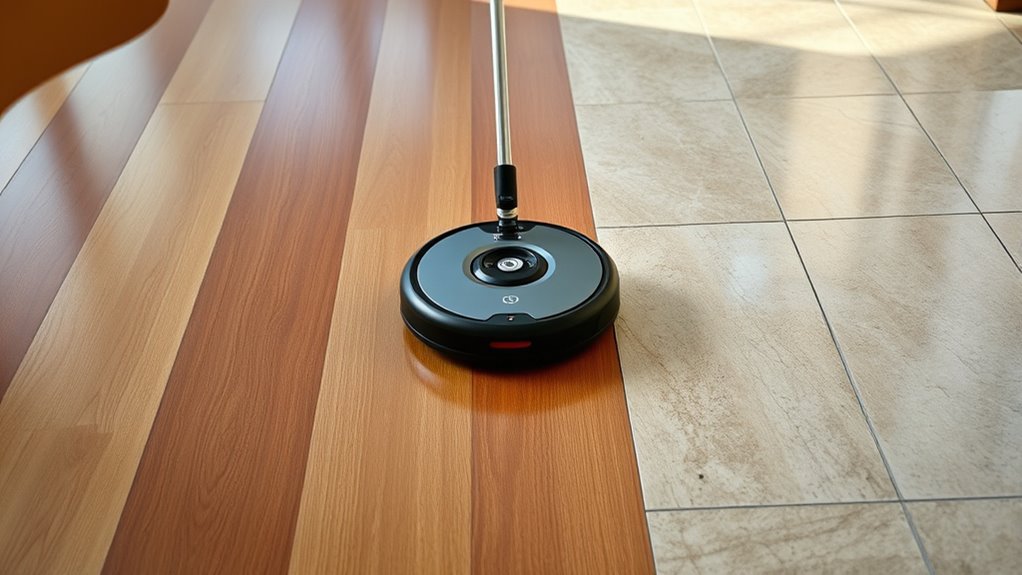
When using a robot mop on laminate surfaces, you’ll want to consider how well it grips the floor and stays in place. The mop’s adhesion and grip determine how effectively it cleans without slipping or sliding. Additionally, you’ll want to see how well it removes surface residues to leave your laminate looking spotless.
Adhesion and Grip
Laminate surfaces can pose unique challenges for robot mops, as their smooth finish requires effective adhesion and grip for thorough cleaning. Without proper floor adhesion, your robot may slip, missing spots or even causing damage. To guarantee peak performance, consider these key factors:
- Strong grip strength helps the robot maintain contact and avoid sliding.
- Adequate pressure on the mop pad improves floor adhesion.
- Proper wheel traction ensures stability on slick surfaces.
- Anti-slip features in the robot’s design prevent skidding and enhance cleaning efficiency.
Surface Residue Removal
Effective surface residue removal on laminate floors depends heavily on the robot mop’s ability to maintain consistent contact and apply adequate pressure. This ensures it effectively lifts dirt, chemical residue, and surface scratches without causing damage. A well-designed mop can target stubborn residues while avoiding excessive moisture that may warp the surface. To maximize results, choose models equipped with adjustable pressure settings and effective cleaning pads.
| Chemical Residue | Surface Scratches |
|---|---|
| Removed with proper cleaning solutions | Minimized with gentle scrubbing and soft pads |
Keep in mind, aggressive scrubbing can worsen scratches, so select a robot mop that balances cleaning power with gentle handling to preserve your laminate’s integrity.
Hardwood Flooring and Robotic Mopping: What to Know
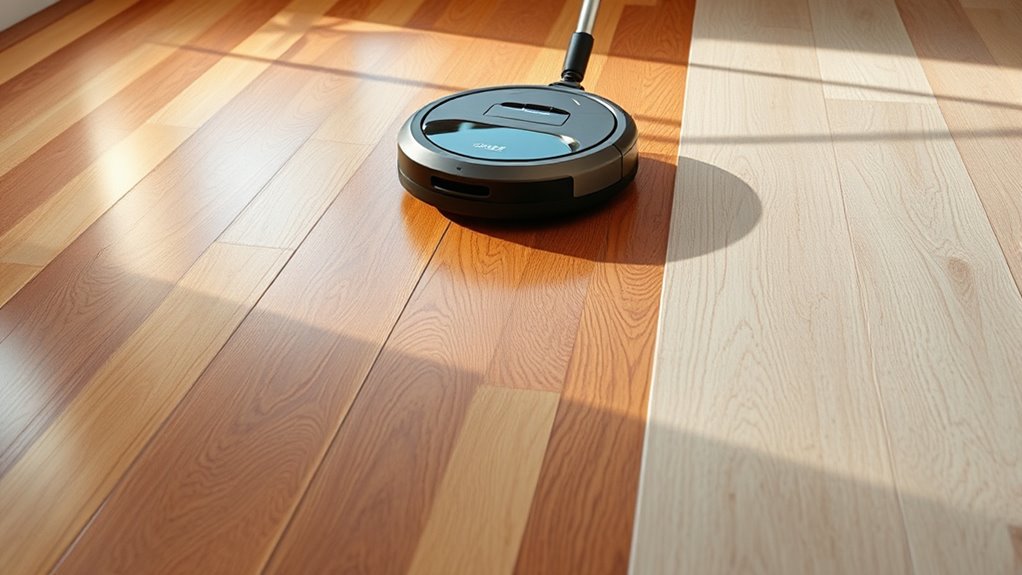
When mopping hardwood floors with a robot, you need to guarantee compatibility to avoid damage. Use gentle cleaning settings and avoid excessive water to protect your surface. Following these tips helps keep your hardwood looking its best without risking harm.
Hardwood Compatibility Tips
If you have hardwood floors, it’s vital to choose a robotic mop designed for delicate surfaces. This prevents scratches and preserves your investment. To guarantee compatibility, consider these tips:
- Opt for a mop with adjustable settings to control water flow, reducing moisture that can damage your floor sealing.
- Avoid models with harsh scrubbing brushes, which can harm the finish during hardwood refinishing.
- Use minimal water or cleaning solution to prevent warping or swelling of the wood.
- Regularly maintain your floors with proper sealing to protect against moisture and extend the lifespan of your hardwood.
Following these tips helps keep your floors looking beautiful, while safeguarding your investment in hardwood refinishing efforts.
Preventing Surface Damage
To prevent surface damage when using robotic mops on hardwood floors, it’s important to understand how improper cleaning techniques can cause scratches, warping, or dulling of the finish. Proper robotic navigation helps avoid bumping into furniture or edges, reducing potential harm. Additionally, monitor your robot’s battery life; a low battery might cause incomplete cleaning or abrupt stops that damage the surface. Use the right cleaning pads and avoid overly wet mops, which can warp hardwood. Regular maintenance keeps the robot functioning smoothly.
| Tip | Benefit |
|---|---|
| Ensure accurate navigation | Prevents accidental scratches or bumps |
| Keep battery charged | Ensures consistent cleaning and avoids abrupt stops |
Pros and Cons of Using Robot Mops on Tile

Are robot mops a good choice for cleaning tile floors? For many, yes, but it depends on your priorities. Here’s what you should consider:
- Durability: If your robot mop is built to last, it can handle frequent tile cleaning without breaking down.
- Floor material compatibility: Tile’s surface is generally compatible with robot mops, making them effective for regular maintenance.
- Ease of use: Robot mops make tile cleaning effortless, saving you time and energy.
- Limitations: Heavy grime or grout lines might require manual scrubbing; robot mops may not reach every nook.
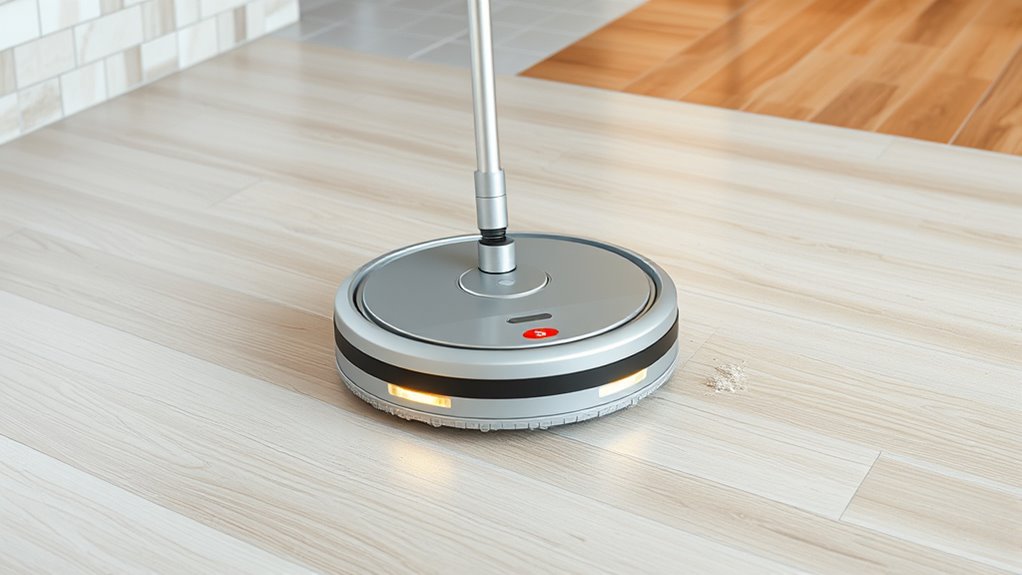
Laminate floors can be sensitive to moisture, so you need to choose the right cleaning approach. Mop compatibility issues may arise if your robot isn’t designed for laminate surfaces, risking damage. Additionally, dust and debris buildup can interfere with your robot’s efficiency, making regular maintenance essential.
Laminate Surface Sensitivity
Although laminate floors are popular for their affordability and durability, they can pose specific challenges for robotic mops. Laminate surface sensitivity means that certain cleaning actions can cause damage or wear over time. You might feel frustrated when:
- Your robotic mop leaves scratches on the surface, questioning its durability.
- Excessive moisture causes swelling or warping, risking costly repairs.
- Harsh cleaning pads strip away the finish, diminishing the floor’s appearance.
- Sudden impacts or rough navigation damage the delicate top layer, reducing the laminate’s lifespan.
Knowing these risks helps you choose a robotic mop designed with gentle cleaning modes and suitable for laminate surface sensitivity. Proper care guarantees your floor’s durability stays intact while maintaining a spotless appearance.
Mop Compatibility Issues
Choosing the right mop for your laminate floors is essential because not all robotic mops are compatible with their delicate surface. Some models lack the necessary floor material compatibility, which can lead to damage or ineffective cleaning. When selecting a robot mop, consider its durability; a sturdy, well-designed mop can better handle gentle cleaning without harming your laminate. Many robotic mops have adjustable settings or soft pads, but if the device isn’t specifically compatible, it might cause scratches or warping. Always check manufacturer guidelines to verify your chosen model is suitable for laminate flooring. Investing in a robot mop with high durability and proven floor material compatibility ensures thorough cleaning while preserving your floor’s integrity.
Dust and Debris Buildup
Robotic mops can struggle with dust and debris buildup on laminate floors, which can hinder their cleaning performance. This challenge impacts the robot mop’s durability and dust collection efficiency, making it harder to maintain a spotless floor. When debris accumulates, you might notice:
- Increased chances of clogging, reducing the robot’s lifespan
- Reduced suction power, leaving dust behind
- Frequent need for manual cleaning, wasting your time
- Frustration from incomplete cleaning cycles
To improve results, guarantee your robot mop has strong dust collection efficiency and regularly empty its dustbin. Choosing a model designed to handle fine dust and debris will keep your laminate floors cleaner longer, while also protecting the durability of your device.
Protecting Hardwood From Robotic Mops: Tips and Precautions
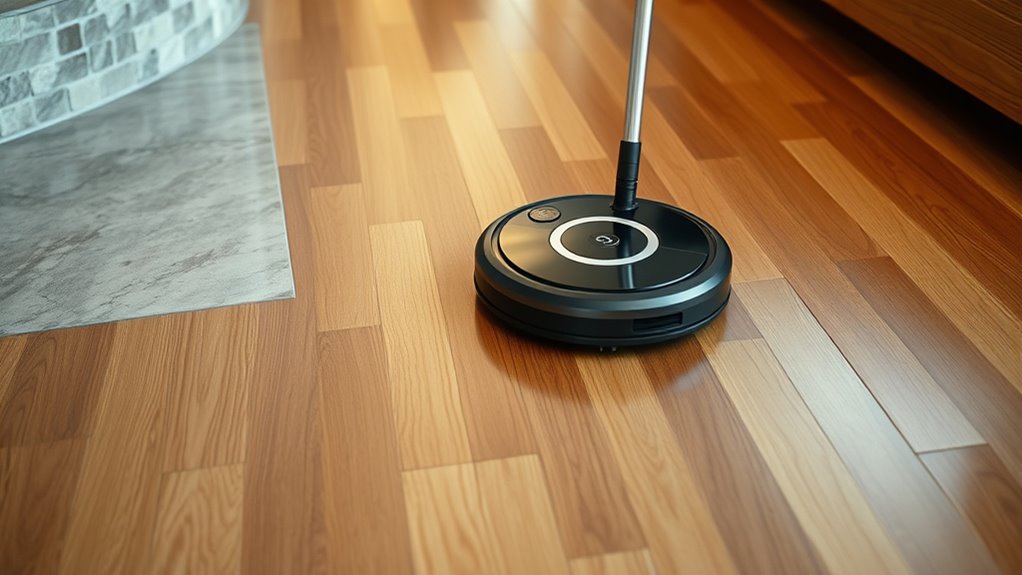
To keep your hardwood floors looking their best while using robotic mops, it’s essential to take some simple precautions. Regular robot mop maintenance guarantees your device functions properly and prevents damage to your floors. Always follow the manufacturer’s guidelines for cleaning and inspecting the mop, especially the brushes and sensors. Establish a consistent floor cleaning schedule to avoid over-wetting or excessive scrubbing, which can harm hardwood finishes. Before each use, remove any loose debris or large particles that could scratch or gouge the surface. Using a damp, not soaked, cloth helps avoid water damage. By maintaining your robot mop properly and sticking to a routine, you protect your hardwood floors from unnecessary wear and tear while keeping them spotless.
Choosing the Right Robotic Mop for Different Floor Types

Selecting the right robotic mop can make a significant difference in how well it cleans and protects your floors. To choose wisely, consider these key factors:
Choosing the right robotic mop ensures effective cleaning and floor protection.
- Smart navigation—ensures your robot accurately maps and adapts to your floor type, avoiding damage.
- Battery life—longer-lasting batteries cover more area without needing a recharge, ideal for large spaces.
- Floor compatibility—check if the mop settings are suitable for tile, laminate, or hardwood.
- Cleaning modes—select models with adjustable modes for delicate hardwood or stubborn tile stains.
Cleaning Performance Comparison: Tile, Laminate, and Hardwood
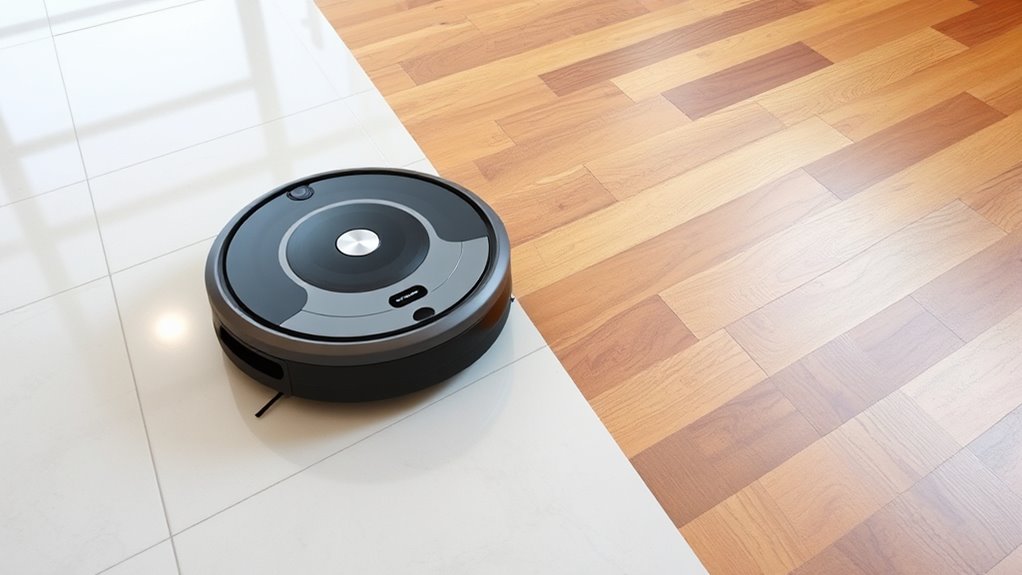
Different floor types respond uniquely to robotic mops, making it crucial to understand their cleaning performance on each surface. Tile flooring material typically allows for thorough cleaning, as robot features like powerful suction and wide mopping pads handle grout lines and textured surfaces well. Laminate floors, with their smooth surface, benefit from gentle scrubbing and effective debris pickup, which many robot features optimize for. Hardwood floors require a delicate touch; robotic mops with adjustable water flow and soft pads prevent damage while still cleaning effectively. Overall, the robot’s features—such as multi-surface sensors and adaptable cleaning modes—play a key role in delivering excellent performance across these flooring materials. Choosing the right robot ensures efficient cleaning tailored to each surface’s specific needs.
Maintenance and Care for Robotic Mops on Various Floors

Regular maintenance is essential to keep your robotic mops performing efficiently across various floor types. Proper care ensures your device stays effective while protecting your floors and electrical safety. Here’s what you should do:
- Clean the mop’s brushes and sensors regularly to prevent buildup that can hinder floor polishing.
- Check and replace filters to maintain suction power and prevent dust from damaging electrical components.
- Avoid water pooling on hardwood to prevent warping and ensure safe operation, especially on sensitive surfaces.
- Inspect power cords for damage to safeguard electrical safety and avoid malfunctions.
Tips for Optimizing Robotic Mopping on Different Surfaces
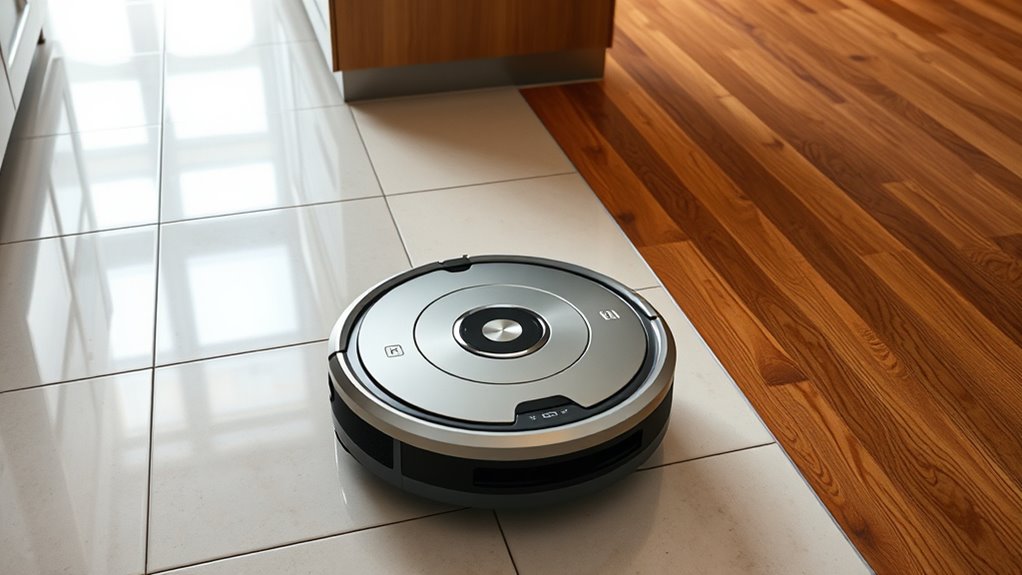
To get the best results from your robotic mops on various surfaces, it’s important to tailor your approach to each floor type. Confirm your robot’s robotic navigation is optimized by adjusting cleaning settings for tile, laminate, or hardwood floors. For tile, focus on thorough navigation to reach grout lines and corners. On laminate and hardwood, set the robot to avoid excessive moisture to prevent damage. Keep an eye on battery life—on larger or more complex surfaces, charge the robot frequently to avoid incomplete cleaning cycles. Using mapping features can help your robotic mop navigate efficiently, saving battery and time. Regularly updating the robot’s software also improves navigation and cleaning performance across different surfaces, ensuring you get the most out of each session.
Frequently Asked Questions
Can Robotic Mops Handle Uneven or Textured Floor Surfaces Effectively?
Robotic mops struggle with uneven or textured surfaces due to limited surface adaptability and sensor accuracy. You’ll find they often miss spots or struggle to maintain consistent cleaning on these floors. To improve results, choose models with advanced sensors that adapt better to irregular surfaces. Keep in mind, for heavily textured or uneven floors, manual cleaning might still be your best option to guarantee thoroughness.
How Do Robotic Mops Affect Long-Term Floor Finish and Durability?
A stitch in time saves nine, and that applies to robotic mops too. They can help preserve your floor finish by cleaning regularly and preventing dirt buildup. However, improper robotic mop maintenance—like neglecting filter changes or overuse—can cause scratches or wear over time. To protect your floors’ durability, follow manufacturer instructions, avoid harsh chemicals, and ensure gentle cleaning. This way, your floors stay beautiful for years to come.
Are There Specific Cleaning Solutions Recommended for Different Floor Types?
You should choose cleaning solutions tailored to your floor type to keep your floors in top shape. For tile, use a mild detergent; for laminate, opt for a gentle, pH-balanced cleaner; and for hardwood, choose a cleaner specifically designed for wood floors. Regular cleaning schedules and proper floor maintenance prevent damage and preserve your floors’ appearance, ensuring your robotic mop works effectively without harming the surface.
What Safety Features Do Robotic Mops Have to Prevent Damage to Fragile Floors?
Your robotic mop uses advanced floor sensor technology to detect fragile surfaces, preventing excessive pressure or movement that could cause damage. It also features anti-scratching brushes that gently clean without harming delicate floors. These safety features work together to protect your floors from scratches, dents, or warping, ensuring your tiles, laminate, or hardwood stay pristine while your robot efficiently handles the cleaning.
How Do Robotic Mops Perform on Floors With Area Rugs or Transition Strips?
You’ll find that robotic mops handle area rug navigation well if equipped with sensors designed for that purpose, preventing them from getting stuck or causing damage. Switch strip compatibility varies; some models smoothly cross different floor surfaces, while others may struggle. Check your robot’s specifications to guarantee it’s suitable for your specific setup, and consider models with advanced sensors for better navigation across rugs and changeover strips.
Conclusion
Choosing the right robotic mop for your floor type can feel overwhelming, but with the right info, it’s like having a cleaning superhero at your command. Whether you’re tackling stubborn tile grout, delicate hardwood, or laminate’s tricky surfaces, understanding each floor’s needs guarantees your robot cleans effectively. With proper care, your robotic mop will be an unstoppable force—transforming your cleaning routine from a chore into a breeze. Say goodbye to dirt and hello to spotless floors every time!