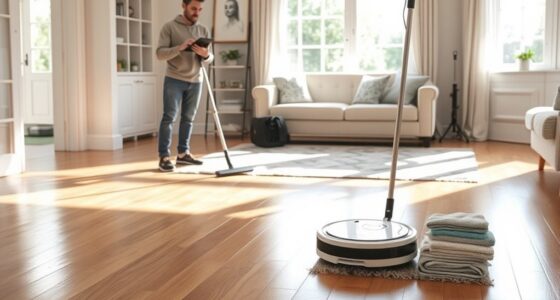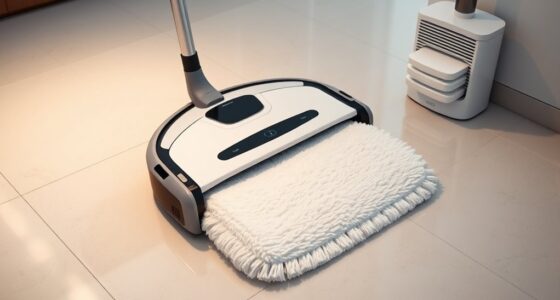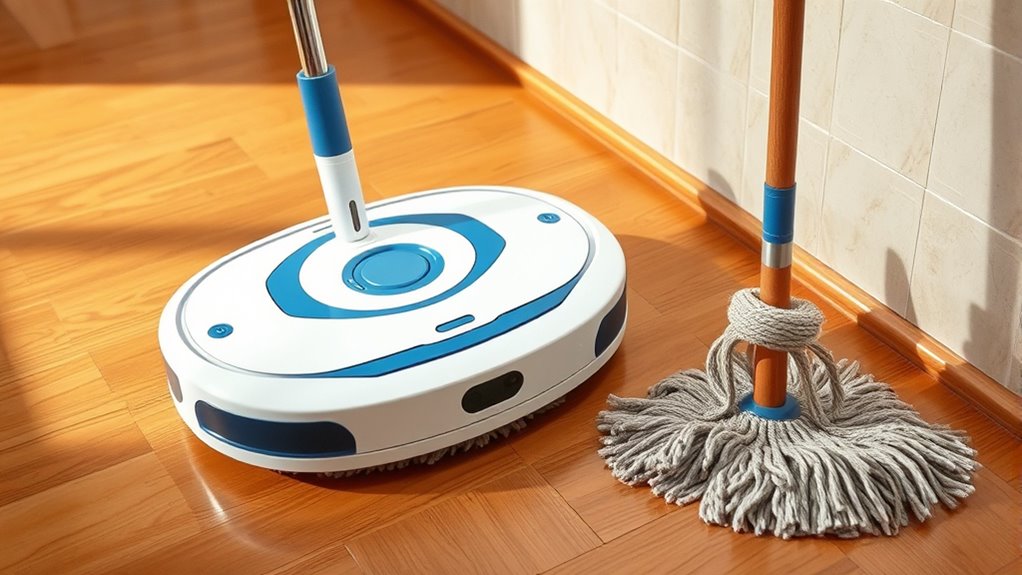
Robot mops can scrub floors effectively for routine cleaning, thanks to sensors, motors, and cleaning algorithms that cover most surfaces automatically. However, they might struggle with stubborn stains or deep dirt that manual mopping with a traditional mop can tackle better. While gadgets offer convenience and hands-free operation, traditional mops give you more control and power for tough spots. Want to discover which option suits your home’s needs? Keep exploring for more insights.
Key Takeaways
- Robot mops use sensors and algorithms for systematic, thorough cleaning, but may miss spots due to limited navigation accuracy.
- Traditional mops provide targeted, deep cleaning with manual scrubbing, ideal for stubborn stains and detailed work.
- Robot mops are convenient and easy to operate, while traditional mops require manual effort and physical effort.
- Both methods are effective on hard floors like tile and hardwood, but robot mops avoid damage on delicate surfaces.
- Overall, robot mops can scrub floors effectively but may struggle with very stubborn dirt compared to manual mopping.
How Robot Mops Operate and Their Cleaning Mechanisms

Robot mops operate using a combination of sensors, motors, and cleaning tools to autonomously navigate and clean floors. You’ll notice they rely heavily on advanced robot navigation techniques, which help them map your space and avoid obstacles. These devices use sophisticated cleaning algorithms that determine the most efficient routes, ensuring thorough coverage without unnecessary repetition. As they move, sensors detect dirt, obstacles, and floor types, allowing the robot to adjust its cleaning pattern accordingly. The motors power the movement of wheels and brushes, enabling smooth navigation and effective scrubbing. The cleaning tools, such as mopping pads or scrubbing brushes, work in tandem with the navigation system to deliver consistent cleanliness. This integrated technology makes robot mops highly autonomous and capable of maintaining your floors with minimal intervention.
The Effectiveness of Manual Mopping Techniques
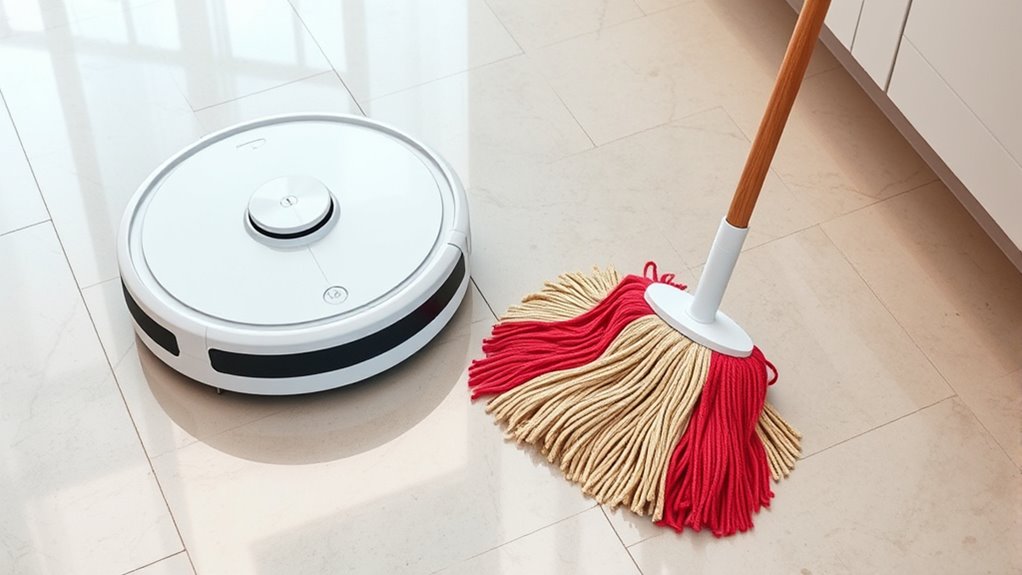
Manual mopping techniques can be highly effective when performed correctly, allowing you to target specific areas and adjust pressure as needed. Your manual scrubbing and cleaning techniques give you control over the force applied, making it easier to remove stubborn stains or dirt. For *best* results, focus on consistent motions and thorough coverage. Keep in mind the importance of using the right cleaning tools, like a quality mop and suitable cleaning solutions. Here’s a quick comparison of different manual cleaning techniques:
| Technique | Effectiveness |
|---|---|
| Back-and-forth | Good for general cleaning |
| Circular motions | Better for stubborn spots |
| Applying pressure | Enhances dirt removal |
| Rinsing mop | Prevents spreading dirt |
| Using scrubbing brush | Ideal for deep stains |
Comparing Cleaning Power: Robot Mops Vs Traditional Mops

While both robot mops and traditional mops aim to clean floors effectively, they do so through different mechanisms that impact their cleaning power. Robot mops use advanced robot navigation to systematically cover surfaces, ensuring thorough cleaning even in hard-to-reach areas. Their ability to map and navigate your space allows for consistent, targeted scrubbing. However, their cleaning power can be limited by battery life, which dictates how long they operate before needing a recharge. Traditional mops rely on manual effort, allowing you to focus on stubborn spots and apply more pressure where needed. While robot mops offer automation and precision, traditional mops can sometimes deliver a deeper clean for heavily soiled areas. The choice depends on your cleaning needs and the area size.
Ease of Use and Convenience Factors
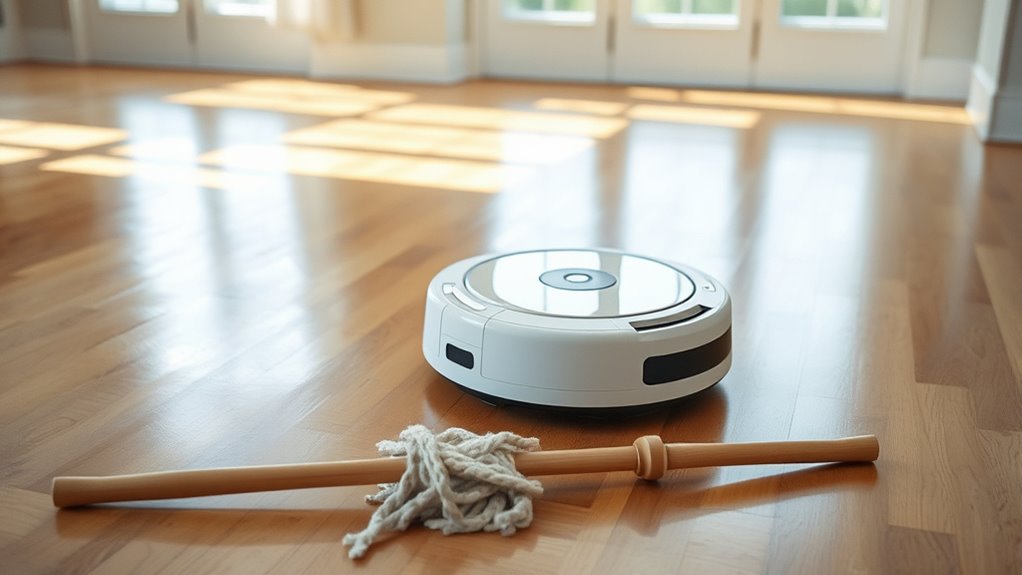
Robot mops are designed for effortless operation, so you can set them up and forget about them while they clean. They save you time by handling routine cleaning tasks quickly and efficiently. Traditional mops, on the other hand, require more manual effort and time, making convenience a key factor in your choice.
Effortless Operation Design
Effortless operation is a key advantage when choosing between a robot mop and a traditional mop, as it directly impacts how easily you can keep your floors clean. Robot mops are designed for simplicity, often requiring minimal input—just press a button, and they handle the rest. Unlike traditional mops, which demand manual techniques and frequent bending or scrubbing, robot mops navigate your space with ease. They also typically use less cleaning chemicals, thanks to precise control and efficient cleaning paths. This design reduces physical effort and makes regular cleaning less of a chore. On the other hand, traditional mops may require more effort and manual handling, especially when dealing with stubborn stains or large areas. Overall, robot mops prioritize user convenience through smart, effortless operation.
Time-Saving Capabilities
Thanks to their smart navigation and automated features, robot mops save you significant time during cleaning sessions. They handle chores efficiently, letting you focus elsewhere. Consider these key points:
- Battery lifespan guarantees longer cleaning cycles without frequent recharges, boosting convenience.
- Noise levels are generally low, allowing you to run the robot anytime without disturbance.
- Automated scheduling means you don’t need to be present, saving setup time.
- Their intuitive controls make operation simple, reducing the learning curve and effort needed.
Cost Considerations and Value for Money

When comparing robot mops and traditional mops, you’ll want to evaluate the initial purchase price and how it fits into your budget. Think about long-term costs like maintenance and replacements to see which option saves you money over time. Ultimately, evaluating the overall cost effectiveness helps determine which mop offers the best value for your needs.
Upfront Purchase Price
While robot mops typically have a higher upfront cost than traditional mops, they can offer better long-term value through features like automated cleaning schedules and advanced navigation. When considering the purchase price, keep these points in mind:
- Brand reputation impacts reliability and support, often justifying a higher initial investment.
- Battery life determines how long your robot can clean without recharging, affecting overall performance.
- The upfront cost reflects the gadget’s sophistication and durability.
- Cheaper models may save money initially but could require more frequent replacements or repairs.
Ultimately, investing in a reputable brand with strong battery performance may cost more upfront but can save you time and money later by providing consistent, effective cleaning.
Long-Term Maintenance Costs
Long-term maintenance costs play a crucial role in determining the overall value of a robot mop. Over time, you might face cost fluctuation due to replacement parts, batteries, or software updates. Unlike traditional mops, which mainly require occasional replacements of pads or solutions, robot mops can incur repair expenses if they malfunction or experience wear and tear. These costs can add up, especially if you need frequent maintenance or repairs. Additionally, some models may require specialized parts, increasing expenses. To evaluate whether a robot mop offers good value for money, consider how often you’ll need to service or repair it and how those costs compare to the ongoing expenses of traditional mopping supplies. Long-term costs influence your overall investment and satisfaction with the gadget.
Overall Cost Effectiveness
Evaluating the overall cost effectiveness of a robot mop involves comparing its initial investment and ongoing expenses to those of traditional mopping methods. Consider these factors:
- Battery life: Longer-lasting batteries reduce replacement costs and downtime.
- Storage capacity: Larger tanks mean fewer refills, saving time and effort.
- Initial cost: Robot mops often require a higher upfront investment versus traditional mops.
- Maintenance and repairs: Ongoing costs can vary depending on durability and availability of parts.
While a robot mop may cost more initially, its efficiency and reduced labor can offer better value over time. Carefully weigh the long-term savings against upfront expenses to determine if it’s a worthwhile investment for your cleaning needs.
Maintenance and Longevity of Each Mop Type

Maintaining a robot mop generally requires less effort compared to a traditional mop, thanks to its self-cleaning features and durable components. You’ll mainly need to monitor the battery life and periodically check for wear and tear. Robot mops tend to have a longer lifespan, but repair costs can add up if parts like brushes or batteries need replacing. Traditional mops, on the other hand, are simple to maintain—just replace pads and clean the mop head regularly. However, they may wear out faster with frequent use, requiring more frequent replacements. Here’s a quick comparison:
| Aspect | Robot Mop | Traditional Mop |
|---|---|---|
| Maintenance | Low, mainly battery and parts checks | Regular cleaning and replacing pads |
| Longevity | 2-5 years, depending on use | 1-2 years with frequent use |
| Repair Costs | Higher, mainly for battery/parts | Low, mainly for replacement pads |
Suitability for Different Flooring Surfaces

When choosing between a robot mop and a traditional mop, it’s important to contemplate how well each performs on different flooring surfaces. Your decision depends on the flooring compatibility and surface sensitivity of each option.
- Hardwood floors require gentle cleaning; many robot mops have delicate settings for this.
- Tile surfaces can handle more vigorous scrubbing, suited for both tools.
- Carpeted areas are generally unsuitable for robot mops, which are designed for hard surfaces.
- Vinyl floors benefit from versatile mops that adapt to surface sensitivity.
Understanding these nuances helps you select the right cleaning method, ensuring your floors stay pristine without damage or compatibility issues.
Environmental Impact and Eco-Friendliness

Choosing between a robot mop and a traditional mop often hinges on their environmental impact. Robot mops typically consume less energy overall because they operate efficiently and often use rechargeable batteries, reducing electricity use compared to running a traditional mop and bucket. Additionally, their materials tend to focus on durability and sustainability, which means fewer replacements and less waste over time. Traditional mops, on the other hand, often require disposable cleaning pads or frequent replacements, increasing waste. While robot mops might use energy initially, their eco-friendliness improves with proper maintenance and energy-efficient models. Ultimately, if you prioritize material sustainability and lower energy consumption, a robot mop can be a greener choice, helping you reduce your environmental footprint.
Limitations and Challenges of Robot Mops
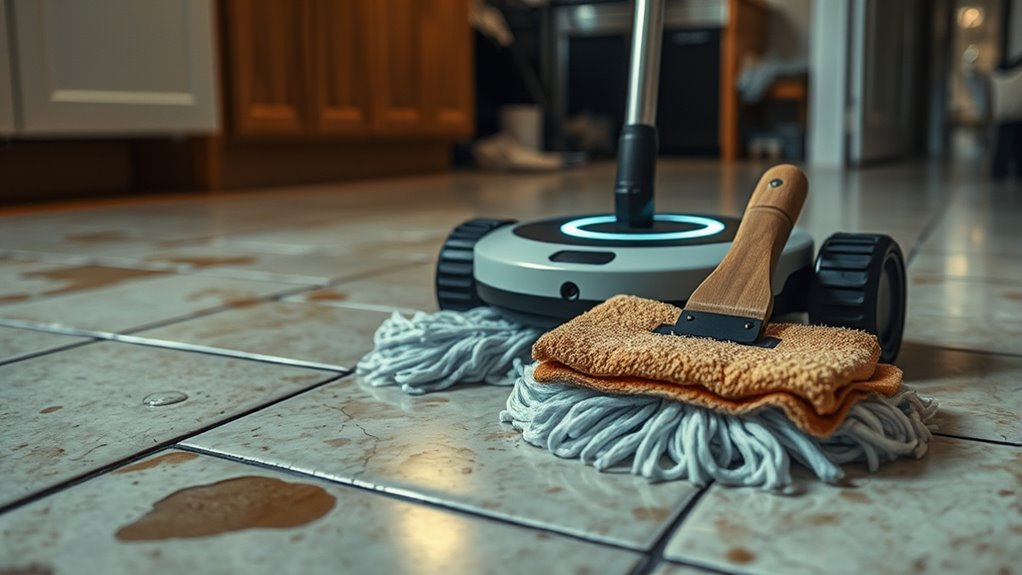
Despite their advanced technology, robot mops face several limitations that can affect their effectiveness and convenience. First, limited battery life means you might need to recharge frequently, disrupting cleaning sessions. Second, navigation accuracy can be inconsistent, causing the robot to miss spots or bump into furniture. Third, obstacles like cords or clutter can confuse the device, reducing cleaning efficiency. Fourth, sensor limitations may prevent it from detecting dirt or edges properly, leaving some areas uncleaned. These challenges can compromise the thoroughness of cleaning and require manual intervention. While improvements are ongoing, understanding these constraints helps you set realistic expectations and decide if a robot mop fits your household needs.
Making the Right Choice for Your Household Needs
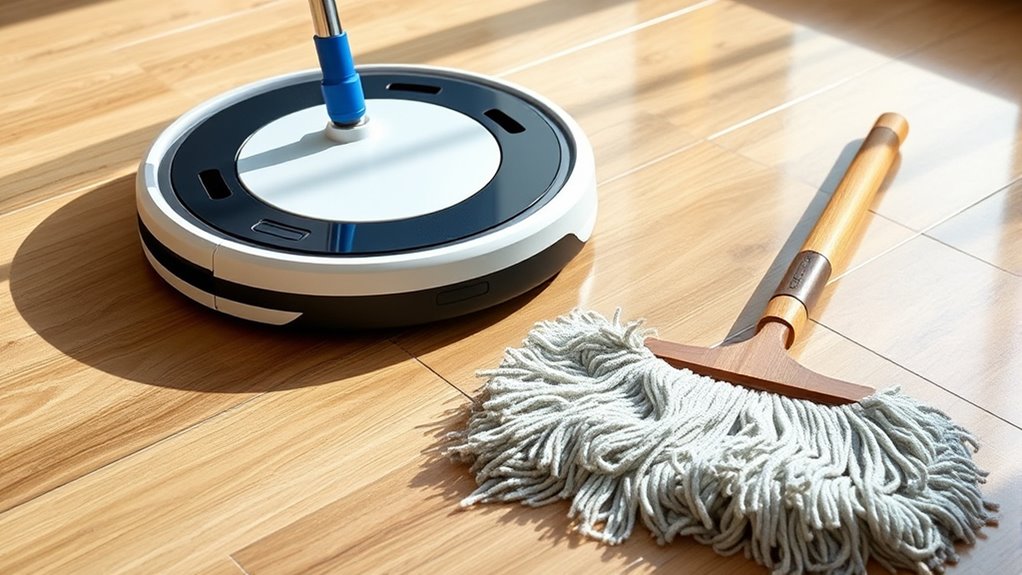
To select the right cleaning tool for your household, it’s essential to assess your specific needs and living environment. If you prefer convenience and have limited time, a robot vacuum can handle daily dirt with minimal effort. However, if your space has stubborn stains or requires detailed cleaning, manual sweeping combined with a traditional mop might be better. Consider the amount of foot traffic, pet hair, and dust levels. Use the table below to compare options:
| Feature | Robot Vacuum | Manual Sweeping | Traditional Mop |
|---|---|---|---|
| Ease of Use | High | Moderate | Low |
| Cleaning Power | Moderate | Varies | High |
| Suitable for Pets | Yes | Yes | Yes |
Frequently Asked Questions
How Long Does a Robot Mop Typically Run Before Recharging?
A robot mop typically runs for about 1 to 3 hours before needing a recharge, depending on its battery life and cleaning duration. You’ll find that most models automatically return to their charging dock once the battery is low, allowing you to plan cleaning sessions accordingly. Keep in mind that larger homes may require multiple sessions or strategic recharging to ensure thorough cleaning without interruptions.
Can Robot Mops Handle Sticky or Dried-On Stains Effectively?
You’re probably wondering if a robot mop can tackle stubborn, sticky stains. The truth is, their cleaning power varies; some models excel at stain removal, while others struggle with dried-on messes. Advanced sensors and stronger scrubbing modes can make a difference, but don’t expect them to replace heavy-duty scrubbing. For persistent stains, a traditional mop or spot cleaning might still be your best bet, leaving you on the edge of an unexpected discovery.
Are Robot Mops Safe for Pets and Children?
Robot mops are generally safe for pets and children when used correctly. They often have safety features like sensors to avoid obstacles, including curious pets or little ones. However, you should guarantee the mop uses pet-safe cleaning solutions and keeps small objects out of its path. Regular maintenance and supervision help prevent accidents, making robot mops a convenient, safe choice for keeping your home clean without compromising pet and child safety.
How Noisy Are Robot Mops During Operation?
Robot mops are generally quiet during operation, with a noise level that’s quite manageable. You’ll notice their sound intensity is usually comparable to a quiet conversation or background music, making them unobtrusive while working. If you’re sensitive to noise, check the product specifications for exact decibel levels, but overall, robot mops won’t disturb your daily activities or rest. Their low sound intensity guarantees a peaceful cleaning experience.
Do Robot Mops Require Wi-Fi or Internet Connectivity for Use?
Robot mops generally require Wi-Fi for ideal operation, especially if you want to control them remotely or use smart features. While some models can function without internet, they may have limited capabilities, such as manual control or scheduled cleaning. Most depend on Wi-Fi and internet connectivity for updates, navigation, and app integration. So, if you want full functionality, guarantee your robot mop has reliable Wi-Fi and internet access.
Conclusion
Ultimately, whether you opt for a robot mop or stick with traditional cleaning, it’s about finding the perfect harmony for your home. While gadgets bring a touch of modern magic and effortless sparkle, manual mopping offers a personal touch that’s hard to replace. Consider your floors, your routine, and your values—sometimes, a gentle dance with tradition is just what your space needs, with a hint of innovation to keep things fresh.