TL;DR
An Ideal Home maintenance report outlines a weekly and monthly routine for robot vacuum cleaners, including emptying debris, checking brushes and caring for mop components. Cleaning intervals and whether parts can be rinsed vary by model, so owners should follow the manufacturer’s instructions.
Ideal Home’s robot-vacuum cleaning guide recommends weekly upkeep and a monthly service to help owners clear debris, hair and residue from their machines. The advice matters because clogged filters, full dust bins and tangled brushes can affect cleaning performance, while water and dirty mop pads left unattended can develop unpleasant smells.

Get home appliances delivered free with Prime
- Fast, free delivery on millions of items
- Prime Video, Amazon Music and more included
- Member-only deals all year
The guide cites Lukas Zou, a Robot Vacuum Specialist at Anker eufy, who summarizes the routine as “a five-minute weekly tidy, one twenty-minute monthly service, and a dock refresh every couple of months.” That is a general schedule rather than a universal rule: the report also advises checking each vacuum’s manual for model-specific care instructions.
For weekly maintenance, the report recommends turning off the robot and unplugging its dock before cleaning. Owners of models with mopping functions should replace fresh water and empty wastewater, then clean the wastewater container. The dock’s washing tray should also be checked and wiped down. If a dock has a heated cleaning component, the guide says to let it cool fully before cleaning.
Dust-bin care depends on the design and use of the machine. Small onboard bins may need emptying after every run, or at least weekly in homes with little mess. The report says dust bags should be inspected monthly and generally replaced every 30 to 60 days, while bagless dock containers may need emptying about monthly. It warns that water should only be used on a container if the manufacturer permits it.
The guide also recommends checking brushes and wheels each week and removing wrapped hair or threads with the tool supplied for the machine. Filters should receive monthly attention, though the supplied report cuts off before giving full instructions for that step. Filter cleaning or replacement methods can vary, so the owner’s manual should determine what is safe.
Why Routine Cleaning Affects Performance
Regular maintenance addresses parts that directly affect how a robot vacuum collects dirt and moves around a home. A full dustbin can restrict airflow, while hair around brushes or wheels can interfere with movement and leave debris behind. AO appliance expert Jade Golding-Gault says that emptying a full bin regularly helps the vacuum pick up dirt more effectively.
For combination vacuum-and-mop models, cleaning has a hygiene as well as a performance purpose. Replacing old water, cleaning the washing tray and allowing mop pads to dry fully can help limit stale smells and avoid spreading dirt back over floors. The guide’s main practical point is that automated cleaning does not remove the need to maintain the machine and its dock.
Products Worth Considering

Roborock Q7 M5+ Robot Vacuum and Mop with Self-Emptying Dock

Roborock RockNeo Q110H Wire-Free Robot Lawn Mower

Dyson Ball Animal 3 Upright Corded Vacuum
As an affiliate, we earn on qualifying purchases.
A Schedule for Robot Vacuum Care
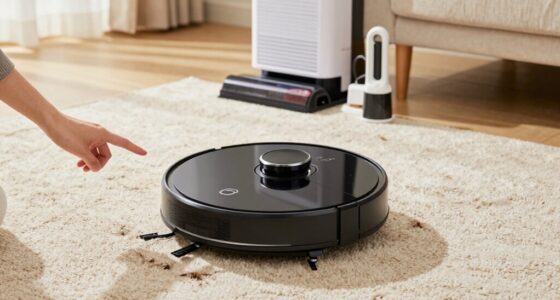
Robot vacuums can return to a dock to empty their debris, wash mop pads or refill water, depending on the model. Those features reduce some manual work but do not eliminate checks of the bin, brushes, filter, water containers and dock. The Ideal Home report frames these tasks as a short weekly routine, a longer monthly service and a dock clean every few months.
The recommendations draw on comments from appliance and brand specialists, including Zou and Elizabeth White, UK Brand Manager for MOVA. White advises checking the washing tray for build-up and checking that automatically washed mop pads are clean and drying properly. Her advice is specific to the care of mop systems; the report does not establish that every robot vacuum has the same dock features or maintenance requirements.
“A five-minute weekly tidy, one twenty-minute monthly service, and a dock refresh every couple of months.”
— Lukas Zou, Robot Vacuum Specialist at Anker eufy, as quoted by Ideal Home
Model-Specific Care Still Matters
The report presents general cleaning intervals, but exact instructions depend on the model. It does not specify which filters can be washed, how long they should dry, or which dock containers tolerate water. Nor does it provide a single replacement interval for every filter or mop pad. Owners should check their manufacturer’s instructions before rinsing components or using cleaning products.
The supplied source text ends partway through its filter-care section. It therefore does not include the article’s complete filter instructions or any further maintenance steps that may have followed. The schedule should be treated as guidance from the report, not as a substitute for the complete manual for an individual machine.
Check the Manual Before Cleaning
Owners can use the report’s weekly and monthly schedule as a prompt to inspect their vacuum, but should confirm the safe cleaning method for each removable part in the product manual. Before maintenance, the guide advises switching off the robot and unplugging the dock. Heated washing trays should be allowed to cool before they are wiped down.
After routine care, check whether the bin is empty, hair is clear of the brushes and wheels, water containers are fresh, and mop pads are clean and dry. The next service is not tied to a single date for every machine: frequency depends on the manufacturer’s instructions, the vacuum’s design and how much debris it collects.
Key Questions
How often should a robot vacuum be cleaned?
The Ideal Home guide cites a rule of thumb of a weekly tidy, monthly service and dock refresh every couple of months. Individual tasks may need to happen more often depending on the model and how heavily it is used.
How often should I empty a robot vacuum’s dust bin?
A small onboard bin may need emptying after every cleaning run, though the report says some households with minimal mess may manage weekly. For dock dust bags, it recommends monthly inspection and says replacement is generally needed every 30 to 60 days.
Can I rinse a robot vacuum’s dust container with water?
Only if the manufacturer says it is safe. The report notes that some manufacturers advise against water on dust containers. Check the manual before rinsing, and dry any part that the instructions permit you to wash.
What should I check on a robot vacuum mop dock?
Check the washing tray for residue, replace fresh water and empty wastewater on models with water tanks, and confirm mop pads are clean and drying properly. Let any heated washing tray cool fully before cleaning it.
Source: rss