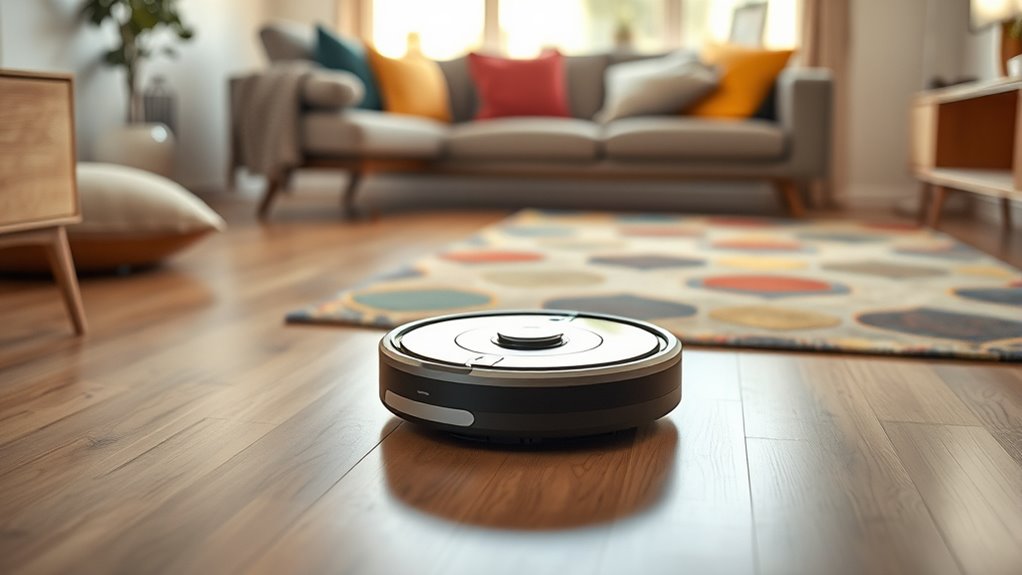

iRobot revolutionized cleaning by creating the Roomba, the first to use sensors and navigation to vacuum floors automatically. This smart device changed household chores from tedious tasks into effortless routines, giving you more free time. Since its launch in 2002, Roomba’s innovation has laid the foundation for smart home devices and transformed how households manage cleanliness. If you continue exploring, you’ll discover how this invention has shaped modern daily life and future automation.
Prime for Young Adults — start your free trial
Fast free delivery, streaming and member deals for eligible 18–24 year olds.
As an affiliate, we earn on qualifying purchases.
Key Takeaways
- Roomba’s innovative sensors and navigation systems transformed household cleaning into an automated, effortless task.
- iRobot’s focus on practical robotics led to the creation of the first effective robotic vacuum in 2002.
- The device’s ability to adapt to different floor types and avoid obstacles improved cleaning efficiency.
- Roomba’s integration with apps and scheduling features revolutionized user convenience and household management.
- Its success marked a significant shift toward smart home automation, reducing household chores and enhancing daily life.

Imagine a world where cleaning becomes effortless—thanks to iRobot’s innovation, that world is now a reality. When you think about how far technology has come, it’s astonishing to realize that robotic technology, once a science fiction dream, now plays an essential role in your daily life. The creation of the Roomba revolutionized consumer electronics by transforming a mundane chore into a simple, automated task. You no longer need to spend hours sweeping or vacuuming; instead, you can set your Roomba to work while you focus on other things. This shift didn’t happen by chance; it was driven by a desire to make household chores more manageable through cutting-edge engineering and smart design.
iRobot, founded in 1990, recognized early on that robotics could serve practical purposes beyond industrial applications. They envisioned robotic technology that could seamlessly integrate into homes, offering convenience and efficiency. The first Roomba models, introduced in 2002, were groundbreaking because they combined sensors, navigation systems, and motorized brushes into a compact device. These innovations allowed Roomba to navigate around furniture, avoid obstacles, and adapt to different floor types. Over the years, improvements in sensors and algorithms made the robot smarter, more autonomous, and more reliable. You’ve probably seen or used one yourself, appreciating how it picks up dirt without your supervision.
This device became a staple in consumer electronics, setting a new standard for smart home devices. Its success demonstrated that robotic technology could be accessible, user-friendly, and effective for everyday tasks. As a user, you benefit from its ability to clean under furniture, reach tight spots, and even return to its charging station automatically. The integration of sensors and sophisticated navigation systems means you can trust your Roomba to do a thorough job without constant monitoring. This convenience has reshaped how people view household chores, turning what used to be tedious work into a passive activity. Additionally, the development of high-precision sensors allowed for even more efficient cleaning and obstacle avoidance.
The story of Roomba is a testimony to how innovation in consumer electronics and robotic technology can improve your quality of life. It’s not just about having a cleaner home; it’s about reclaiming your time and reducing stress associated with chores. The evolution of Roomba reflects a broader shift toward smart, automated solutions that blend seamlessly into your daily routine. Today, you can even control your Roomba remotely through apps, schedule cleanings, and monitor its progress—all thanks to advancements that began with a simple idea: making cleaning effortless through robotic technology. iRobot’s invention didn’t just change cleaning; it transformed the way you live at home.
Robotic vacuum cleaner with app control
As an affiliate, we earn on qualifying purchases.
As an affiliate, we earn on qualifying purchases.
Frequently Asked Questions
How Does Roomba Navigate Around Furniture?
You might notice your Roomba maneuvering around furniture using advanced navigation algorithms and obstacle detection technology. It actively scans its environment with sensors, identifying obstacles in real-time. The navigation algorithms help it plan efficient cleaning paths, avoiding collisions and furniture. When obstacles are detected, the Roomba adjusts its route dynamically, ensuring thorough cleaning without getting stuck, making your cleaning routine smoother and more effective.
What Maintenance Does a Roomba Require?
Think of your Roomba as a loyal garden gnome that needs regular care. You’ll want to check and replace the robot filter every few months to keep it breathing easy. Follow a maintenance schedule that includes emptying the bin and cleaning sensors weekly. This keeps your robot running smoothly and efficiently, ensuring your floors stay spotless without missing a beat. Proper maintenance transforms your Roomba into a tireless cleaning companion.
Can Roomba Operate on Multiple Floor Types?
Yes, your robotic vacuum can operate on multiple floor types, enhancing cleaning efficiency across your home. Most Roombas are equipped with sensors and adjustable settings that adapt to carpets, hardwood, and tile seamlessly. You simply need to select the appropriate cleaning mode or guarantee your robot is set to auto-detect floor types, allowing it to optimize performance and deliver thorough cleaning regardless of surface, saving you time and effort.
How Long Does Roomba’s Battery Last?
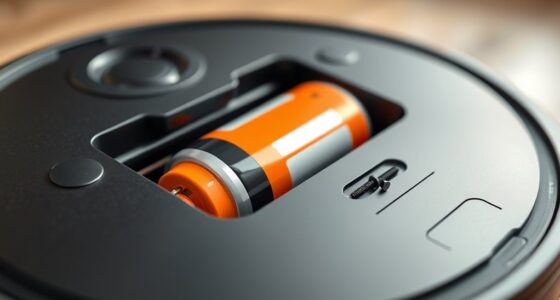
You wonder how long your Roomba’s battery lasts? It typically runs for about 90 minutes, but this depends on the model and how demanding the cleaning session is. The battery lifespan can decline over time, requiring a replacement to maintain performance. Charging time usually takes around 3 hours, so you’ll want to plan your cleaning schedule accordingly. Stay attentive to these details to keep your Roomba running smoothly.
Is Roomba Compatible With Smart Home Systems?
Yes, your Roomba is compatible with smart home systems. It easily integrates with popular voice assistants like Alexa and Google Assistant, allowing you to control it with simple voice commands. You can schedule cleanings or start it remotely through your smart home app. This smart home compatibility and voice assistant integration make maintaining a clean home more convenient, saving you time and effort.
As an affiliate, we earn on qualifying purchases.
Conclusion
Like a quiet guardian patrolling your home, Roomba transformed cleaning from a tedious chore into a seamless dance. It’s more than just a robot; it’s a pioneer carving paths through uncharted territory, turning chaos into order. As you watch it glide effortlessly, remember that iRobot’s invention is a symbol of innovation, reminding you that even small ideas can sweep through the world, changing lives one sweep at a time.
As an affiliate, we earn on qualifying purchases.
Robot vacuum with obstacle avoidance
As an affiliate, we earn on qualifying purchases.
As an affiliate, we earn on qualifying purchases.
NFL season / tailgating Picks
team gear
As an affiliate, we earn on qualifying purchases.