If your robot vacuum avoids dark surfaces, it’s likely because its sensors mistake shadows or low-reflectivity areas for obstacles or hazards. These sensors are designed to protect the device from damage or getting stuck, but dark floors or rugs can cause them to misinterpret the area, leading to missed spots. Advances in sensor tech aim to fix this issue, and you’ll discover more about how newer models are improving their navigation and cleaning today.
Prime for Young Adults — start your free trial
Fast free delivery, streaming and member deals for eligible 18–24 year olds.
As an affiliate, we earn on qualifying purchases.
Key Takeaways
- Sensors interpret dark surfaces as obstacles or drops to prevent damage or entrapment.
- Dark-colored rugs or floors can cause sensors to malfunction or falsely detect hazards.
- Dirt detection sensors may underperform on dark surfaces, leading to missed debris.
- Sensor misinterpretation results in uneven cleaning, with some areas skipped or less cleaned.
- Advances in sensor technology aim to improve differentiation between dark surfaces and hazards.
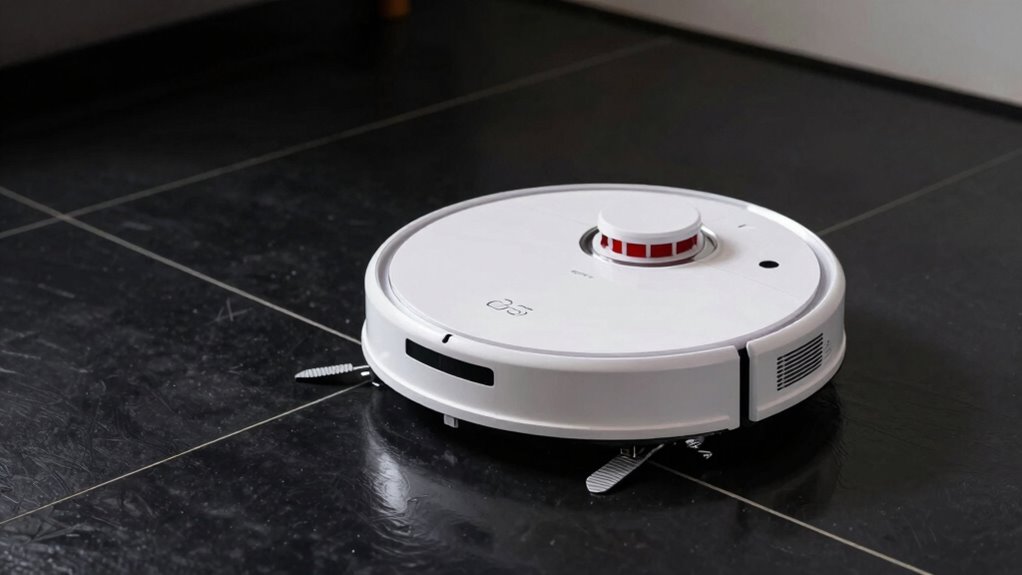
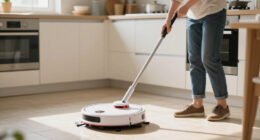
Many robot vacuums struggle to clean dark surfaces because they rely on sensors that interpret shadows as drops or obstacles, causing the devices to avoid these areas entirely. This limitation stems from their obstacle navigation systems, which are designed to prevent damage or entrapment. When sensors detect a shadow or a dark patch, the vacuum often perceives it as a potential hazard, prompting it to change course or stop altogether. Consequently, your dark-colored rugs, carpets, or floors may remain uncleaned, defeating the purpose of automation.
Dirt detection is another critical feature that can be affected by a vacuum’s sensitivity to dark surfaces. Many models use optical or infrared sensors to identify areas with higher dirt levels, increasing cleaning intensity accordingly. However, on dark surfaces, these sensors may malfunction or provide inaccurate readings, leading the vacuum to underestimate the amount of dirt. This means that even if the vacuum moves over a dark area, it might not recognize the need for additional cleaning, leaving debris behind. The combination of obstacle navigation and dirt detection capabilities can be compromised in these conditions, resulting in less effective cleaning in darker zones.
The problem is especially frustrating because it’s not always obvious that your robot vacuum has skipped certain areas. You might notice uneven cleaning patterns, with some spots looking untouched or dirtier than others. This is often due to the vacuum’s sensors misinterpreting dark surfaces as obstacles or drops. Some newer models attempt to address this issue by employing more advanced sensors or algorithms that better distinguish shadows from actual hazards, but many still struggle with certain materials or lighting conditions. Improving sensor technology is a key focus in the development of newer robot vacuums to overcome these limitations. Developers are also exploring alternative sensor methods to improve overall accuracy and reliability across different surfaces. Additionally, manufacturers are working on sensor calibration techniques that allow devices to adapt to specific environments and lighting conditions for better performance, which can help mitigate issues caused by sensor sensitivity.
robot vacuum dark surface navigation
As an affiliate, we earn on qualifying purchases.
As an affiliate, we earn on qualifying purchases.
Frequently Asked Questions
Do All Robot Vacuums Avoid Dark Surfaces Equally?
Not all robot vacuums avoid dark surfaces equally. Some models use advanced sensor calibration and surface detection technology, allowing them to better recognize dark areas and navigate more effectively. Cheaper or older units might struggle with dark surfaces because their sensors can’t distinguish them from drops or gaps. Upgrading to a robot with improved sensor calibration enhances its ability to detect and clean dark surfaces without avoiding them.
Can Changing the Sensor Settings Prevent Dark Surface Avoidance?
Changing sensor settings can help prevent dark surface avoidance. Think of sensor calibration like tuning a musical instrument; when properly adjusted, it detects surfaces accurately. Some robot vacuums allow you to adjust or disable surface detection features, reducing the chance of avoiding dark areas. By tweaking these settings, you improve sensor calibration and surface detection, making your vacuum less likely to skip over dark floors and more effective at cleaning every corner.
Are There Specific Brands Better at Cleaning Dark Floors?
Some brands are better at cleaning dark floors because they use advanced sensor calibration and surface detection technology. Brands like iRobot Roomba and Roborock have sensors that adapt more effectively to different surface colors, reducing avoidance issues. These vacuums can better recognize dark surfaces without mistaking them for drops or obstacles, ensuring thorough cleaning. Investing in models with superior sensor calibration improves your robot vacuum’s ability to handle dark floors efficiently.
How Do Dark Surfaces Affect Robot Vacuum Battery Life?
Dark surfaces can be like a black hole for your robot vacuum’s battery life, causing it to work harder and drain faster. When sensors struggle with calibration on dark floors, the vacuum may need extra passes, reducing battery optimization. This means you might find your device’s battery depletes quicker, especially if it keeps recalibrating to navigate properly. Regular sensor cleaning and calibration can help maintain efficiency and extend battery life.
Is Dark Carpet More Likely to Be Avoided Than Dark Hardwood?
Dark carpet is more likely to be avoided than dark hardwood because robot vacuums rely on surface perception to navigate. The sensors can mistake dark carpets for drop-offs or obstacles, causing the vacuum to avoid them. Hardwood surfaces reflect light better, making detection easier. As a result, the robot’s navigation system perceives dark carpet differently, which increases the chances of it avoiding dark carpet compared to dark hardwood.
As an affiliate, we earn on qualifying purchases.
Conclusion
So, next time your robot vacuum skips over dark spots, remember it’s not ignoring you—it’s just following its programming. The theory that sensors mistake dark surfaces for drops or stairs holds some truth; it’s a safety feature, not a flaw. While it might seem inconvenient, understanding this helps you work around it. Embrace the quirks, and your robot will keep your floors clean without missing a beat—dark or light.
robot vacuum with dirt detection on dark floors
As an affiliate, we earn on qualifying purchases.
As an affiliate, we earn on qualifying purchases.
As an affiliate, we earn on qualifying purchases.
Fall Picks
fall essentials
As an affiliate, we earn on qualifying purchases.