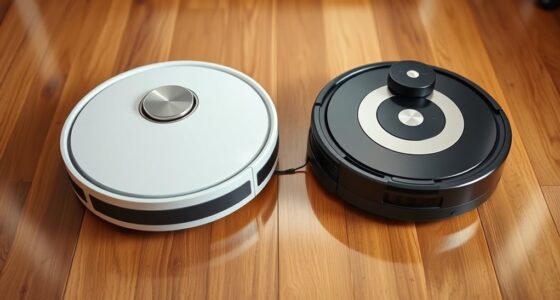

Robot vacuums may struggle with black carpets and dark floors because sensors can have trouble detecting obstacles and dirt on dark surfaces. This can cause navigation errors and missed spots. Some models include features to better handle dark floors, like calibration and special modes. Regular maintenance and choosing advanced models can improve cleaning efficiency. If you want to discover how to make your robot work better on dark surfaces, keep exploring these solutions.
Key Takeaways
- Modern robot vacuums often feature sensors that can be calibrated to navigate dark floors effectively.
- Dark carpets and black surfaces may still pose challenges for obstacle detection and dirt visibility.
- Some models include special modes or virtual walls to improve cleaning on dark or black flooring.
- Regular sensor cleaning and proper calibration help prevent false obstacle readings on dark surfaces.
- Choosing a robot vacuum with advanced sensors increases cleaning efficiency on black carpets and dark floors.

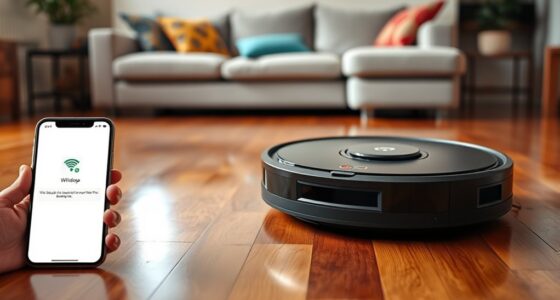
Robot vacuums have revolutionized home cleaning, but if your floors are dark or black, you might find that these devices struggle to do their job effectively. This issue primarily stems from the way many robot vacuums detect obstacles and dirt. Dark surfaces can confuse their sensors, causing them to misjudge their surroundings or avoid areas altogether. To address this, proper sensor calibration becomes crucial. When you calibrate your robot’s sensors, you’re essentially teaching it to better distinguish between actual obstacles and the floor’s surface. This process involves adjusting the sensors so they can accurately detect the boundaries and prevent false readings caused by dark colors. Many modern robot vacuums come with automatic calibration features, but in some cases, manual calibration might be necessary. Carefully following the manufacturer’s instructions can improve the device’s ability to navigate dark floors confidently.
Proper sensor calibration helps robot vacuums navigate dark floors more effectively.
Dust detection is another critical aspect that impacts cleaning performance on black carpets and dark floors. These surfaces often hide dirt and debris more effectively, making it harder for the vacuum’s sensors to identify areas needing extra attention. If your robot vacuum isn’t equipped with effective dust detection technology, it might miss spots or give a false impression of cleanliness. Upgrading to a model with advanced dust detection sensors can enhance cleaning efficiency. These sensors use optical or acoustic technologies to identify areas with higher dirt concentrations, prompting the vacuum to spend more time cleaning those spots. When your vacuum can accurately detect dust, it can adapt its cleaning pattern, ensuring even the darkest carpets get the thorough cleaning they need.
In addition to sensor calibration and dust detection, some robot vacuums feature specific settings or modes designed for dark surfaces. Exploring these options can improve performance considerably. You might also consider using boundary strips or virtual walls to direct your vacuum away from overly dark or problematic areas until it’s better calibrated. Regularly cleaning the sensors and ensuring they’re free of dust and debris also helps maintain peak function.
Ultimately, the key to cleaning black carpets effectively with a robot vacuum lies in understanding these technological nuances. Proper sensor calibration ensures your device can navigate and avoid false obstacles, while enhanced dust detection helps it identify dirt in hidden spots. By choosing the right model and maintaining it well, you can enjoy the convenience of automated cleaning, even on the darkest floors.
Frequently Asked Questions
Do Robot Vacuums Have Sensors to Detect Dark Floors?
Robot vacuums generally don’t have sensors that reliably detect dark floors due to sensor limitations. These sensors often struggle under varying lighting conditions, making it hard for the vacuum to distinguish dark surfaces from drops or obstacles. As a result, you might notice the vacuum hesitating or avoiding dark areas. To prevent mishaps, consider models with advanced sensors or modify lighting conditions to improve detection and ensure a thorough clean.
Can Dark Floors Affect Robot Vacuum Navigation?
Dark floors can indeed affect your robot vacuum’s navigation because of color contrast and sensor limitations. Imagine your vacuum’s sensors struggling to distinguish the dark surface from obstacles, causing it to slow down or miss spots. This happens because some sensors can’t pick up the contrast needed to detect edges or stairs on dark floors, making navigation trickier. You might need to adjust settings or choose models with advanced sensors for better accuracy.
Are There Specific Robot Vacuums Designed for Dark or Black Carpets?
Some robot vacuums feature advanced color recognition and floor compatibility, making them better suited for dark or black carpets. These models use sophisticated sensors to distinguish between different floor types and colors, ensuring effective cleaning without getting stuck or missing spots. When shopping, look for vacuums with strong navigation systems and adjustable settings for dark floors, so you can confidently clean black carpets without worrying about detection issues or damage.
How Do Dark Floors Impact the Cleaning Efficiency of Robot Vacuums?
Dark floors can reduce your robot vacuum’s cleaning efficiency due to sensor limitations caused by low color contrast. You might notice it struggles to detect dirt or edges, leading to missed spots. To improve performance, verify your vacuum has advanced sensors or use manual spot cleaning in dark areas. Regularly clearing sensors and choosing models with better contrast detection can help your robot effectively clean dark floors.
Can Robot Vacuums Damage Black Carpets or Dark Flooring?
No, robot vacuums typically won’t damage black carpets or dark flooring if they’re compatible. Think of your vacuum as a gentle gardener, carefully tending your dark carpet maintenance without harm. Modern models have sensors to prevent scratching or misjudging surfaces. Just make certain you select a robot vacuum designed for dark surfaces, and you’ll enjoy efficient cleaning without worries about damage. Your dark floors will stay pristine and well-maintained.
Conclusion
So, don’t let dark carpets scare you away from robot vacuums. With the right sensors and features, these little helpers can navigate even the blackest floors with confidence. Think of them as your trustworthy sidekicks, ready to tackle dust and debris without missing a beat. Remember, choosing the right model is like giving your home a shield of armor. With a bit of research, you’ll keep your dark floors spotless and your worries at bay.