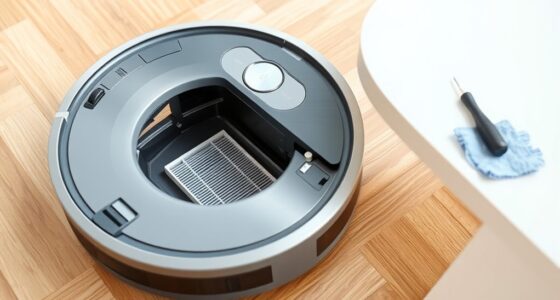
If your robot vacuum gets wet, immediately turn it off, unplug it, and remove any detachable parts like the dustbin or brushes. Blot away excess water gently and place the device upright in a well-ventilated area to dry naturally for at least 24 to 48 hours, using silica gel packets or a fan on low if possible. Avoid heat sources and don’t try to power it on until you’re sure it’s completely dry. For detailed steps, continue exploring safe drying methods.
Key Takeaways
- Immediately turn off, unplug, and remove detachable parts to prevent water from causing further damage.
- Gently blot excess water with a soft cloth and avoid heat sources like hairdryers.
- Place the vacuum upright in a well-ventilated area for natural air drying for 24-48 hours.
- Use silica gel packets or a fan on low to help absorb moisture without forcing airflow into openings.
- Do not power on until fully dry; consult manufacturer support or a professional if unsure about internal moisture.
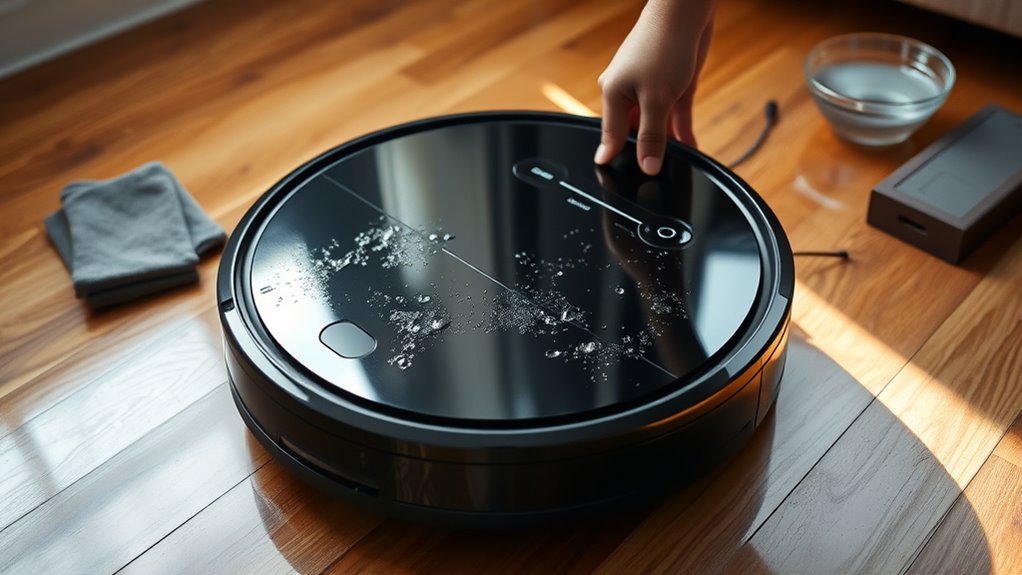
When your robot vacuum accidentally gets wet, it can cause immediate concern about damage and malfunction. Water damage is a serious issue because electronic devices are highly sensitive to moisture. The first step is to act quickly to minimize the impact. The key is to prevent water from seeping into internal components, which could lead to corrosion or short circuits. To do this, carefully turn off the robot vacuum and unplug it from any power source. Avoid trying to turn it on again until you’re sure it’s completely dry.
Act quickly to turn off and unplug your robot vacuum to prevent water damage and internal harm.
Once powered down, gently remove any detachable parts, such as the dustbin, brushes, or filters. Use a soft, absorbent cloth to blot away as much water as possible from the surface and accessible areas. Do not use a hairdryer or any heat source, as high temperatures can damage delicate circuits or warp plastic parts. Instead, focus on effective drying techniques to eliminate residual moisture. Air drying is often the safest method—place the vacuum in a well-ventilated area, preferably upright, and allow it to dry naturally for at least 24 to 48 hours. If you have silica gel packets or desiccants, place them nearby to absorb moisture more efficiently.
In some cases, you might consider using a fan to increase airflow around the device, but keep the fan on a low setting and avoid blowing directly into any openings. It’s essential to be patient; rushing the drying process may trap moisture inside, increasing the risk of water damage. If you notice any water inside the device or suspect water has reached internal circuitry, resist the temptation to turn it on again. Attempting to power it up prematurely can cause short circuits, further damaging the device.
Additionally, understanding the navigation and mapping features of your robot vacuum can help you identify potential areas where water might have entered during the incident. If you’re unsure whether the device has dried thoroughly, it’s best to consult a professional or contact the manufacturer’s support team. They can advise whether your vacuum needs repairs or if there’s a risk of further damage. Remember, water damage isn’t always immediately visible, so thorough drying is vital for safe operation. Taking these drying techniques seriously can save you from costly repairs or replacement down the line. Acting swiftly and patiently ensures you give your robot vacuum the best chance to recover and continue functioning properly after getting wet.
Frequently Asked Questions
Can I Dry My Robot Vacuum With a Hairdryer?
You can use a hairdryer for DIY drying your robot vacuum, but do so with caution. Keep the hairdryer on a low or cool setting, and hold it at a safe distance to avoid damaging sensitive parts. Never aim directly at the motor or battery area. Remember, excessive heat can cause more harm than good, so proceed carefully and consider air drying in a well-ventilated space instead.
Should I Contact Customer Support After a Spill?
A stitch in time saves nine, so you should contact customer support after a spill. Water damage can silently affect your robot vacuum’s components, risking long-term issues. Reaching out promptly allows experts to guide you through proper steps or arrange repairs if needed. Don’t delay—getting professional advice helps prevent further damage and ensures your vacuum stays in top shape. Always trust customer support when water damage occurs.
How Long Should I Let It Dry Before Turning It On?
You should let your robot vacuum dry for at least 24 to 48 hours before turning it on. Use drying techniques like placing it in a dry, well-ventilated area and avoiding direct heat, which can cause further water damage. Make sure all components are thoroughly dry to prevent electrical issues. Patience is key to avoiding long-term damage from water. Once you’re confident it’s completely dry, you can safely power it back on.
Is There a Special Cleaning Process After Water Exposure?
Think of cleaning your robot vacuum after water exposure like giving it a gentle spa day. You should perform water damage repair by carefully inspecting and removing any debris, then use soft, damp cloths for cleaning techniques to wipe down affected areas. Avoid harsh chemicals, and make sure it’s completely dry before turning it back on. This careful process helps prevent corrosion and guarantees your vacuum stays in top shape.
Will My Warranty Cover Water Damage?
Your warranty likely won’t cover water damage, as most manufacturers exclude it from coverage. If your robot vacuum gets wet, avoid claiming warranty repair for water damage, and instead, focus on drying it thoroughly. Check your warranty terms carefully, because water damage is usually considered user damage. To prevent future issues, keep your vacuum away from spills, and consider additional waterproofing measures if needed.
Conclusion
If your robot vacuum takes an unexpected swim, don’t panic—think of it as a tiny underwater rescue mission! Act quickly, dry it off, and give it time to recover. With the right care, it might just bounce back like nothing happened, ready to conquer your floors again. Remember, a wet vacuum isn’t the end of the world—just a dramatic rescue story waiting to be told. Stay calm, act fast, and your robot will be back in action before you know it!