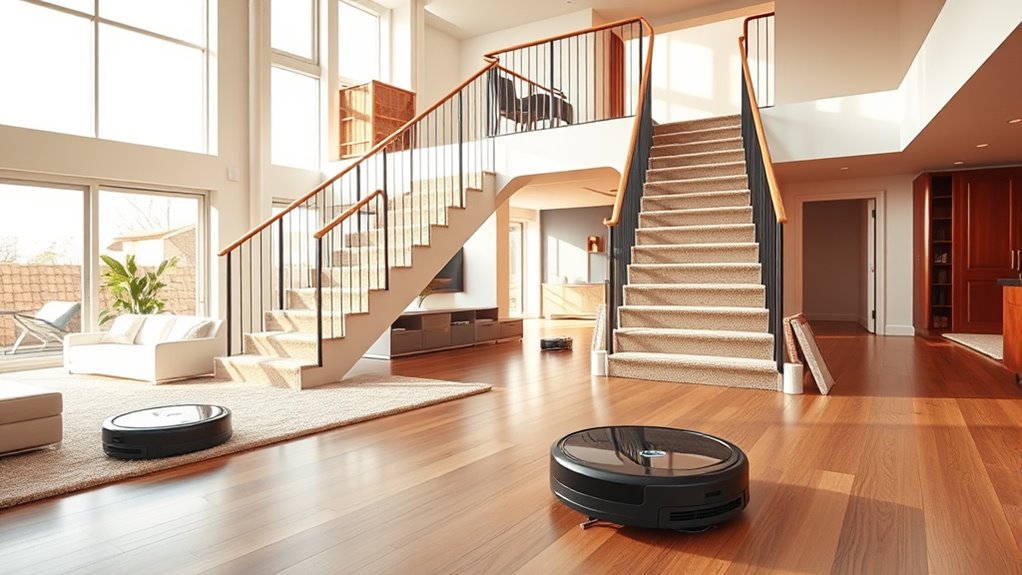

To clean multiple floors efficiently, choose a multi-floor robot vacuum with smart mapping and scheduling features. Place the charging dock centrally and clear pathways on each level. Use scheduled cleaning times to automate the process, especially when you’re away or asleep. Guarantee safety by keeping stairways clutter-free and monitoring the vacuum’s navigation. Discover more tips to maximize your robot vacuum’s performance across your home’s different levels.
Key Takeaways
- Multi-floor robot vacuums can automatically switch between levels, simplifying home cleaning routines.
- Proper scheduling ensures effective cleaning on each floor without manual intervention.
- Safety features like cliff sensors prevent vacuums from falling down stairs during operation.
- Store the vacuum centrally near staircases and clear obstacles for smooth multi-level cleaning.
- Regular maintenance of sensors and adherence to safety precautions optimize vacuum performance across floors.
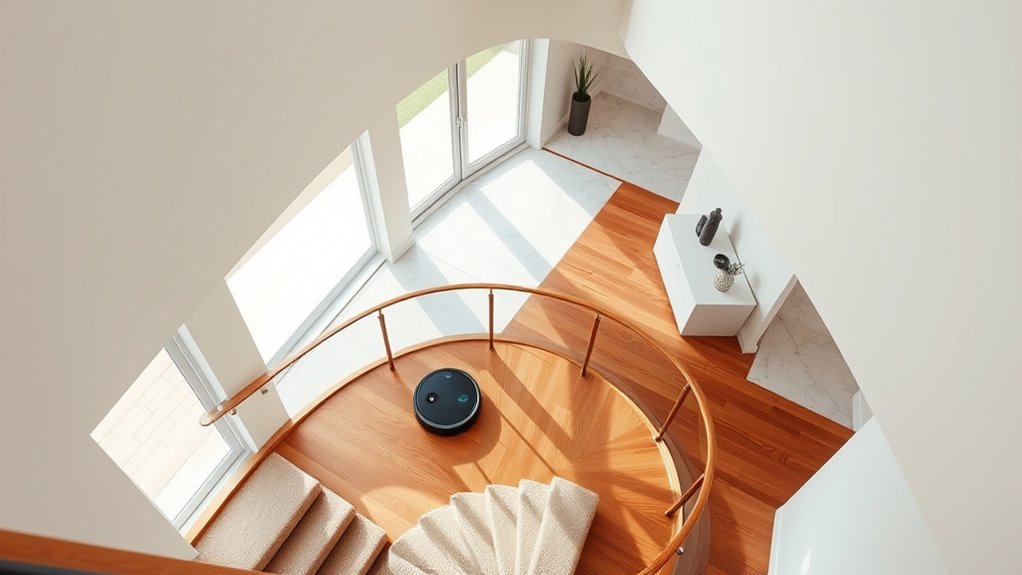
Living in a multi-story home can make cleaning a challenge, especially when it comes to keeping every floor spotless. Navigating stairs with a traditional vacuum can be risky, so investing in a robot vacuum designed for multiple floors is a smart move. These devices can automatically switch between levels, saving you time and effort. However, to maximize their efficiency and safety, you need to consider staircase safety and vacuum scheduling carefully.
Staircase safety is crucial when using robot vacuums on different floors. While most modern robots are equipped with sensors to avoid falling down stairs, these sensors aren’t foolproof. You should ensure that the robot vacuum has an effective cliff detection feature to prevent it from tumbling over the edge. Regularly check the sensors and keep the staircases clear of clutter, cords, or loose rugs that could trip up the device. It’s also wise to establish a routine where the robot only operates when you’re around to supervise, especially if your staircase has intricate railings or open areas that might confuse the vacuum’s navigation system.
Ensure robot vacuums have reliable cliff sensors and keep stairways clutter-free for safe multi-floor cleaning.
Vacuum scheduling becomes your best friend in managing multiple floors efficiently. Setting a schedule allows your robot vacuum to clean at ideal times, such as when you’re out or asleep. Most models come with companion apps that let you customize cleaning times for each level. For example, you might schedule the main living areas to be cleaned during the day and bedrooms at night. By doing so, you keep your home consistently tidy without manually starting the vacuum each time. Additionally, scheduling helps conserve battery life and prevents the vacuum from running when it’s unnecessary. Remember to adjust the schedule periodically, especially if you notice high-traffic areas requiring more frequent cleaning or if your household routines change.
To make the most of your multi-floor cleaning, designate specific zones for your robot vacuum on each level. Store it in a central location or near the staircase for easy access. Before each scheduled cleaning, clear the floors of any obstructions and make sure the charging dock is in a safe, accessible spot. This way, your vacuum can seamlessly transition between floors without interruption or safety concerns. Incorporating navigation and mapping explainers can further improve the robot’s efficiency by helping it recognize and adapt to different floor layouts. Combining proper staircase safety measures with a well-planned vacuum schedule ensures your robot takes care of all your floors efficiently and safely. With these strategies in place, you’ll enjoy a cleaner home with less effort and fewer worries about accidents or missed spots.
Frequently Asked Questions
How Do Robot Vacuums Handle Different Floor Types?
Robot vacuums handle different floor types well thanks to features like carpet detection and smooth floor shift. When it detects a carpet, it automatically increases suction power for a thorough clean. For smooth floors, it adjusts accordingly. You just need to make certain your robot can recognize these changes; most modern models do, allowing seamless cleaning across various surfaces without you needing to intervene.
Can Robot Vacuums Automatically Detect and Switch Between Floors?
Sure, your robot vacuum might seem to magically detect and switch floors, but in reality, it’s just clever floor detection and multi-floor navigation. Some models have sensors and mapping tech that recognize changes in surface types or layout, prompting the vacuum to adapt. While not perfect, this allows smoother progressions. So, yes, your robot vacuum can handle different floors, but don’t expect it to do so with the finesse of a human—yet.
What Is the Battery Life for Multi-Floor Cleaning?
Your robot vacuum’s battery longevity for multi-floor cleaning typically lasts around 60 to 120 minutes, depending on the model and cleaning intensity. Power management features help optimize battery life by adjusting suction and route efficiency. When switching floors, verify your vacuum’s battery is sufficiently charged to complete cleaning tasks. Regularly charging and using smart power management settings can extend runtime, making multi-floor cleaning more effective and less disruptive.
How Do I Prevent Robot Vacuums From Falling Down Stairs?
To prevent your robot vacuum from falling down stairs, make certain it has reliable staircase safety features like advanced vacuum edge detection. Keep sensors clean and regularly update the firmware for peak performance. Place boundary strips or virtual walls around staircases, and consider using physical barriers if necessary. These measures help your vacuum navigate safely, avoiding dangerous falls and keeping your home protected.
Are There Specific Models Better Suited for Multi-Story Homes?
Think of your home like a complex labyrinth; some robot vacuums are better explorers. You want models with advanced floor mapping and multi-floor navigation, like iRobot Roomba i7+ or Shark IQ. These models easily switch between floors, remember layouts, and avoid obstacles. To keep your home spotless, choose vacuums designed for multi-story homes, ensuring they intelligently navigate each level without getting lost or needing constant supervision.
Conclusion
Now that you know how to navigate cleaning multiple floors, you can truly stay ahead of the dust bunnies. Using robot vacuums on different levels makes the job easier and keeps your home spotless. Just remember, don’t bite off more than you can chew—set up a routine and stick to it. With a little planning, you’ll keep every floor shining without breaking a sweat. It’s all about working smarter, not harder.