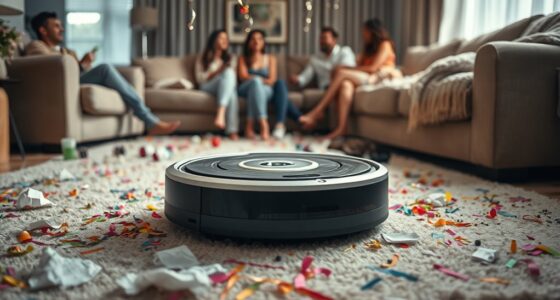
Most robot vacuums are quiet enough for night cleaning, emitting between 55 and 65 decibels, similar to a soft conversation. Many models now feature advanced noise-reduction tech, soft brushes, and vibration controls to keep sounds minimal. Brands highlight quiet operation, and some models emphasize night-friendly modes. If you want to find the best options for a peaceful sleep while cleaning effectively, there’s more to explore in the details behind these quiet technologies.
Key Takeaways
- Look for models operating at or below 55 decibels for minimal nighttime disturbance.
- Choose vacuums with advanced sound-insulating materials and vibration-reduction features.
- Opt for models with soft, rubberized brushes and optimized wheel designs to lower noise.
- Check product specifications and customer reviews for confirmed quiet operation during night use.
- Consider brands that market night-friendly or ultra-quiet cleaning modes for added peace.
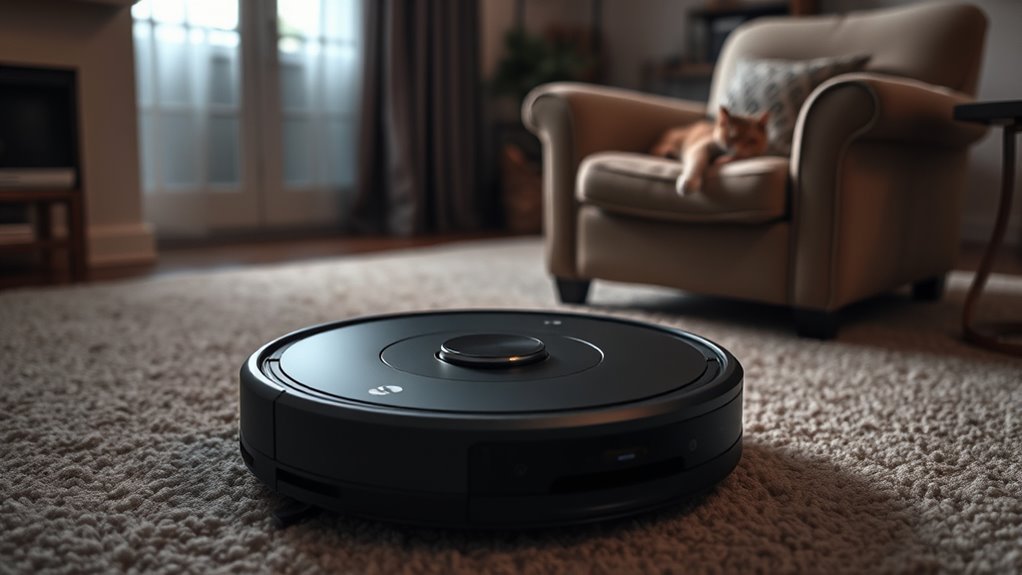
Have you ever wondered how loud your robot vacuum really is? When you’re trying to wind down for the night or get some peace while working from home, the last thing you want is a noisy device disrupting your calm. Fortunately, many modern robot vacuums are designed with quiet cleaning technology, helping you maintain a peaceful environment without sacrificing cleanliness. The key is understanding robot vacuum noise levels and choosing models engineered to operate quietly.
Today’s quiet robot vacuums use innovative motor designs and noise-reduction features to minimize disturbance. These vacuums typically produce sound levels ranging from 55 to 65 decibels, comparable to a soft conversation or background music. Some models even go lower, making them ideal for nighttime cleaning. When shopping, look for units explicitly advertised as quiet or featuring quiet cleaning technology. These often include sound-insulating materials or optimized motor placements to dampen noise.
Quiet robot vacuums operate at 55-65 decibels, ideal for nighttime cleaning and peaceful home environments.
The most effective quiet cleaning technology involves advanced brushless motors that operate smoothly and quietly. Manufacturers invest in sound-dampening components and vibration-reduction systems to keep noise levels down. You’ll find that many high-end models incorporate adaptive cleaning modes that adjust suction power based on surface type, which also helps reduce unnecessary noise. For example, when cleaning hard floors, the vacuum can run at a lower setting, consequently decreasing noise. When more power is needed, it automatically increases suction without creating a loud disturbance.
Another factor influencing robot vacuum noise levels is the design of the brushes and wheels. Models with soft, rubberized brushes tend to generate less noise compared to those with traditional bristles. Likewise, optimized wheel design prevents squeaking and rattling sounds during operation. Choosing a model with a low-profile, sleek design not only helps with navigation but also contributes to quieter operation since it reduces vibrations and rattling against furniture and walls.
If you want a robot vacuum that won’t disturb your sleep or work, pay attention to reviews and specifications related to noise. Many brands now highlight their quiet cleaning technology, especially for models marketed as night-friendly. Keep in mind that the size of the motor and the overall build quality directly impact noise levels. A well-built, quiet robot vacuum can clean your home effectively without waking up the household or interrupting your concentration. Additionally, sound insulation materials in some models further contribute to reducing operational noise. So, by understanding robot vacuum noise levels and opting for models with quiet cleaning technology, you can enjoy a cleaner home as a result of the noise hassle.
Frequently Asked Questions
Do Robot Vacuums Have Adjustable Noise Levels?
Yes, robot vacuums often have noise level customization features, allowing you to modify their sound output to suit your needs. Some models incorporate soundproofing technology, reducing noise during operation. You can usually control these settings via a mobile app or on the device itself, helping you clean quietly at night without disturbance. Look for models with adjustable noise levels and soundproofing tech to guarantee a peaceful environment while maintaining cleaning performance.
How Does Noise Impact Robot Vacuum Effectiveness?
Noise impacts robot vacuum effectiveness by potentially disturbing your environment, especially at night. When noise reduction features are used, they help the vacuum operate more quietly, allowing you to clean without disruption. Sound insulation can also improve comfort during cleaning sessions. Reduced noise enables better focus and less disturbance, ensuring the vacuum can work efficiently while maintaining a peaceful home atmosphere.
Are There Specific Brands Known for Ultra-Quiet Models?
Think of some brands as the silent ninjas of cleaning—they excel in quiet operation. Brands like Eufy, iRobot, and Roborock are known for ultra-quiet models, earning praise in user reviews for their noise levels. These brands have solid reputations, making them reliable choices for night cleaning. When choosing, look at user reviews to confirm the model’s noise performance matches your need for a peaceful sleep while keeping your home spotless.
Can Noise Levels Vary Based on Floor Type?
Yes, noise levels can vary based on your flooring acoustics and sound absorption qualities. Hard surfaces like tile or hardwood reflect sound, making the vacuum seem louder, while carpets absorb sound, reducing noise. If you want a quieter cleaning experience at night, consider models designed for minimal sound output and check how your floor type influences noise. Adjusting the vacuum’s settings or adding rugs can also help lessen noise levels.
What Features Help Reduce Noise During Operation?
You might think silent operation is impossible, but many robot vacuums feature sound insulation and quiet motors that considerably reduce noise. Look for models with advanced noise reduction technology, adjustable suction power, and noise-dampening materials. These features work together to create a peaceful cleaning experience, especially at night. By choosing such models, you guarantee your robot vacuum operates quietly, allowing you to rest undisturbed while your floors stay clean.
Conclusion
Choosing a quiet robot vacuum is like finding a peaceful night’s star amid a busy sky. When you select a model with gentle noise, it becomes your silent partner, blending seamlessly into your nightly routine. Its soft hum symbolizes serenity, allowing your home’s tranquility to shine through. With the right device, you create an environment where cleanliness and calm coexist, turning nightly cleaning into a quiet dance beneath a peaceful, watchful sky.