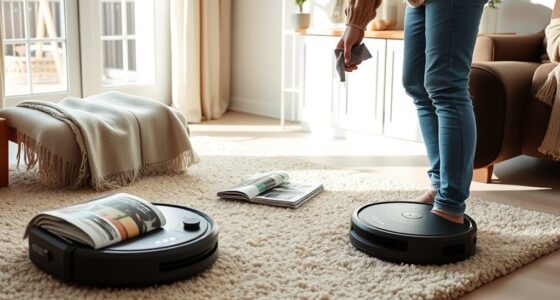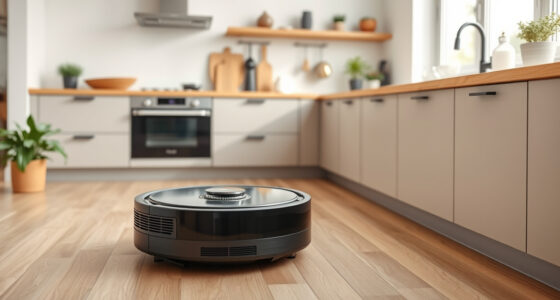
Your robot vacuum uses HEPA filters to trap dust, pollen, and allergens, helping you breathe easier. It also relies on sensors like infrared, ultrasonic, and cameras to detect obstacles and map your home, preventing bumps and missed spots. Laser navigation creates detailed routes for efficient cleaning, while sensors and lasers work together for smarter obstacle avoidance and safety. Want to discover how these technologies improve your cleaning routine? Keep exploring to learn more.

Get home appliances delivered free with Prime
- Fast, free delivery on millions of items
- Prime Video, Amazon Music and more included
- Member-only deals all year
Key Takeaways
- HEPA filters trap tiny particles, improving indoor air quality and reducing allergens.
- Sensors like infrared, ultrasonic, and bump detect obstacles and map environments for efficient navigation.
- Laser sensors create detailed home maps, enabling precise route planning and obstacle avoidance.
- Combining sensors and lasers allows real-time obstacle detection, fall prevention, and adaptive cleaning strategies.
- Advanced sensors and laser tech ensure safe operation, reduce collisions, and optimize cleaning performance.
As an affiliate, we earn on qualifying purchases.
The Role of HEPA Filters in Maintaining Air Quality
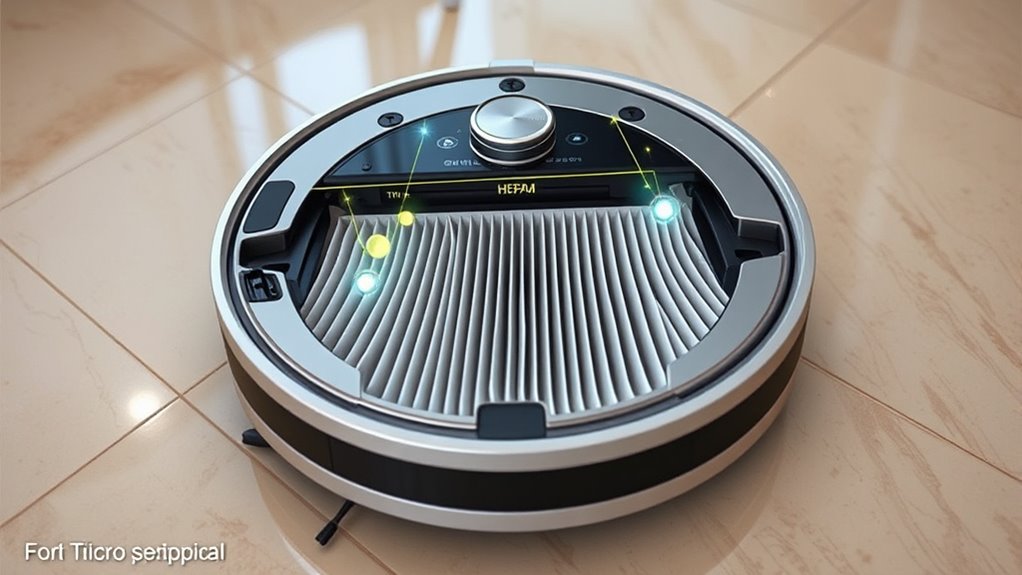
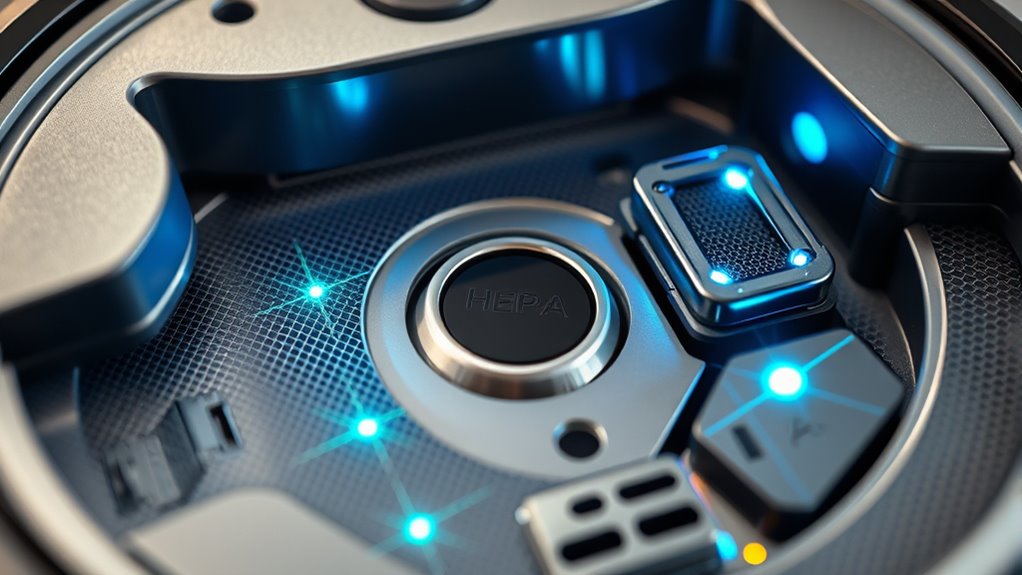
HEPA filters play a crucial role in keeping the air inside your home clean by trapping tiny particles that can cause allergies and respiratory issues. By capturing dust, pollen, pet dander, and other allergens, these filters improve overall air quality. Regular filter maintenance is essential to keep your vacuum’s HEPA filter functioning effectively; a dirty or clogged filter reduces its ability to trap particles and can even release trapped contaminants back into the air. Check and replace the filter as recommended by the manufacturer to maintain ideal performance. Proper filter maintenance ensures your vacuum continues to improve air quality, making your living space healthier and more comfortable. Staying attentive to filter upkeep maximizes the benefits of your robot vacuum’s HEPA filtration system.
As an affiliate, we earn on qualifying purchases.
How Sensors Detect Obstacles and Map Your Home
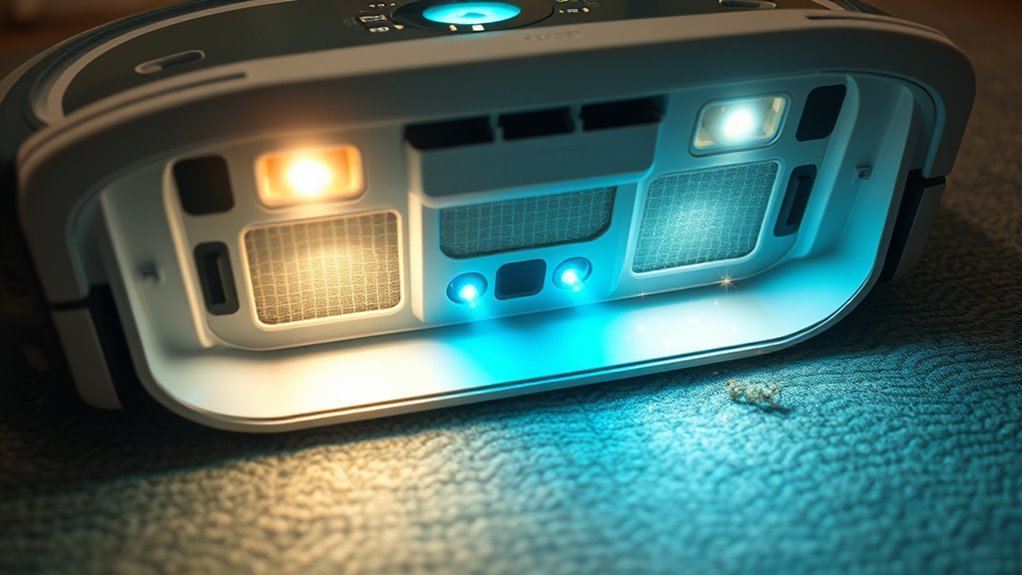
Modern robot vacuums rely on advanced sensors to navigate your home efficiently. These sensors use obstacle detection to identify objects and avoid collisions. They collect data that feeding into mapping algorithms, which create a virtual map of your space. This map helps the vacuum plan effective cleaning routes and avoid obstacles in real-time.
| Sensor Type | Function |
|---|---|
| Infrared Sensors | Detect objects and measure distance |
| Ultrasonic Sensors | Identify obstacles and room layout |
| Bump Sensors | Sense physical contact with objects |
| Cameras | Assist in mapping and obstacle detection |
Together, these sensors enable your robot vacuum to understand its environment, adapt to changes, and efficiently clean your home without missing spots or bumping into furniture.
As an affiliate, we earn on qualifying purchases.
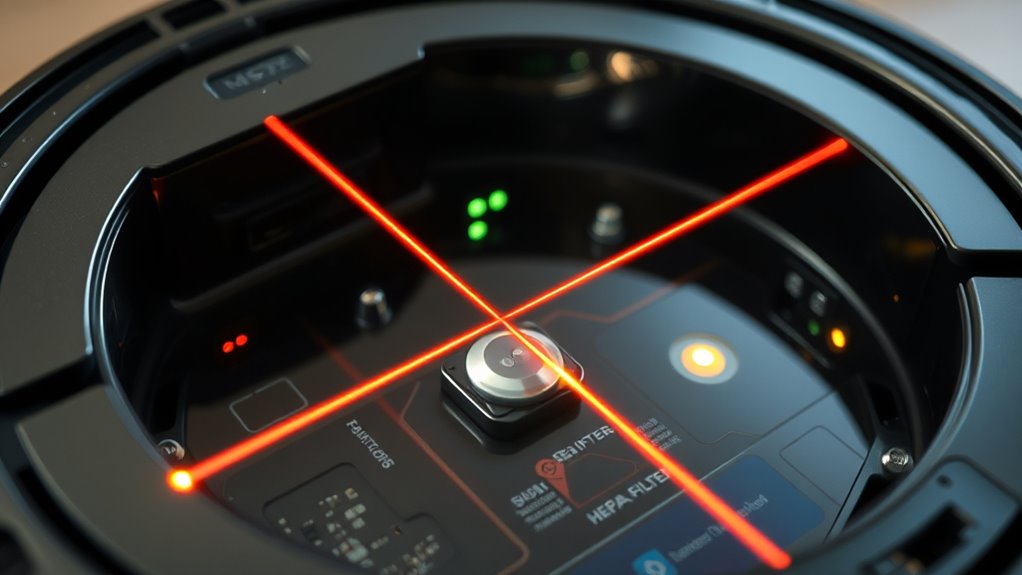
Laser navigation has revolutionized the way robot vacuums create precise cleaning paths by using laser sensors to scan and map your home in real-time. This technology allows your vacuum to efficiently plan routes, avoid obstacles, and cover every inch without unnecessary repetition. To keep your laser navigation system functioning at its best, regular robot vacuum maintenance is essential—cleaning sensors and ensuring the laser is unobstructed helps maintain accuracy. Additionally, laser navigation aids in battery life optimization by minimizing wasted movement, so your vacuum uses power efficiently and runs longer between charges. With this advanced navigation, you experience thorough cleaning while reducing wear on components, making your robot vacuum smarter and more reliable over time.
As an affiliate, we earn on qualifying purchases.
Combining Sensors and Lasers for Smarter Navigation
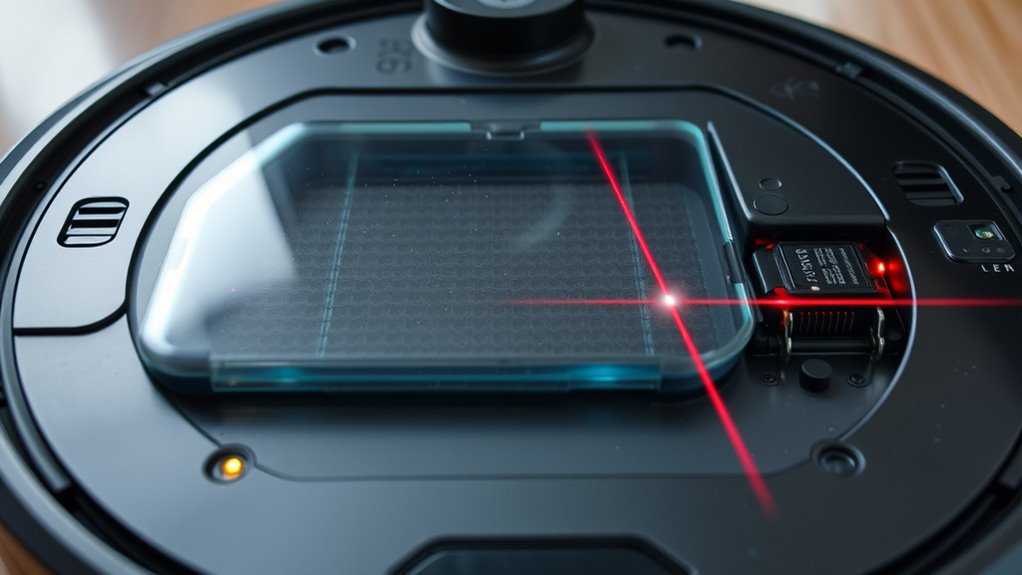
By integrating multiple sensors with laser navigation, your robot vacuum gains a more thorough understanding of its environment. Combining sensors like infrared, ultrasonic, and proximity detectors allows it to detect obstacles, avoid falls, and adapt to different surfaces in real time. AI integration processes this data on the fly, enabling smarter decision-making and smoother navigation. This synergy not only improves cleaning efficiency but also helps optimize battery usage by preventing unnecessary movements and redundant passes. As a result, your vacuum conserves power while maintaining thorough coverage. The blend of sensors and lasers creates a more intuitive system that responds dynamically to changes in your home, ensuring you get a cleaner space with less energy consumption. This smarter navigation system enhances performance and prolongs your device’s battery life.
The Importance of Dust Collection and Filtration Technologies
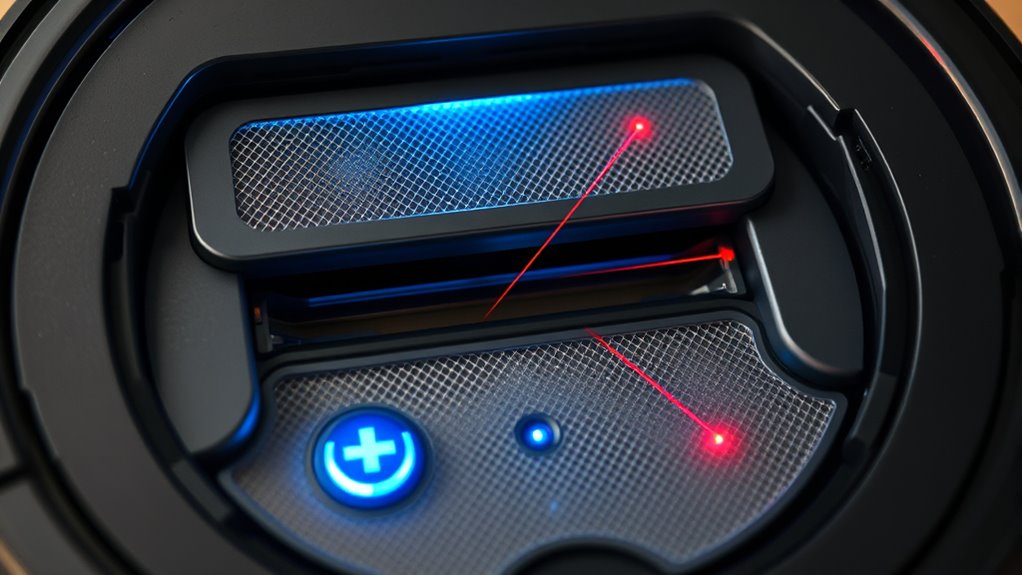
Good dust collection and filtration systems make your robot vacuum more effective and healthier to use. High filtration efficiency captures smaller particles, keeping your air cleaner. Accurate dust sensors guarantee your vacuum targets dirt precisely, saving you time and effort.
Filtration Efficiency Benefits
Have you ever wondered how your robot vacuum keeps your home so clean? It’s all about filtration efficiency benefits. Advanced filters, like HEPA, trap tiny dust particles, allergens, and pet dander more effectively, ensuring cleaner air and improved indoor air quality. These filtration benefits lead to noticeable efficiency improvements, meaning your vacuum doesn’t just sweep dirt but also prevents it from recirculating. Better filtration reduces clogging and maintains suction power longer, allowing your device to work more effectively over time. Additionally, high-quality filters prevent fine particles from escaping back into the environment, making your home safer and healthier. In short, superior filtration technology enhances performance, making your robot vacuum a more powerful ally in maintaining a spotless, allergen-free space.
Dust Sensor Accuracy
Accurate dust sensor technology plays a vital role in how effectively your robot vacuum maintains a clean home. When sensors are precise, they detect dust accumulation accurately, guaranteeing the vacuum targets areas needing the most attention. Proper sensor calibration is essential; if sensors aren’t calibrated correctly, they may misjudge dirt levels, leading to missed spots or unnecessary cleaning cycles. Regular calibration helps maintain sensor accuracy, preventing dust buildup from skewing readings. This ensures your vacuum responds appropriately to different levels of dust, improving overall cleaning efficiency. Inaccurate sensors can cause your device to over-clean or under-clean, wasting energy and time. Investing in well-calibrated sensors guarantees your vacuum performs reliably, keeping dust and debris under control while optimizing its cleaning powers.
Advances in Sensor and Laser Technologies for Enhanced Efficiency
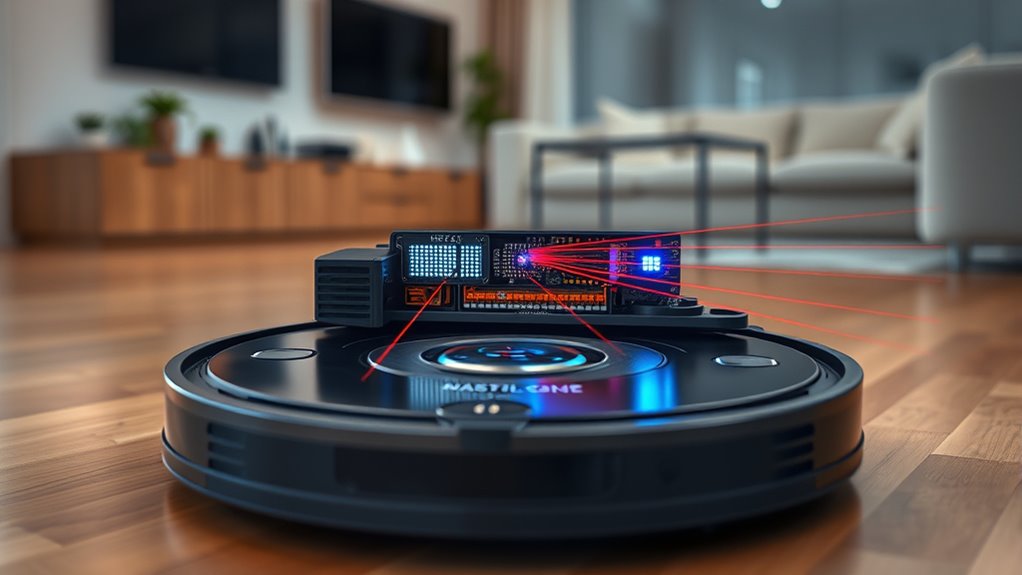
You’ll notice how laser navigation now provides pinpoint accuracy, helping your vacuum map rooms effortlessly. Dust detection sensors identify dirty spots, so the cleaner can focus on high-traffic areas. Real-time obstacle avoidance keeps your device moving smoothly without collisions or interruptions.
Laser Navigation Precision
How do robot vacuums navigate so precisely around obstacles and confined spaces? They rely on advanced laser navigation systems that boost mapping accuracy and refine navigation algorithms. These lasers create detailed, real-time maps of your home, enabling the robot to plan efficient paths and avoid obstacles smoothly. Improvements in laser technology have increased the speed and resolution of scans, resulting in more accurate navigation. This precision allows for thorough cleaning without missing spots or bumping into furniture unnecessarily. Plus, enhanced laser sensors adapt quickly to changes in your environment, maintaining ideal performance. The combination of high-resolution lasers and smarter algorithms ensures your robot vacuum navigates confidently and efficiently, saving time and energy while delivering a thorough clean.
- High-resolution laser sensors improve mapping detail
- Smarter navigation algorithms optimize path planning
- Real-time environment updates adapt to changes
Dust Detection Sensors
Ever wondered how robot vacuums detect dust and debris with such precision? It’s thanks to advanced dust detection sensors that continuously monitor air quality inside your home. These sensors analyze microscopic particles, helping your vacuum identify heavily soiled areas. When dust levels spike, the vacuum adjusts its cleaning pattern for thorough coverage. Modern dust sensors are highly sensitive, providing real-time feedback to maximize cleaning efficiency. They work in tandem with other sensors to distinguish between dust, debris, and air quality issues. This integration guarantees your vacuum doesn’t just clean blindly but intelligently targets areas needing extra attention. As a result, your home stays cleaner and healthier, with dust sensors playing a vital role in maintaining excellent air quality and guaranteeing no hidden dirt is left behind.
Real-Time Obstacle Avoidance
Building on the precision of dust detection sensors, modern robot vacuums now incorporate advanced obstacle avoidance systems that utilize cutting-edge sensor and laser technologies. These systems enable your vacuum to navigate efficiently, avoiding obstacles in real-time. AI integration enhances this process by allowing the robot to learn from past encounters, improving accuracy over time. Laser sensors create detailed maps of your space, helping the vacuum plan ideal routes while reducing collisions. This not only increases cleaning efficiency but also conserves battery longevity by preventing unnecessary movements. You benefit from smoother navigation, fewer interruptions, and longer cleaning sessions.
- Precise navigation with laser mapping
- Adaptive AI for obstacle recognition
- Battery-efficient path planning
Ensuring Safety and Preventing Collisions With Smart Tech
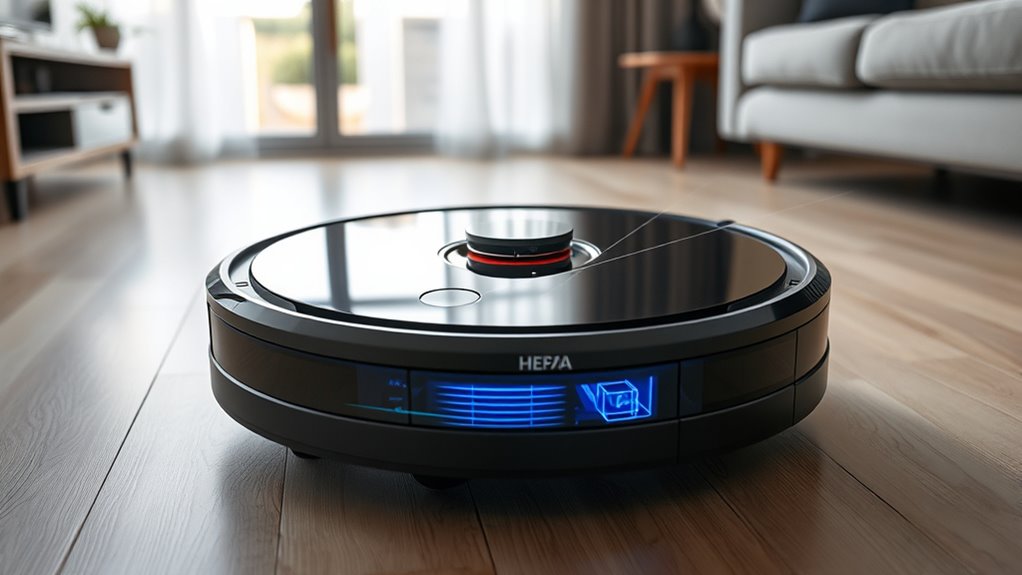
Smart technology in robot vacuums plays a crucial role in ensuring safety and preventing collisions. You rely on advanced sensors that detect obstacles and adjust the vacuum’s path in real time. Regular sensor calibration is key to maintaining accuracy, preventing false readings that could cause crashes. Additionally, air purification systems help keep the environment healthy, reducing dust and allergens that might interfere with sensor performance. By integrating these features, your vacuum can navigate more smoothly, avoiding furniture, walls, and even small objects. Some models even use laser sensors to map your home precisely, further enhancing safety. With continuous updates and smart calibration, these systems work seamlessly to protect both your belongings and your loved ones.
Frequently Asked Questions
How Often Should HEPA Filters Be Replaced in Robot Vacuums?
You should replace the HEPA filter in your robot vacuum every 3 to 6 months, depending on the filter lifespan and how often you use it. Regular replacement guarantees peak cleaning performance and air quality. If you notice reduced suction or increased dust, it’s a sign it’s time for a new filter. Check your manufacturer’s guidelines for specific replacement frequency, and consider more frequent changes if you have pets or allergies.
Can Sensors Differentiate Between Pets and Humans?
Think of your robot vacuum as a smart detective. It uses advanced sensors for pet detection and human identification, but it can’t always tell the difference perfectly. While sensors can often recognize the size and movement patterns of pets versus humans, they don’t have true understanding. So, your vacuum may sometimes treat a pet like a person or vice versa, but it’s constantly improving to make your cleaning smarter and more efficient.
How Do Lasers Improve Navigation in Complex Room Layouts?
Lasers dramatically improve your robot vacuum’s navigation through laser accuracy and precise room mapping. They create detailed 3D maps of complex room layouts, allowing your vacuum to plan efficient cleaning routes. With laser guidance, it can detect obstacles, navigate tight corners, and adapt to changes in furniture placement. This technology guarantees thorough coverage, even in challenging spaces, making your cleaning smarter, faster, and more reliable.
Are There Privacy Concerns With Laser Mapping Technology?
You might worry about privacy concerns with laser mapping technology, but most robot vacuums prioritize data security. Manufacturers usually store mapping data locally or encrypt it during transmission, reducing risks. To stay safe, check the device’s privacy policy and disable cloud features if you’re uncomfortable. While laser mapping enhances navigation, understanding how your vacuum handles data helps safeguard your privacy and ensures your home remains secure.
What Maintenance Is Required for Sensor and Laser Components?
Think of your robot vacuum’s sensors and lasers as the eyes and compass guiding its cleaning journey. To keep them sharp, you’ll need to regularly perform sensor calibration and check laser alignment. Gently dust off sensors and ensure lasers aren’t obstructed by debris. Periodic maintenance keeps your device’s vision clear and precise, so it continues to navigate your home flawlessly and efficiently.
Conclusion
Think of your robot vacuum as a skilled explorer steering through a vast, unfamiliar jungle. Its HEPA filters are like vigilant guards, keeping the air pure. Sensors and lasers serve as your trusty guide, mapping out the terrain and avoiding dangers. Together, they turn cleaning into a seamless adventure, ensuring every corner is covered safely and efficiently. With this smart technology, your home stays spotless, and you get to enjoy the peace of mind that comes with a well-guarded, clean sanctuary.
Cold & flu season Picks
humidifiers
As an affiliate, we earn on qualifying purchases.