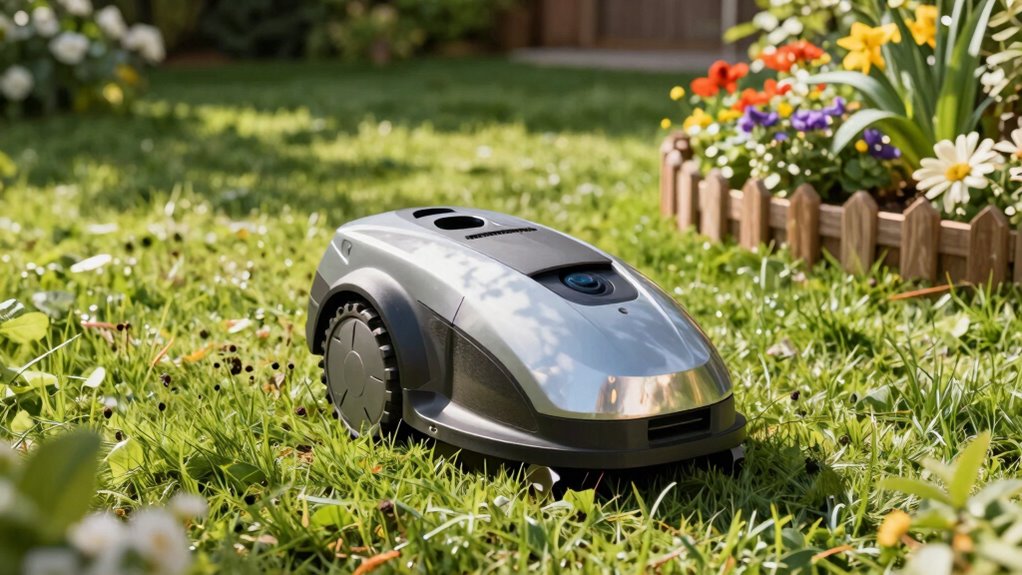

If your robotic lawn mower gets trapped in a corner, start by carefully removing it to prevent damage. Check for obstacles like twigs or rocks that could block its movement and clear them away. Verify the boundary wire is intact and properly placed, and make certain your battery is fully charged. Recalibrate the navigation settings if needed, and reposition the charging station if it’s too close to corners. For more tips to prevent future issues, keep exploring how to optimize your mower’s setup.

Get home appliances delivered free with Prime
- Fast, free delivery on millions of items
- Prime Video, Amazon Music and more included
- Member-only deals all year
Key Takeaways
- Carefully remove the mower from the corner to prevent damage and check for obstructions or debris causing entrapment.
- Clear twigs, rocks, and uneven terrain that may block the mower’s movement in the corner.
- Recalibrate the mower’s navigation system and update boundary settings for better corner handling.
- Ensure boundary wires are properly installed, intact, and free from damage near the corner area.
- Move the charging station to a more open, accessible spot to improve navigation and prevent future trapping.
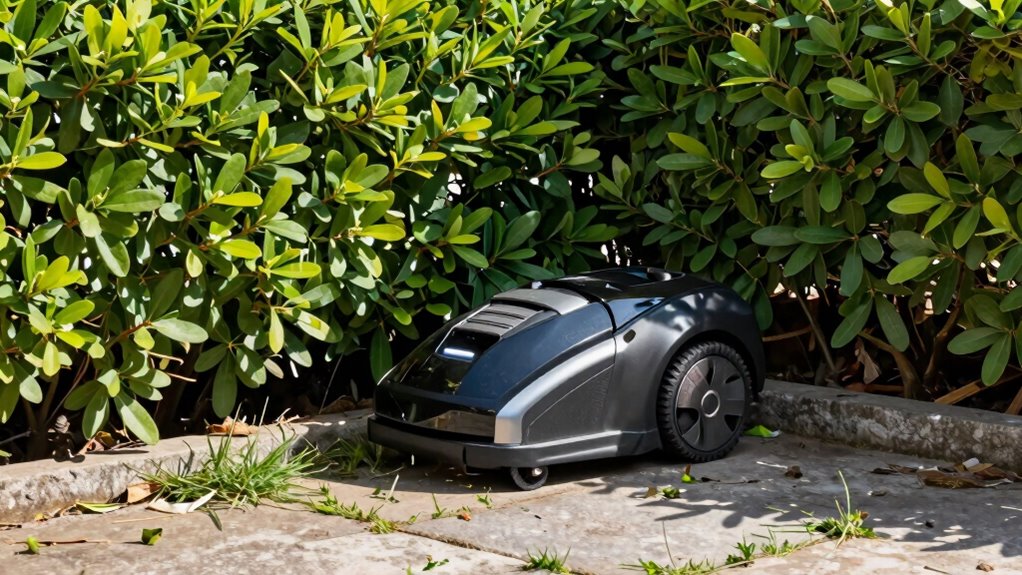
If your robotic lawn mower ends up stuck in a corner, it can be frustrating and disrupt your yard work. The first thing to do is to carefully remove the mower from the tight spot. Once freed, check for any obvious obstructions or debris that might be causing it to get trapped. Sometimes, small twigs, rocks, or uneven terrain can interfere with its movement. Clearing these away guarantees smoother operation moving forward.
Next, consider the battery maintenance of your mower. A weak or poorly charged battery can cause the mower to struggle with navigation and obstacle avoidance, especially in tight corners. Make sure the battery is fully charged and in good condition. If your mower has a replaceable battery, it might be time to swap it out for a fresh one. Regular battery maintenance helps ensure consistent performance and reduces the chances of getting stuck. Also, avoid letting the battery completely drain, as deep discharges can shorten its lifespan and impact the mower’s ability to navigate effectively.
Signal interference is another common culprit behind navigation problems. Many robotic mowers rely on boundary wires or GPS signals to stay within designated areas. If there’s interference from other electronic devices, wireless networks, or nearby power lines, the mower might lose its orientation and get trapped. To minimize this issue, keep electronic devices that emit strong signals away from the mower’s charging station and boundary wires. Also, confirm that the boundary wire is properly installed and intact. Damaged or poorly laid boundary wires can confuse the mower, causing it to stay stuck or repeatedly enter the same corner. Regularly checking and maintaining the boundary setup can prevent such issues. Additionally, understanding how boundary wire placement affects navigation can help optimize your mower’s performance. Proper placement of boundary wires, considering interference sources, is essential for reliable operation.
You can also try recalibrating your mower’s navigation system. Many models allow you to reset or update the mapping process, which can resolve persistent corner-trapping issues. Consult your user manual for specific instructions on recalibration. Sometimes, simply repositioning the boundary wire or rerouting it away from high-interference zones can do the trick. Additionally, choosing a model with advanced navigation features can improve its ability to avoid corners and obstacles. Investing in a model with smart navigation technology can significantly reduce the likelihood of getting trapped. Moreover, using a robot mower with collision detection sensors can further help prevent it from getting stuck in tight spots or corners.
Finally, consider the placement of the charging station. If it’s too close to corners or obstructed by objects, your mower might have trouble returning to it when the battery runs low. Moving the station to a more open, accessible location can help prevent it from getting stuck in tight spots as it heads back for recharging. Regularly inspecting the boundary setup, maintaining the battery, and minimizing signal interference will keep your robotic mower moving smoothly, saving you time and effort in your yard work.
Products Worth Considering

Philips Hue Secure Starter Kit with Contact Sensors, Motion Sensor, Bridge, and Color Smart Bulbs

Bose SoundLink Flex Bluetooth Speaker (2nd Gen), Waterproof, Dustproof, USB‑C, Up to 12 hr Battery, Black

Google Nest Learning Thermostat (4th Gen) with Nest Temperature Sensor (2nd Gen), Obsidian
As an affiliate, we earn on qualifying purchases.
Frequently Asked Questions
How Can I Prevent My Mower From Getting Trapped Initially?
To prevent your mower from getting trapped, make sure your lawn is well-maintained and free of obstacles that could block its path. Adjust the boundary wires to clearly define the mowing area, and regularly check for issues with the boundary system during lawn maintenance. If troubleshooting, inspect for tangled wires or signal interference. Proper setup and routine troubleshooting help your mower navigate smoothly, avoiding traps and guaranteeing efficient, hassle-free mowing.
What Safety Precautions Should I Take When Freeing the Mower?
You should always prioritize safety when freeing your mower. Use emergency shutdowns to stop it immediately, preventing injury or damage. Wear protective gear like gloves and goggles to guard against sharp blades or debris. Don’t reach into the mower’s blades directly—wait until it’s completely powered down. Taking these precautions guarantees you stay safe while carefully removing the mower from the corner, avoiding potential accidents.
Are There Specific Models More Prone to Corner Trapping?
Some models are more prone to corner trapping due to their design features and vulnerabilities. Mowers with limited turning radius or rigid edges often struggle in tight spots. Cheaper or older models may lack advanced navigation sensors, increasing trap risks. Look for mowers with smarter algorithms and flexible edge designs, as these features reduce corner vulnerabilities, ensuring smoother operation and fewer stuck moments during lawn maintenance.
How Often Should I Check for Potential Trapping Areas?
You should check for potential trapping areas weekly to guarantee pet safety and maintain efficient lawn maintenance. Regularly inspecting corners, tight spaces, and boundary wires helps prevent your mower from getting stuck, reducing stress for pets and saving time. Adjusting or removing obstacles and ensuring boundary signals are clear keeps your mower running smoothly. Staying vigilant helps you maintain a safe, well-manicured lawn while protecting your pets from accidental harm.
Can I Customize Boundary Settings to Avoid Corners?
Did you know that 65% of robotic mower issues stem from poor boundary settings? Yes, you can customize boundary settings to avoid corners by adjusting the boundary wire placement and using obstacle avoidance features. This helps your mower navigate smoothly and prevents it from getting trapped. Focus on precise boundary customization, especially around tricky corners, to improve efficiency and guarantee your mower works seamlessly without frequent manual interventions.
Conclusion
If your robotic mower gets stuck in a corner, don’t panic. Simply pause the mower, clear any obstacles, and adjust the boundary wires if needed. For example, imagine your mower keeps trapping itself in a corner near a flower bed; repositioning the boundary wire slightly away from the edge can help. Regularly inspecting and updating the boundary settings guarantees smooth operation. With these simple steps, your mower will cut your lawn effortlessly, avoiding future trapping issues.