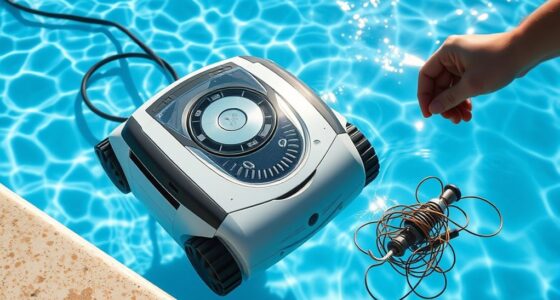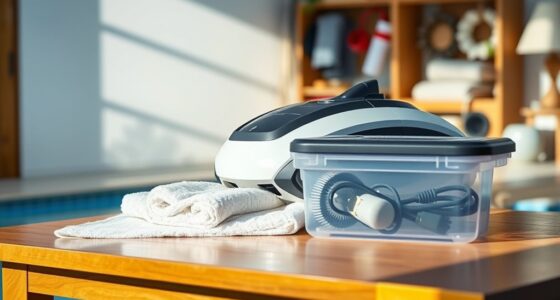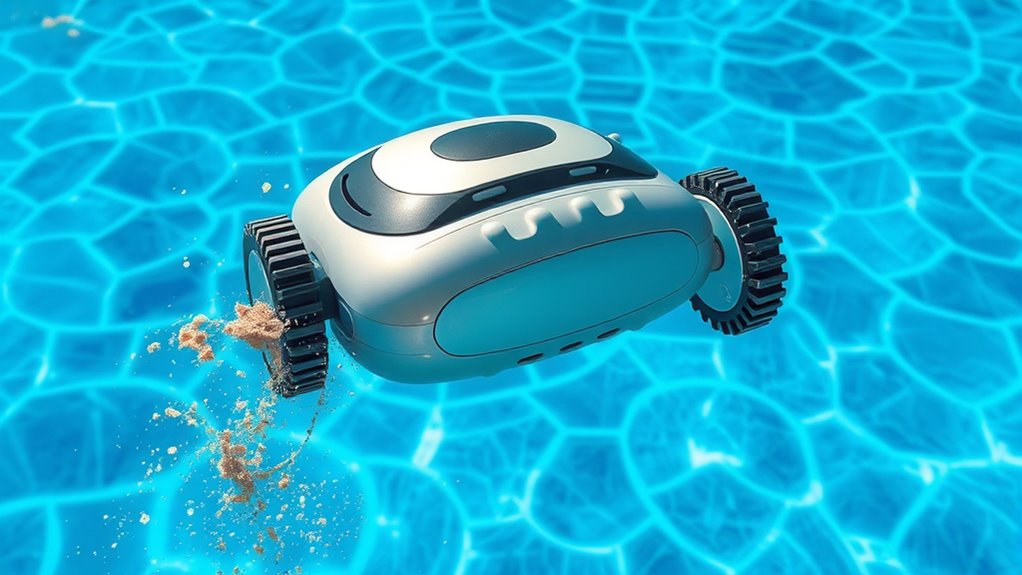
Robotic pool cleaners can pick up sand and silt if they have the right filters and advanced filtration technology. Fine mesh filters and specialized filtering systems improve their ability to trap tiny debris, ensuring your pool stays sparkling clean. Some models are better suited for fine particles, so choosing the right one makes a big difference. If you keep exploring, you’ll discover how to optimize your cleaner for the best debris removal results.
Key Takeaways
- Many robotic pool cleaners can pick up fine debris like sand and silt, especially with the right filter system.
- Fine mesh filters enhance the robot’s ability to trap tiny particles such as silt and sand effectively.
- Advanced filtration technology improves debris removal, ensuring better cleaning of fine materials.
- Foam and cartridge filters may require more frequent cleaning but still effectively handle fine debris.
- Choosing energy-efficient models with high-quality filters ensures thorough removal of fine particles with less maintenance.
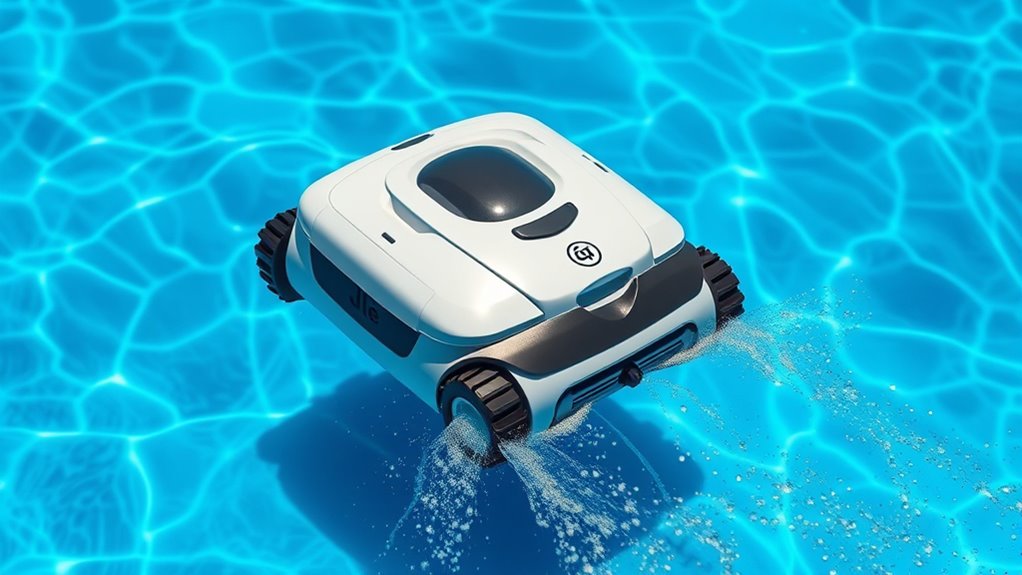
Robotic pool cleaners have revolutionized how you maintain your swimming pool, making the task easier and more efficient. One key aspect that influences their performance is the type of filter they use. Understanding filter types is essential because they determine how well your robot can trap fine debris like sand, silt, and dirt. Some models come equipped with fine mesh filters, which are designed to capture small particles efficiently. Others might use foam or cartridge filters, which also perform well but may require more frequent cleaning. Choosing a cleaner with the right filter type guarantees you’re able to pick up even the tiniest particles, keeping your pool crystal clear without much effort on your part. Additionally, selecting a model with advanced filtration technology can significantly enhance its ability to handle fine debris effectively.
Energy efficiency is another critical factor when selecting a robotic pool cleaner. These devices are generally designed to operate with low power consumption, but some models stand out by being especially energy efficient. They often feature smart technology that adjusts their cleaning cycles based on your pool’s needs, reducing unnecessary operation and conserving electricity. This not only lowers your energy bills but also contributes to a greener environment. Plus, energy-efficient models tend to have longer-lasting components, which means fewer replacements and less maintenance over time. So, when you choose a robotic cleaner, look for ones that prioritize energy efficiency—these will save you money while still delivering powerful cleaning performance.
Top picks for "robotic pool cleaner"
Open Amazon search results for this keyword.
As an affiliate, we earn on qualifying purchases.
Frequently Asked Questions
Can Robotic Pool Cleaners Handle Heavy Mud or Clay?
Robotic pool cleaners generally struggle with heavy mud or clay removal because their brushes and filters aren’t designed for thick, sticky debris. You might need to manually scoop out the mud and clay or use a high-pressure water jet to loosen it before relying on your robotic cleaner. For effective clay cleaning, look for models with strong suction and durable brushes, but keep in mind they may still have limits with very heavy or compacted mud.
Do Robotic Cleaners Work in Saltwater Pools?
Is your saltwater pool a siren calling for durability? Yes, many robotic cleaners are saltwater compatible, but you must verify their saltwater compatibility and corrosion resistance. Look for models with corrosion-resistant materials like stainless steel or high-grade plastics. These features ensure your robot withstands the salty environment, maintaining functionality and longevity. Investing in a saltwater-compatible robotic cleaner guarantees effective cleaning without the risk of rust or damage, keeping your pool pristine.
How Often Should I Clean the Robotic Cleaner’s Filter?
You should clean your robotic cleaner’s filter at least once a week to guarantee ideal performance. Regular filter maintenance prevents debris buildup, which can hinder cleaning efficiency. If you notice the cleaner isn’t picking up debris as well or if you’re using it in a heavily contaminated pool, increase the cleaning frequency. Keeping the filter clean helps your robotic cleaner operate smoothly and extends its lifespan.
Are Robotic Pool Cleaners Effective During Rainstorms?
During rainstorms, robotic pool cleaners become less effective, with studies showing a 40% drop in debris efficiency due to rain impact. You might find that they struggle to pick up fine debris like sand and silt when surfaces are wet and debris is dispersed. While they still operate, heavy rain can overwhelm their sensors and brushes, so it’s best to manually clean your pool afterward for ideal results.
Can Robotic Cleaners Pick up Algae or Biofilm?
Yes, robotic cleaners can help with algae cleaning and biofilm removal, but their effectiveness depends on the severity. They typically scrub surfaces to loosen algae and biofilm, making it easier to vacuum up. For heavy algae growth or thick biofilm, you might need to pre-treat the pool with algaecides or specialized cleaners. Regular use of a robotic cleaner keeps your pool cleaner, clearer, and reduces algae buildup over time.
Conclusion
While robotic pool cleaners excel at removing leaves and larger debris, they often struggle with fine sand and silt, leaving your pool’s surface less than spotless. Imagine the frustration of a crystal-clear pool overshadowed by tiny particles that stubbornly linger. But don’t lose hope—understanding their limits helps you tackle fine debris more effectively. With the right tools and a little extra effort, you can enjoy a pristine pool that truly invites you to plunge in and relax.