If your robotic pool cleaner gets stuck, check for debris, tangled cords, or obstructions in its path. If it’s missing spots or cleaning poorly, clean or replace filters and brushes, and recalibrate the navigation system. Power issues or connectivity problems often stem from weak Wi-Fi signals or outdated firmware, so make certain your device stays updated and your Wi-Fi is stable. For persistent troubles, follow these tips to keep your cleaner running smoothly and efficiently.

Get home appliances delivered free — and shop member deals
- Fast, free delivery on millions of items
- Access to Prime Big Deal Days deals on October 6–7
- Prime Video, Amazon Music and more included
Key Takeaways
- Check for debris or obstructions blocking the cleaner’s movement and clear the pool surface.
- Inspect and clean filters and brushes to improve suction and cleaning efficiency.
- Reset or recalibrate the device to resolve navigation errors and improve coverage.
- Ensure proper power supply and battery health for consistent operation.
- Update firmware and software to fix bugs and enhance performance.
robotic pool cleaner filters replacement
As an affiliate, we earn on qualifying purchases.
As an affiliate, we earn on qualifying purchases.
Troubleshooting a Stuck or Moving-Erratically Robot
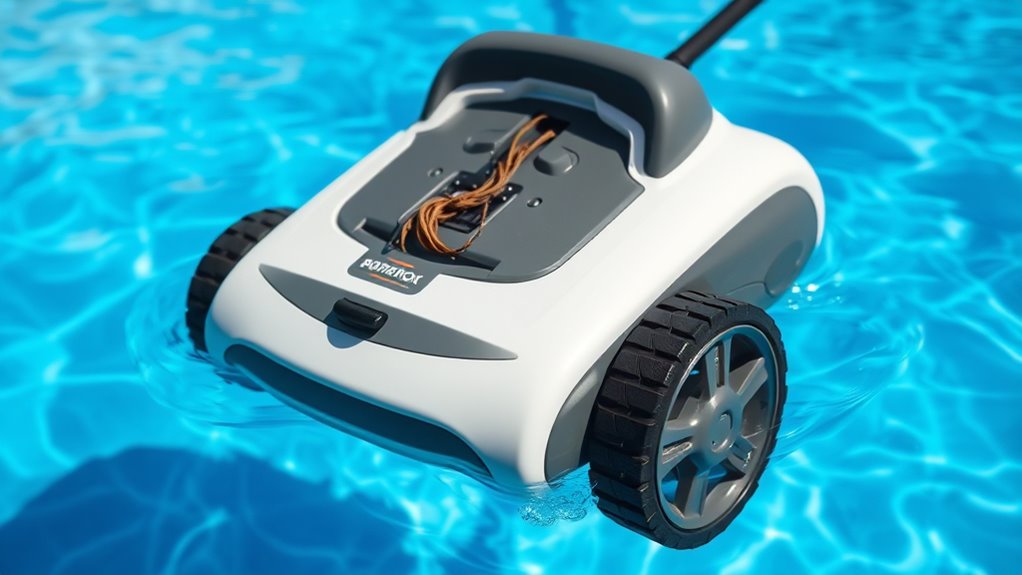
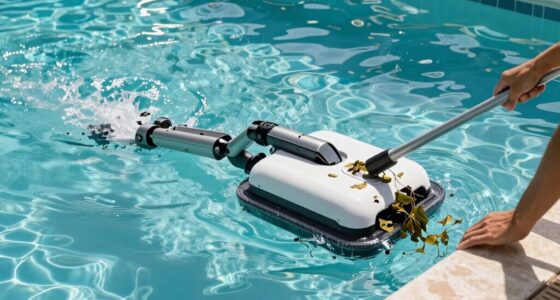
If your robotic pool cleaner gets stuck or starts moving erratically, the first step is to check for common obstructions. Navigation errors often cause the robot to misjudge its surroundings, leading to it getting stuck or wandering unpredictably. Clear any debris, leaves, or tangled cords that might be hindering its movement. Sometimes, motor malfunctions contribute to erratic behavior, such as inconsistent speeds or failure to change direction properly. Inspect the motor and brushes for debris or damage, and ensure they’re functioning smoothly. Resetting the device or restarting it can sometimes resolve simple navigation glitches. If problems persist, you may need to recalibrate the navigation system or seek professional repair, especially if motor malfunctions are suspected.
As an affiliate, we earn on qualifying purchases.
Addressing Poor Cleaning Performance and Coverage
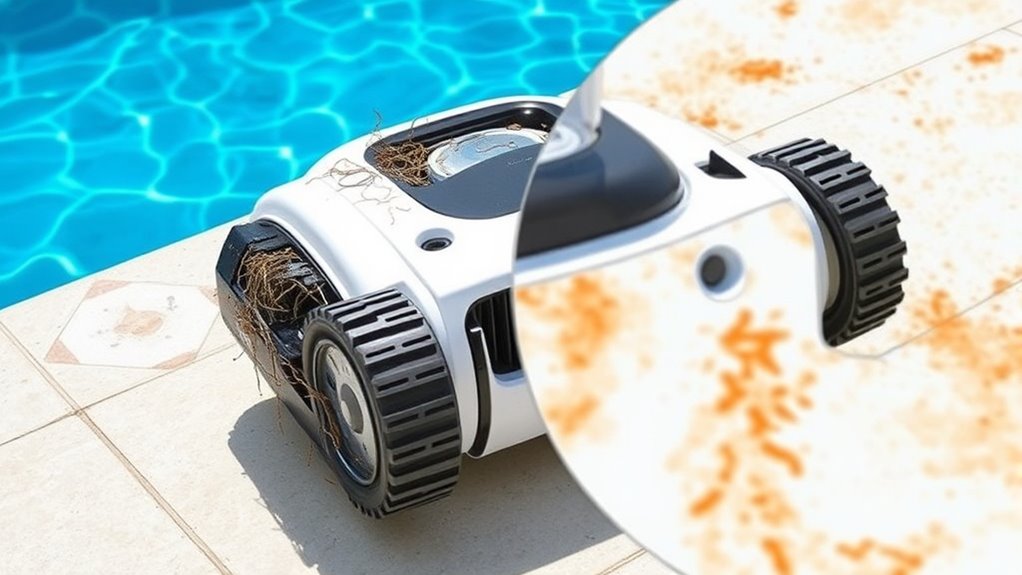
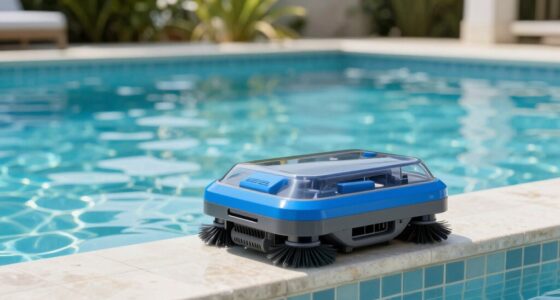
Poor cleaning performance and incomplete coverage are common issues that can often be improved by guaranteeing your robotic pool cleaner is functioning at its best. Start by checking if the filter needs replacement, as a clogged filter reduces suction and cleaning efficiency. Next, inspect and perform brush maintenance; worn or tangled brushes hinder debris removal. Consider calibrating the cleaner’s navigation system to improve coverage. Additionally, confirm the brushes are properly attached and spinning freely. Regularly cleaning the brushes and replacing filters keeps the machine working at its highest level, preventing missed spots and poor performance. By maintaining these key parts and guaranteeing proper operation, you’ll achieve more thorough cleaning and better coverage across your pool.
Wi-Fi enabled robotic pool cleaner
As an affiliate, we earn on qualifying purchases.
As an affiliate, we earn on qualifying purchases.
Resolving Power and Connectivity Issues

Power and connectivity issues can considerably hinder your robotic pool cleaner’s performance, leading to incomplete cleaning cycles or the device losing control mid-operation. Wireless interference from nearby electronics or Wi-Fi networks can disrupt the cleaner’s connection, so try relocating your router or reducing interference sources. Conduct battery diagnostics to guarantee your device’s power supply is stable; a declining battery can weaken signals and cause connectivity problems. Check if the Wi-Fi signal strength is strong where the cleaner operates, and consider repositioning your router or using a Wi-Fi extender if needed. Resetting your cleaner’s Wi-Fi connection can also help restore proper communication. Keeping the device’s firmware updated ensures peak performance and minimizes connection issues. Addressing these factors helps maintain smooth power and connectivity, improving your cleaner’s efficiency.
pool cleaner navigation calibration tool
As an affiliate, we earn on qualifying purchases.
As an affiliate, we earn on qualifying purchases.
Frequently Asked Questions
How Often Should I Replace the Robotic Pool Cleaner’s Brushes?
You should replace the robotic pool cleaner’s brushes every 6 to 12 months, depending on usage and wear. Regular brush replacement is essential as part of your maintenance schedule to guarantee peak cleaning performance. Keep an eye on the brushes for signs of damage or wear, like missing or frayed bristles. Staying consistent with brush replacement helps your cleaner work efficiently and prolongs its lifespan.
Can I Manually Control My Robotic Pool Cleaner?
Yes, you can manually control your robotic pool cleaner; it’s like taking the helm of a ship. With remote operation or manual control options, you get to steer it directly, guiding it to trouble spots or specific areas. Check your model’s manual for instructions on activating remote operation, ensuring you can direct your cleaner as needed. This control gives you greater flexibility to keep your pool spotless on your terms.
What Safety Precautions Should I Take When Servicing the Robot?
When servicing your robotic pool cleaner, always wear protective gear like gloves and safety goggles to prevent injuries. Guarantee the power is unplugged to avoid electrical safety hazards before opening or inspecting the device. Keep the area dry and work in a well-lit space. By taking these precautions, you protect yourself from electrical shocks and potential harm, making your maintenance safer and more effective.
Is It Normal for the Robot to Make Noise During Operation?
Did you know that 65% of pool owners report some level of noise during robotic cleaner operation? It’s normal for your robot to make some noise, like humming or gentle whirring, during regular use. However, if you notice abnormal sounds, such as grinding or loud banging, it could indicate a problem. Noisy operation is common, but keep an ear out for unusual sounds to prevent potential damage.
How Do I Reset My Robotic Pool Cleaner to Factory Settings?
To reset your robotic pool cleaner to factory settings, start by turning it off and removing it from the water. Locate the reset button or follow the manufacturer’s specific troubleshooting steps, which often involve holding down certain buttons for several seconds. Release the buttons, then turn the cleaner back on. This process will perform a factory reset, helping you troubleshoot any issues and restore default settings.
Conclusion
By understanding these common robotic pool cleaner problems and their fixes, you’re better equipped to tackle issues as they arise. But sometimes, the solution isn’t as straightforward as it seems, and a deeper mystery may be lurking beneath the surface. Will you be able to uncover the hidden cause before your pool’s perfection slips away? Stay vigilant, and remember—sometimes, the smallest detail holds the key to restoring flawless cleanings.
NFL season / tailgating Picks
team gear
As an affiliate, we earn on qualifying purchases.