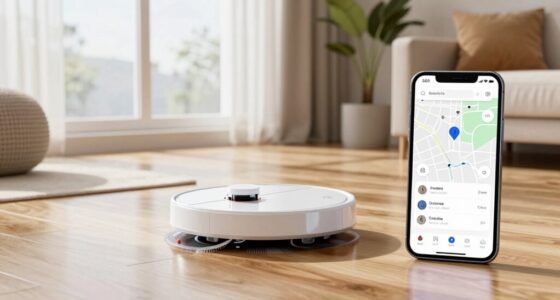
You should never mop delicate floors like hardwood with soft finishes, antiques, or surfaces that can absorb water, as moisture can cause warping, staining, or damage. Porous tiles, natural stone, or floors prone to discoloration are also risky since harsh solutions and excess water can seep in and deteriorate them. Using a robot on these surfaces may do more harm than good. If you want to protect your floors, keep going for more helpful tips.

Get home appliances delivered free with Prime
- Fast, free delivery on millions of items
- Prime Video, Amazon Music and more included
- Member-only deals all year
Key Takeaways
- Avoid mopping delicate floors like hardwood with soft finishes to prevent water damage or warping.
- Do not use robotic mops on antique or fragile surfaces prone to scratches or deterioration.
- Refrain from mopping porous tile or stone floors with harsh or inappropriate cleaning solutions.
- Never use a robot on floors susceptible to water infiltration, such as certain wood or layered materials.
- Avoid mopping floors that require manual cleaning or specialized products to prevent damage.

While robotic mops can make cleaning more convenient, there are certain floors you should avoid mopping with them. If you have delicate flooring, like hardwood with a soft finish, or antique surfaces, using a robot mop can cause more harm than good. Water or cleaning solutions might seep into the wood or fragile materials, leading to warping, discoloration, or damage over time. For these floors, manual cleaning or specialized products are safer options, ensuring you avoid unintended harm and preserve their appearance.
When it comes to tile or stone floors, you need to be cautious about the type of cleaning solution you use. Some robotic mops rely on water and cleaning agents that could be too harsh for natural stone or porous tiles, causing etching or staining. Additionally, excessive moisture can seep into grout lines, leading to mold or weakening of the grout over time. It is crucial to verify whether your robotic mop is compatible with your specific flooring type and to choose gentle, pH-neutral cleaners if you do decide to use them. Proper robot maintenance, like regular cleaning of the mop’s pads and sensors, can help prevent issues that might otherwise compromise your floors or the robot’s functionality. Indoor air quality can also be affected by excess moisture and cleaning agents used in mopping routines. Understanding the flooring materials you have is essential to avoid damage from inappropriate cleaning methods. Regularly inspecting your floors and cleaning tools can help identify early signs of damage and maintain optimal flooring health. Proper knowledge of curiosity benefits can empower you to make informed decisions about your cleaning routines, ensuring the longevity and safety of your floors.
gentle hardwood floor cleaning mop
As an affiliate, we earn on qualifying purchases.
As an affiliate, we earn on qualifying purchases.
Frequently Asked Questions
Can Robots Damage Delicate Hardwood Floors?
Robots can damage delicate hardwood floors if you don’t pay attention to robot maintenance and floor material compatibility. You might accidentally scratch or gouge soft wood if the robot’s brushes or wheels aren’t suitable. To prevent damage, regularly check your robot, keep the brushes clean, and verify it’s designed for hardwood floors. Proper maintenance and understanding your robot’s capabilities help protect your delicate floors from harm.
Should I Avoid Mopping Tile Grout Lines?
You should avoid mopping tile grout lines with a robot because it can cause grout discoloration over time. The constant moisture may weaken unsealed grout, leading to stains and buildup. If your grout is sealed, mopping is safer, but you should still be gentle to prevent damage. Regularly check your grout’s condition and clean carefully, ensuring your tile surfaces stay pristine without risking harm to the grout lines.
Are There Floor Types That Hinder Robot Navigation?
Certain floor types can hinder your robot’s navigation, especially if they have uneven surfaces or are incompatible with carpet. Robots struggle on thick carpets, plush rugs, or uneven flooring like warped wood or textured tiles. These surfaces can trap sensors or cause difficulty in maneuvering. To guarantee smooth operation, check your robot’s carpet compatibility and avoid placing it on uneven surfaces that could disrupt its navigation.
How Do Spills Affect Robot Mopping Performance?
Spills can challenge your robot’s automated cleaning, causing it to pause or miss spots. When spills happen, your device might struggle with spill management, especially if liquids seep into areas it can’t handle. To keep your floors spotless, quickly address spills before your robot starts its routine. Proper spill management guarantees smooth automated cleaning and prevents potential damage, helping your robot work efficiently and keep your floors looking great.
Can Pet Accidents Harm Robot Mops?
Pet accidents can harm robot mops, especially if they involve pet hair or chemical spills. Pet hair can clog sensors or brushes, reducing efficiency, while chemical spills may damage the device’s components or cause malfunctions. To safeguard your robot, clean up pet accidents promptly and avoid mopping floors with chemical spills. Regular maintenance and careful monitoring help guarantee your robot stays in good condition and works effectively.
natural stone safe cleaning solutions
As an affiliate, we earn on qualifying purchases.
As an affiliate, we earn on qualifying purchases.
Conclusion
In summary, avoid mopping certain floors like unsealed hardwood or delicate surfaces with your robot. Did you know that nearly 60% of homeowners admit to using their robot vacuum for mopping, yet many damage sensitive floors? By understanding which floors to steer clear of, you protect your surfaces and prolong your device’s lifespan. Always check your floor type and manufacturer guidelines before letting your robot do the cleaning—your floors will thank you for it.
As an affiliate, we earn on qualifying purchases.
antique fragile surface cleaning products
As an affiliate, we earn on qualifying purchases.
As an affiliate, we earn on qualifying purchases.
NFL season / tailgating Picks
team gear
As an affiliate, we earn on qualifying purchases.