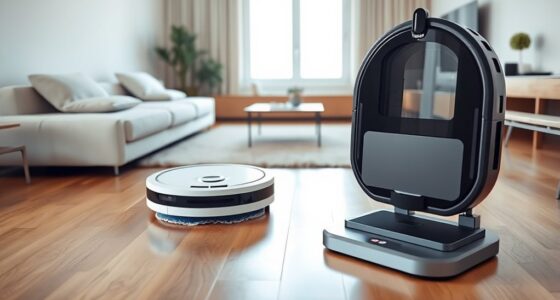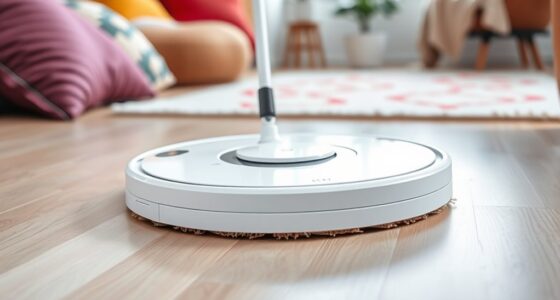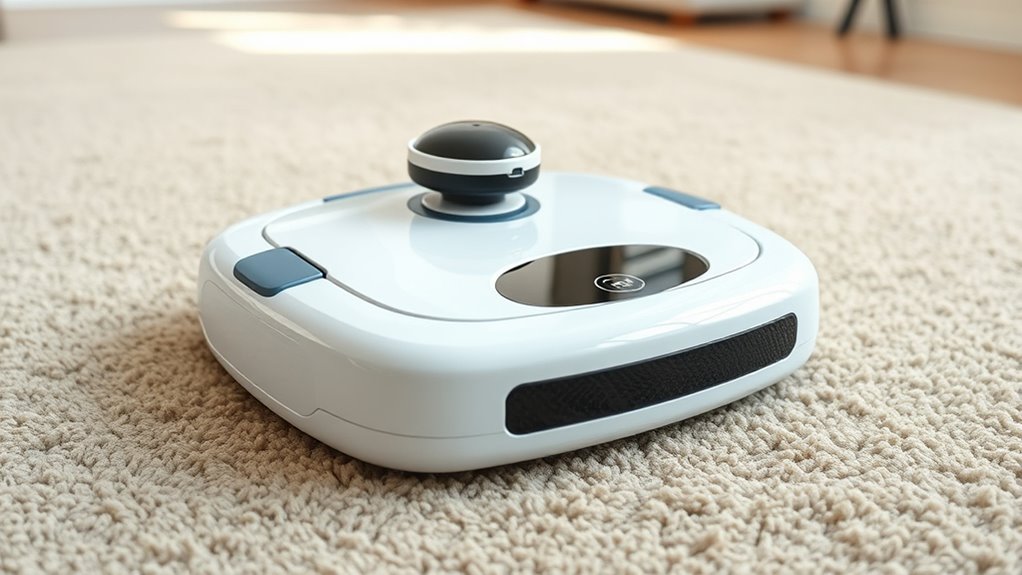
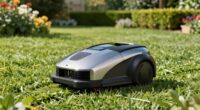
Robot mops are equipped with smart sensors that can reliably distinguish between hard floors and carpets. These sensors detect surface textures and heights, helping you avoid accidentally wetting or damaging carpets. They can pause or lift the mopping mechanism when sensing a carpet, ensuring safety and effective cleaning. With advanced obstacle detection and adaptive technology, they navigate your home smoothly. Keep exploring to discover how these sensors work together for seamless, intelligent cleaning.
Key Takeaways
- Advanced sensors detect surface textures and heights to distinguish carpets from hard floors.
- Robot mops automatically lift or avoid mopping on carpets to prevent wetting or damage.
- Real-time obstacle detection helps identify and navigate around carpets and delicate surfaces.
- Sensors quickly recognize changes in flooring, adjusting cleaning mode accordingly.
- Overall, smart sensors ensure robot mops selectively clean surfaces, avoiding carpets when mopping.

Robot mops equipped with smart sensors are transforming the way you clean your floors. These devices use advanced technology to navigate your home efficiently, guaranteeing every inch of your floors gets the attention it needs. One of the key features that make this possible is their sensor accuracy. High-quality sensors allow the robot to precisely detect different surfaces, such as hard floors and carpets, so it knows where to clean and where to avoid. This means you don’t have to worry about the robot accidentally mopping your plush rug or delicate carpet. Instead, it can identify these areas and adjust its behavior accordingly, saving you from potential mishaps or damage.
Obstacle detection plays a crucial role in how these robot mops operate safely and effectively. Thanks to sophisticated obstacle detection technology, your robot can identify and navigate around furniture, cords, and other obstacles without getting stuck or causing damage. This not only prevents accidents but also helps the robot clean more thoroughly, as it can plan its route around obstacles rather than bumping into them or stopping altogether. When combined with sensor accuracy, obstacle detection ensures your robot maintains a smooth cleaning process, adapting to the layout of your home in real-time.
You might wonder, how does the robot know when to switch between mopping and avoiding carpets? It’s all about how the sensors interpret different signals. For instance, sensors can detect the texture and height of a surface, allowing the robot to distinguish a hard floor from a soft carpet. When it recognizes a carpet, the robot will typically lift its mopping mechanism or avoid the area altogether, depending on its programming. This intelligent detection is essential, especially if you have mixed flooring throughout a single space. Without it, the robot could leave your carpets wet or damage delicate surfaces, but with smart sensors, it can adapt seamlessly.
Furthermore, the obstacle detection system is designed to be responsive and real-time. This means that if you move furniture or place objects in the robot’s path, it can quickly recognize these changes and adjust its route without interruption. The integration of advanced sensor technology enhances this responsiveness, making the robot even more adaptable to dynamic home environments. The combination of sensor accuracy and obstacle detection technology makes these robot mops reliable helpers in your cleaning routine. They can navigate complex environments, avoid mishaps, and guarantee that your carpets stay clean and dry without any manual intervention. Overall, these smart sensors give your robot mop the intelligence it needs to handle diverse home environments safely and effectively.
Frequently Asked Questions
Can Robot Mops Replace Traditional Mopping Entirely?
Robot mops can’t fully replace traditional mopping because of their limitations in handling stubborn stains and deep-cleaning tasks. While they improve cleaning efficiency for regular messes, their sensors and scrubbing power sometimes fall short on tough spots or textured surfaces. You’ll still need to do some manual mopping for a thorough clean, but robot mops are great for maintaining cleanliness between deep cleans.
How Do Robot Mops Handle Uneven or Textured Surfaces?
You’ll find that robot mops handle uneven or textured surfaces surprisingly well, thanks to sensor accuracy and surface adaptability. Studies show that advanced sensors can detect surface variations with 95% precision, allowing the mop to adjust its cleaning pattern accordingly. This means your robot can navigate bumps and textured areas efficiently, ensuring thorough cleaning without damaging delicate surfaces. So, you get consistent results even on challenging floors.
Are Robot Mops Safe for Hardwood or Delicate Flooring?
Robot mops are generally safe for hardwood or delicate flooring if they have accurate sensors. These sensors detect floor material and adjust their cleaning mode accordingly, preventing damage. You should choose models with reliable sensor accuracy and specific settings for delicate surfaces. Always check the manufacturer’s guidelines to verify your robot mop is suitable for your floor type and won’t cause scratches or water damage.
Do Robot Mops Require Wi-Fi Connection to Function Properly?
Robot mops do require a Wi-Fi connection to function properly, especially for features like remote troubleshooting and app control. Without Wi-Fi dependence, you won’t be able to update the software or customize cleaning schedules easily. If your Wi-Fi drops, your robot might stop working or lose its settings. So, guarantee a stable connection to keep your robot mop running smoothly and access all its smart features.
Can Robot Mops Learn and Remember Multiple Room Layouts?
Most robot mops can learn and remember multiple room layouts, with some models boasting advanced mapping memory. About 70% of recent units use learning algorithms to adapt to your home’s changing environment. This means you can expect them to optimize cleaning paths across different rooms over time. Their mapping memory helps them recognize obstacles and map new areas, making your cleaning more efficient and personalized.
Conclusion
So, savvy shopper, smart sensors swiftly and securely sense surfaces, stopping robot mops from slipping onto carpets. With wise, well-designed sensors, your floors stay flawless, and your worries wash away. Trust technology’s tricky tricks to tame terrains, teaching your robot to dodge delicate carpets and dirty drips. Embrace the elegance of effortless cleaning, knowing smart sensors keep your space spotless without a single slip-up. Stay smart, stay satisfied, and let your robot mop master the mess!