To effectively deep clean high-pile carpets with a robotic vacuum, choose one with a sturdy, motorized brush that can handle thick fibers without tangling. Adjust the height settings so the brush makes proper contact without damaging the fibers or missing dirt. Regularly clean and inspect the brush to prevent buildup and maintain performance. Using the right settings and maintenance helps guarantee a thorough clean—if you keep exploring, you’ll discover how to optimize your robot’s performance even further.
Key Takeaways
- Use a robotic vacuum with adjustable height settings to ensure proper contact with high-pile fibers.
- Regularly clean and inspect the brush to prevent tangling and maintain cleaning efficiency.
- Opt for models with motorized, sturdy brushes designed for deep cleaning thick carpets.
- Schedule frequent cleaning sessions to remove embedded dirt and preserve carpet appearance.
- Combine robotic vacuum use with occasional manual deep cleaning for optimal results.
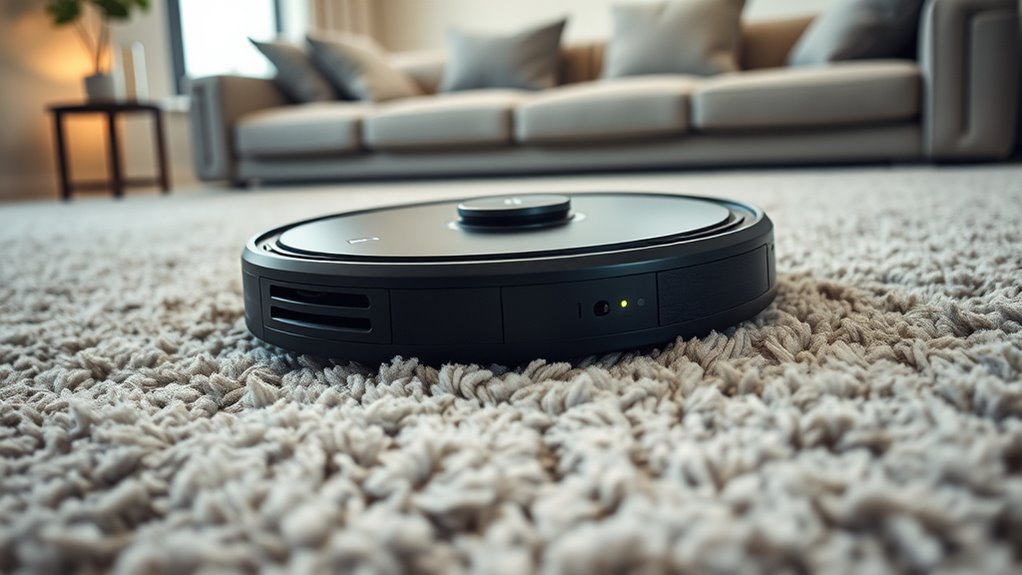
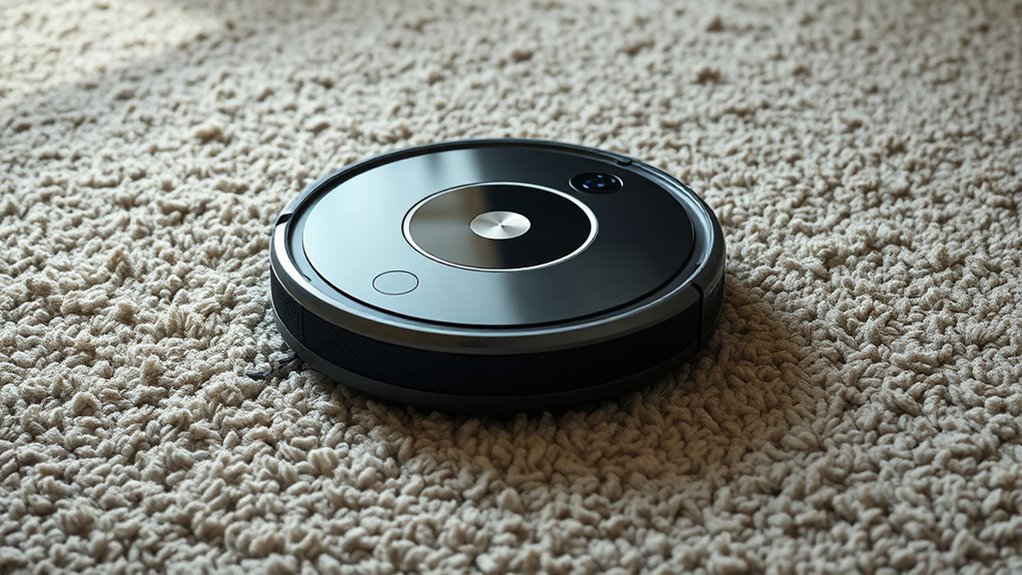
Cleaning high-pile carpets can be challenging, but a robotic vacuum designed specifically for this task makes it easier. High-pile carpets have thick, plush fibers that trap dirt and debris, making standard cleaning tools less effective. To get deep into those fibers, your robotic vacuum needs to be equipped with the right features, starting with a quality vacuum brush. The vacuum brush plays a vital role in agitating and lifting dirt from the carpet fibers. Look for a model with a sturdy, motorized brush that can handle thick pile without getting tangled or bogged down. A brush with adjustable height settings is ideal, allowing you to customize the height according to your carpet’s pile. If your robot vacuum has a fixed brush height, make sure it’s suitable for high-pile carpets; otherwise, it might skip areas or fail to clean thoroughly.
A sturdy, adjustable motorized brush is essential for deep cleaning high-pile carpets effectively.
Adjusting the carpet height on your robotic vacuum is indispensable to optimize cleaning performance. Many models let you manually set the height or automatically adapt to different surfaces. Setting the vacuum to the correct height ensures the brush makes proper contact with the carpet, maximizing dirt pickup without damaging the fibers. When you’re cleaning a high-pile carpet, it’s tempting to crank up the height to avoid tangling or pulling at the fibers, but this can reduce cleaning efficiency. Conversely, setting it too low might cause the brush to struggle or become tangled in the thick fibers. The key is finding a balance—ensuring the brush is close enough to dislodge embedded dirt while avoiding excessive strain on the vacuum’s motor. Proper maintenance of the vacuum brush, including regular cleaning and inspection, is crucial to maintaining optimal performance.
In addition to adjusting the carpet height, pay attention to the vacuum’s brush design. Some models feature multi-surface brushes that automatically adapt to different carpet types, which is especially useful for homes with varied flooring. Regular maintenance of the vacuum brush is also essential. Remove hair, threads, and debris frequently to prevent build-up that can hinder cleaning performance. When the brush is clogged or worn out, it won’t effectively lift dirt from deep within the fibers, reducing the overall cleanliness of your high-pile carpet.
Finally, pairing the right vacuum brush and correct carpet height settings with a thorough, consistent cleaning schedule ensures your high-pile carpets stay fresh and dirt-free. With the right robotic vacuum, you won’t have to wrestle with thick fibers or worry about missed spots. Instead, you’ll enjoy a deep clean that preserves the plushness and longevity of your carpet while saving you time and effort.
Frequently Asked Questions
Can Robotic Vacuums Handle Pet Hair on High-Pile Carpets?
Yes, robotic vacuums can handle pet hair on high-pile carpets, especially if they have strong suction and brush agitation features. Look for models designed for pet hair removal, which often include specialized brushes that loosen hair embedded deep in the fibers. Regular use helps maintain cleanliness, but you may need to manually remove hair from the brushes to guarantee ideal carpet agitation and prevent clogging.
How Often Should I Schedule Deep Cleaning for High-Pile Carpets?
Think of your high-pile carpet as a living canvas that needs regular care. You should schedule deep cleaning every 6 to 12 months, depending on foot traffic and pets. Maintaining a consistent cleaning schedule guarantees your carpet stays vibrant and resilient. By adjusting the frequency maintenance, you prevent dirt buildup and prolong its life, making your space feel fresh and inviting. Regular deep cleanings are the brushstrokes that preserve its beauty over time.
Are There Specific Models Best Suited for High-Pile Carpet Cleaning?
You should look for robotic vacuums specifically designed for high-pile carpets that offer strong suction and effective carpet agitation. Models with adjustable height settings and advanced brush systems are best, ensuring compatibility with your carpet’s thickness. Check the specifications to confirm model compatibility, and choose a device that can handle deep cleaning. This way, you’ll get thorough results without damaging your high-pile carpet.
Do Robotic Vacuums Damage Delicate High-Pile Fibers?
Your robotic vacuum is unlikely to damage delicate high-pile fibers if you choose one with advanced vacuum safety features. While some models might seem to threaten fiber damage, quality vacuums are designed to be gentle, preventing harm to fibers. Always check the suction power and brush settings, and avoid overly aggressive cleaning modes. With proper care, you can enjoy spotless carpets without risking fiber damage—your carpet’s fibers will thank you!
How Do Robotic Vacuums Navigate Thick, Plush Carpets Effectively?
You should choose a robotic vacuum with advanced navigation sensors and strong suction power to navigate thick, plush carpets effectively. The sensors help it detect and maneuver around dense fibers, while the powerful suction ensures deep cleaning. Regularly clear the vacuum’s path of obstacles, and adjust settings for maximum performance. This combination allows your robot to clean thoroughly without getting stuck or missing spots on high-pile carpets.
Conclusion
So, now you’re all set to conquer that high-pile carpet with your robotic vacuum—because who needs a professional cleaner when you’ve got technology on your side? Just watch it wiggle and jiggle through the mess, pretending to be a cleaning hero. Sure, it might miss a spot or two, but hey, at least you can impress your friends with your “futuristic” cleaning skills. Happy vacuuming—your carpet’s about to get the royal treatment!