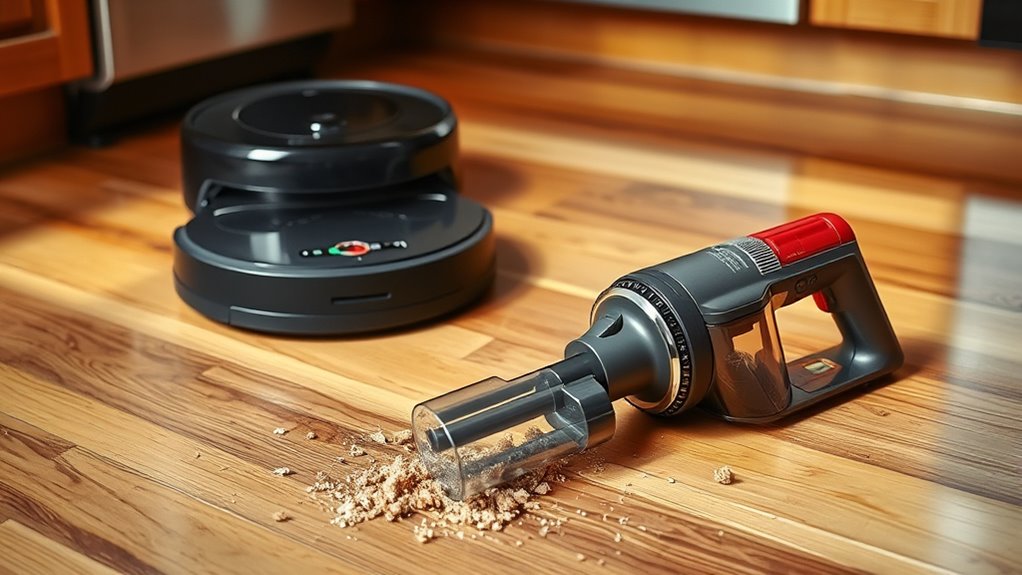
For small spills, a handheld vacuum is your best option since it’s lightweight, quick to grab, and provides targeted cleaning. It’s more powerful for stubborn crumbs and pet hair, making cleanup fast and easy. Robot vacuums are great for regular, automatic maintenance but may struggle with spot cleaning since they need time and space to navigate. Want to discover which suits your needs best? Keep exploring to find out more.
Key Takeaways
- Handheld vacuums offer stronger suction and are more effective for quick, targeted cleanup of small spills.
- Robot vacuums are convenient for routine small messes but may struggle with immediate spill response.
- Handhelds provide manual control, allowing precise cleaning in tight or hard-to-reach spots.
- Robot vacuums operate quietly and automatically, suitable for regular maintenance of small messes.
- For frequent small spills, a handheld vacuum is often faster and more efficient.
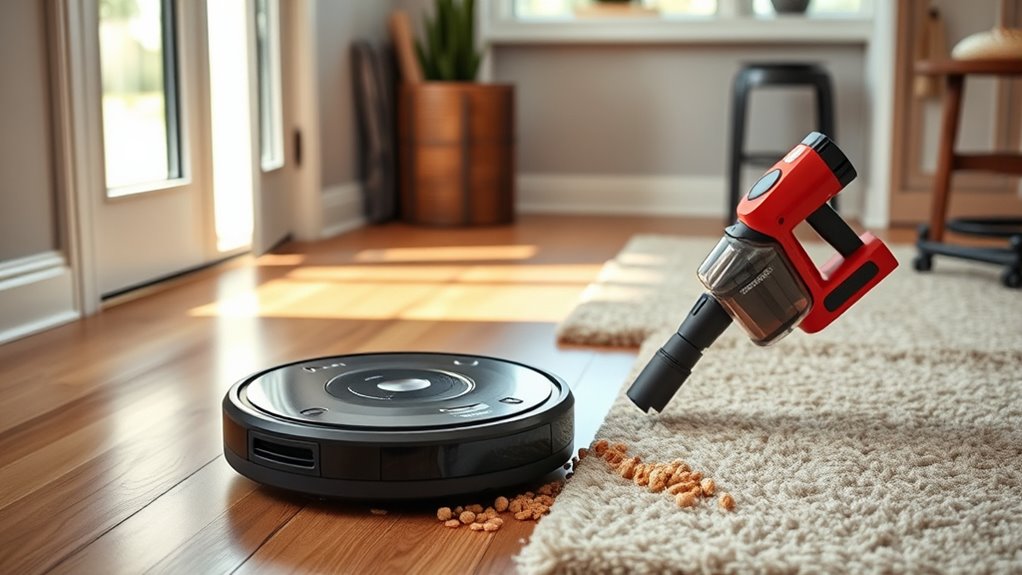
When choosing between a robot vacuum and a handheld vacuum, understanding their strengths and limitations is essential to making the right decision for your cleaning needs. For small spills, both options have their advantages, but factors like battery life and noise levels can notably influence which one suits you better.
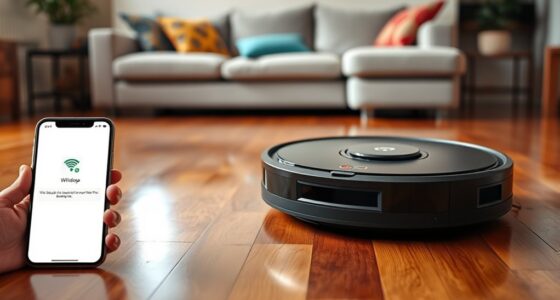
A robot vacuum typically comes with a rechargeable battery designed for longer cleaning sessions. Most models can run anywhere from 90 minutes to over two hours before needing a recharge, which is usually enough to cover multiple rooms or an entire floor. This means you can set it to work automatically, and it’ll handle routine cleanups without your constant supervision. However, keep in mind that some robot vacuums might experience reduced battery performance over time, especially if they’re used frequently or not maintained properly. When it comes to noise levels, robot vacuums are generally quieter than handhelds. They’re designed to operate in the background, so your household activities aren’t disrupted. This makes them ideal for quick cleanups during work hours or when you’re watching TV, as they won’t be overly loud or distracting. Additionally, the color accuracy of robot vacuums can sometimes be affected by their sensors and lighting conditions, impacting their navigation efficiency.
On the other hand, handheld vacuums tend to have shorter battery life, often between 15 to 30 minutes per charge. This quick burst of power is perfect for small spills or quick pickups, but it means you’ll need to recharge more frequently if you have larger areas to cover. When dealing with small messes, this isn’t usually an issue since you can grab the handheld, clean up the spill, then put it away. Handhelds are typically louder than robot vacuums, especially those with powerful motors designed for deep cleaning. While this noise might be a drawback if you’re sensitive to sound or if you’re cleaning during quiet hours, the increased noise often correlates with better suction power, making them more effective for stubborn crumbs or pet hair.
Frequently Asked Questions
Can Robot Vacuums Handle Wet Spills Effectively?
Robot vacuums generally can’t handle wet spill cleanup effectively because they’re not designed for liquids. They lack vacuum sealing features necessary to contain moisture and prevent damage. If you have wet spills, a handheld vacuum with wet/dry capabilities is your best bet. Handhelds can manage small wet spills quickly and efficiently, avoiding potential damage to your robot vacuum and ensuring your floors stay clean.
Are Handheld Vacuums Suitable for Pet Hair Removal?
A handheld vacuum is like a trusty sidekick when it comes to pet hair removal. It’s highly effective for quick cleanups, especially on furniture and tight spots your larger vacuum might miss. You’ll find it easy to maneuver, making pet hair removal faster and more efficient. While not as powerful as upright vacuums for large areas, a handheld vacuum is perfect for targeted cleaning, keeping your home fur-free and fresh.
How Long Does Battery Life Typically Last on These Vacuums?
Battery life on handheld vacuums typically lasts between 15 to 30 minutes, depending on the model and usage. You’ll want to contemplate battery longevity when choosing one, especially if you plan to clean larger areas. Charging duration varies from about 3 to 5 hours, so it’s smart to check the charger specifications. Keep in mind, higher-end models often offer longer battery life and faster charging times, making your cleaning more efficient.
Which Vacuum Is More Cost-Effective Long-Term?
Think of your budget as a garden—careful tending yields long-term rewards. A handheld vacuum usually costs less upfront and has lower maintenance costs, making it more cost-effective over time. Robot vacuums may seem pricier initially, but their convenience can save you time and effort, offsetting the cost. So, if you’re watching your wallet, a handheld vacuum is often the smarter choice for long-term savings.
Do Either of These Vacuums Work Well on Uneven Surfaces?
Both robot vacuums and handheld vacuums can handle uneven surfaces, but their performance varies. Robot vacuums often have adaptive wheels and sensors, helping them navigate uneven surfaces more effectively. Handheld vacuums, on the other hand, are more maneuverable and can be directed precisely on rough patches. If you have a lot of uneven flooring, a robot vacuum might offer better overall performance, but a handheld vacuum gives you more control for specific spots.
Conclusion
Ultimately, choosing between a robot and handheld vacuum is like deciding whether to trust the steady compass or follow your spontaneous compass. For quick small spills, a handheld is your reliable sidekick—ready at a moment’s notice. But if you want hands-free convenience that works while you’re busy, a robot vacuum is your modern marvel. Whichever you pick, remember, it’s about making your cleaning routine feel effortless—like having your own personal cleaning genie.