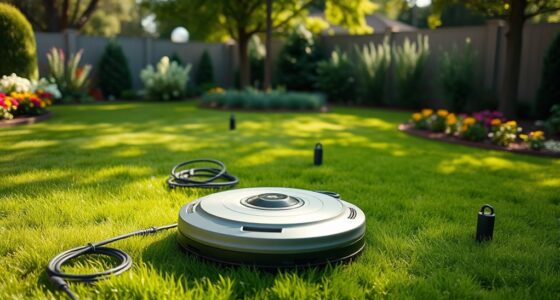

Robot mowers can be wildlife-friendly if you choose models with safety sensors, quiet operation, and GPS technology that detect animals like hedgehogs, frogs, and insects. By maintaining natural debris, planting native plants, and adding water features, you create a safe habitat. Using eco-conscious tools further reduces risks. To protect small creatures effectively, you need to understand how to balance garden maintenance with wildlife needs—continue to learn how to create a truly wildlife-friendly yard.
Key Takeaways
- Modern robot mowers feature safety sensors and quieter operation, reducing risks and disturbances for hedgehogs and other wildlife.
- They are designed to detect obstacles, slowing or pausing mowing to prevent injury to small animals like hedgehogs.
- Eco-friendly models with manual or solar-powered options minimize habitat disruption and chemical runoff, supporting wildlife health.
- Creating wildlife-friendly gardens with native plants, water features, and leaf litter helps hedgehogs and benefits from compatible robot mower use.
- Proper yard management, including avoiding overly tidy landscapes and maintaining habitat complexity, enhances hedgehog safety alongside robotic mowing.
Understanding the Behavior of Hedgehogs and Other Wildlife
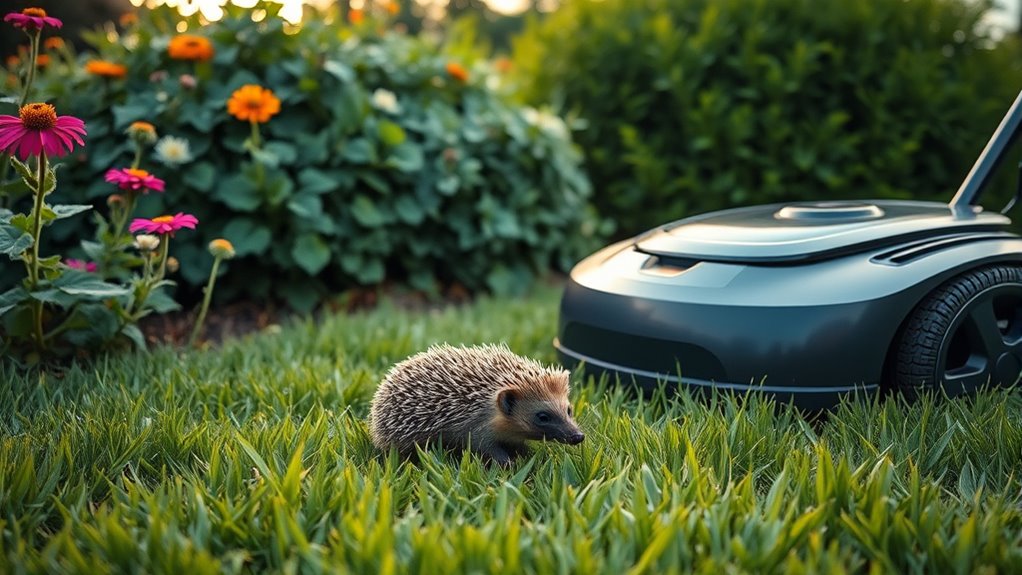
Understanding the behavior of hedgehogs and other wildlife is essential when considering the impact of robot mowers on their habitats. Hedgehogs are primarily nocturnal creatures, so they’re active during the night, which means you might not see them during the day. Their diet mainly consists of insects, worms, and small invertebrates found in your garden soil. This diet is vital for their survival and helps control pest populations. Because they’re active at night, they rely on undisturbed habitats free from noise and movement. Any disturbance during their active hours can stress them or force them to seek new shelter. Understanding their nocturnal behavior and dietary needs helps you create a safer environment, minimizing the risk of harming these beneficial creatures.
How Robot Mowers Operate and Their Safety Features

Robot mowers operate autonomously by maneuvering your lawn with a combination of sensors, boundary wires, and GPS technology to guarantee precise cutting coverage. Their robot mower navigation systems enable efficient, methodical mowing patterns, reducing missed spots. Safety sensor technology plays a vital role in preventing accidents; these sensors detect obstacles, including small creatures, and immediately halt the blades if something is detected nearby. Many models also feature lift and tilt sensors, which stop the blades if the mower is lifted or tilted. This combination of navigation and safety features ensures the mower works effectively while minimizing risks to wildlife. You can trust that a well-designed robot mower will trim your lawn without harming small animals or becoming a hazard around your garden.
Potential Risks of Robot Mowers to Small Creatures
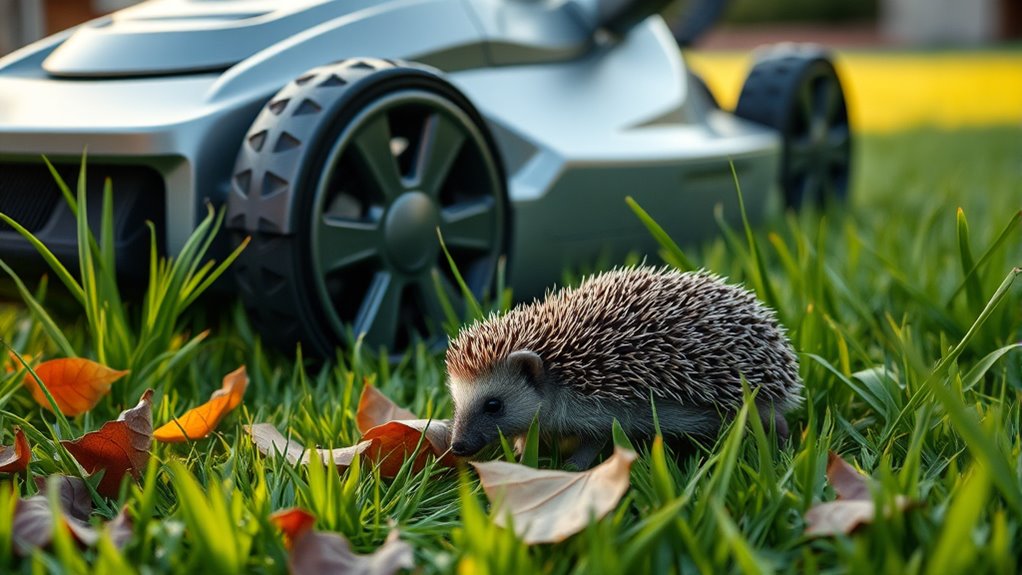
While safety sensors help prevent accidents, small creatures like insects, frogs, and birds can still be at risk. Robot mowers may inadvertently disturb animals with nocturnal behavior or those with heightened predator awareness. These creatures often move quietly and unpredictably, making them vulnerable. Imagine a tiny frog startled by the mower’s whirring blades, or an insect caught unaware during its nightly foraging. The table below visualizes potential risks:
| Small Creature | Typical Behavior | Risk Level |
|---|---|---|
| Insects | Nocturnal, ground-dwelling | Moderate |
| Frogs | Nocturnal, near water | High |
| Birds | During dawn/dusk | Moderate |
| Hedgehogs | Nocturnal, cautious | Low |
These behaviors increase their vulnerability, especially when predator awareness is heightened at night.
Designing Gardens That Support Wildlife Safety
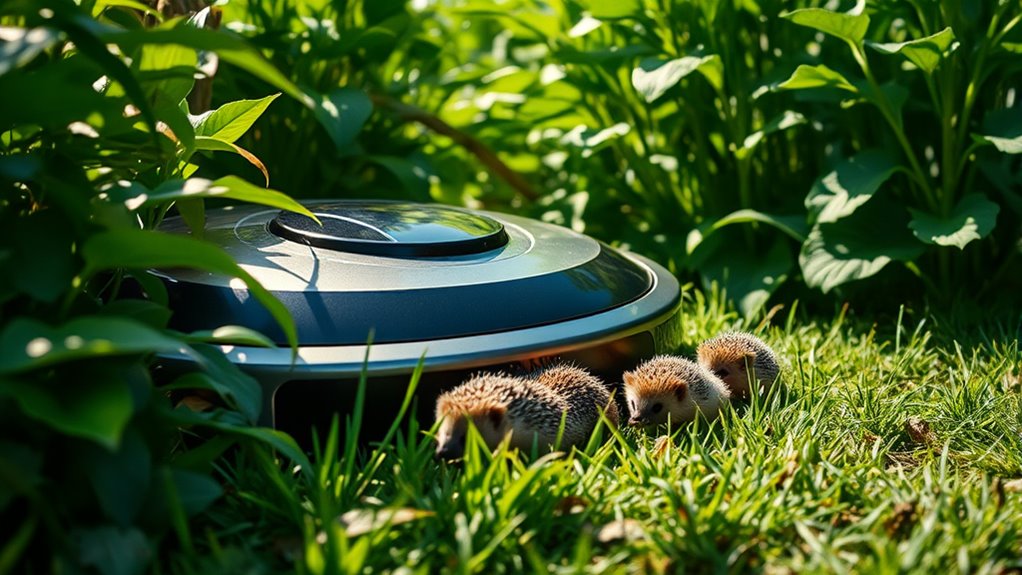
Creating a wildlife-friendly garden begins with thoughtful design choices that prioritize the safety of small creatures. You can achieve this by incorporating features that provide shelter, food, and safe movement paths. Use diverse flower beds to attract pollinators and offer hiding spots. Water features, such as shallow ponds or birdbaths, give wildlife essential hydration and bathing areas. Guarantee pathways are wide and free of obstacles to allow safe passage. Avoid sharp edges and heavy machinery zones where animals might get trapped or injured. Consider planting native flora that supports local insects and small mammals. Creating a balanced environment reduces risks posed by robot mowers, making your garden a safe haven for wildlife. Remember, thoughtful design fosters harmony between your garden’s beauty and its tiny visitors.
Features and Technologies That Make Robot Mowers More Wildlife-Friendly
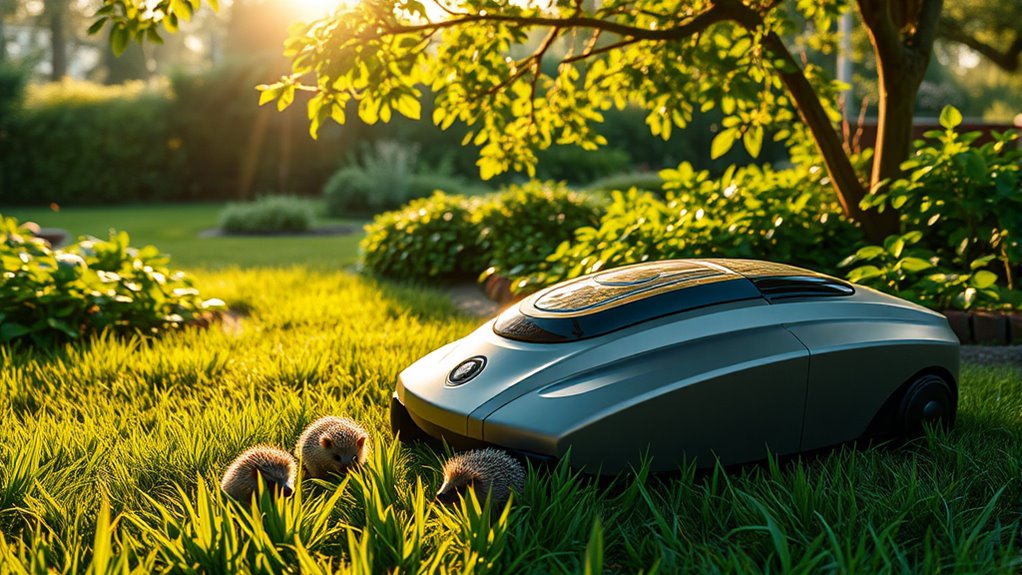
Advances in technology are making robot mowers more compatible with wildlife-friendly gardens. Many models now feature quieter operation, markedly reducing robot mower noise, which minimizes disturbance to hedgehogs and other creatures. Additionally, safety features like mower blade safety systems prevent accidental injuries to small animals or wildlife passing through the garden. These systems detect obstacles and stop the blades immediately, ensuring a safer environment. Some mowers also include sensors that recognize animals nearby, automatically slowing down or pausing. These technological improvements help you maintain a well-kept lawn without compromising your garden’s wildlife. By choosing models with quieter operation and robust safety features, you support the local ecosystem while enjoying the benefits of automated mowing.
Practical Tips for Garden Owners to Protect Hedgehogs
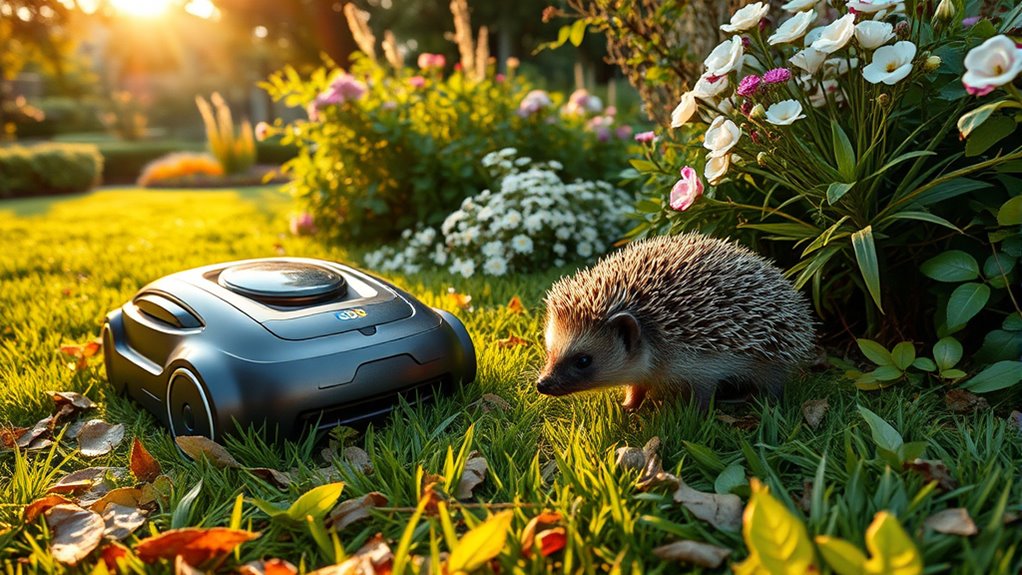
To protect hedgehogs in your garden, start by opting for hedgehog-friendly mowers that are gentle on wildlife. Make sure to create safe hiding spots and shelter areas where they can rest undisturbed. Additionally, avoid using harmful chemicals that could pose risks to these small creatures.
Use Hedgehog-Friendly Mowers
Using hedgehog-friendly mowers is one of the simplest ways to protect these charming creatures while maintaining a tidy garden. Opt for mowers with low blades, or consider manual or electric models that operate quietly. This minimizes disturbance and prevents accidental harm. When designing your garden, think about creating gentle slopes and leaving patches of longer grass to support hedgehog foraging and movement. Remember, a proper garden design encourages a natural hedgehog diet, rich in insects and worms. To further protect hedgehogs, consider these tips:
- Avoid cutting too close to the ground
- Mow less frequently to preserve habitat
- Remove debris and leaf piles for safe foraging
- Use eco-friendly, non-toxic lawn treatments
These practices keep your garden safe and hedgehog-friendly year-round.
Create Safe Garden Hiding Spots
Creating safe hiding spots in your garden provides essential shelter for hedgehogs, helping them feel secure from predators and harsh weather. Leave piles of leaves, logs, or dense shrubbery to offer natural cover. These hideouts also support garden pest control by encouraging hedgehogs to hunt for insects and slugs. Be mindful of outdoor lighting; dim or shielded lights prevent disorienting and disturbing hedgehogs during their active hours. Avoid bright, direct lighting that can scare them away or disturb their natural behaviors. Ensure your garden has accessible, undisturbed areas where hedgehogs can retreat and rest. By removing clutter and managing outdoor lighting carefully, you create a welcoming environment that promotes hedgehog safety and contributes to a balanced garden ecosystem.
Avoid Harmful Garden Chemicals
Garden chemicals like pesticides and herbicides can pose serious threats to hedgehogs, especially since they often forage close to the ground. To protect them, avoid using chemical pesticides and synthetic fertilizers in your garden. Instead, opt for natural pest control methods, such as encouraging beneficial insects or using organic compost. Here are some practical tips:
- Use organic fertilizers to promote healthy plants without harming wildlife
- Replace chemical pesticides with natural deterrents like neem oil or soap sprays
- Remove weeds manually instead of applying herbicides
- Create wildlife-friendly zones free of harmful chemicals for hedgehogs to forage safely
Balancing Garden Maintenance With Wildlife Conservation
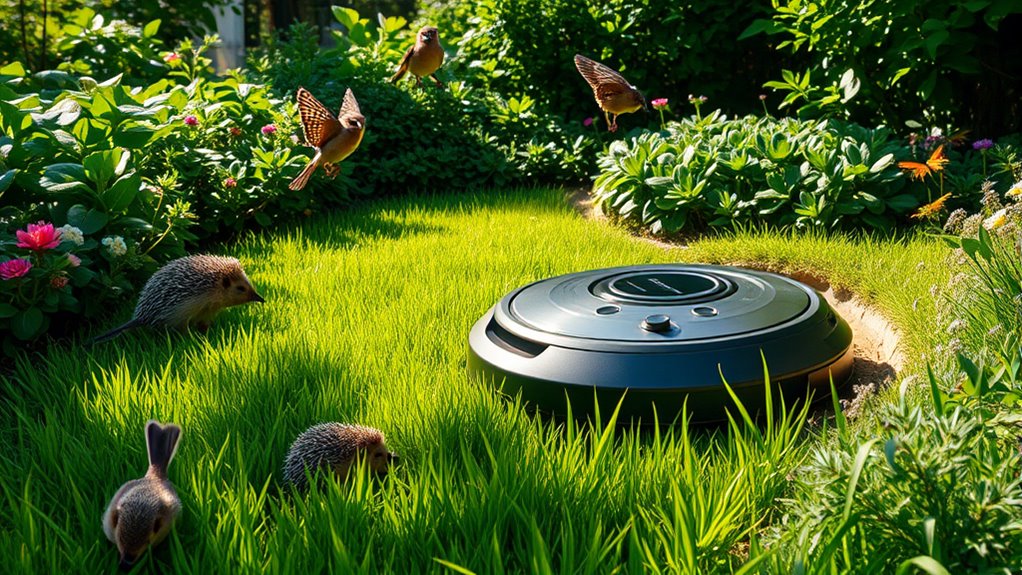
To balance garden maintenance with wildlife conservation, you can create lawns that support local species and choose eco-conscious equipment that minimizes disturbance. Maintaining natural habitats within your garden encourages biodiversity and provides refuge for wildlife. By making these thoughtful choices, you guarantee your garden stays beautiful while protecting the creatures that live there.
Creating Wildlife-Friendly Lawns
Balancing lawn maintenance with wildlife conservation requires thoughtful planning and intentional choices. To create a wildlife-friendly lawn, consider adding diverse elements like native flower beds that attract pollinators. Incorporate natural features instead of excessive lawn ornaments, which can disturb wildlife. Keep some areas uncut or allow patches of wildflowers to grow, providing shelter and food. Use a mix of plants to support different species, ensuring your yard becomes a habitat rather than just a manicured space. Avoid removing natural debris like logs or leaves, which serve as nesting sites. Remember, small changes can make a big difference—your thoughtful approach encourages a thriving ecosystem right in your backyard.
Selecting Eco-Conscious Equipment
Choosing the right equipment is key to maintaining a wildlife-friendly yard. Opt for solar powered tools whenever possible to reduce energy consumption and limit pollution. These tools operate silently, minimizing disturbance to animals like hedgehogs and birds. Additionally, select biodegradable lawn products to keep harmful chemicals out of the environment. These eco-conscious choices help preserve soil health and prevent water contamination, supporting local wildlife. When shopping for equipment, prioritize those designed with sustainability in mind, such as electric or manual options, over gas-powered alternatives. By making informed decisions, you guarantee your garden’s maintenance aligns with wildlife conservation efforts. This approach not only benefits the environment but also creates a safer, more inviting space for native animals.
Maintaining Natural Habitats
Maintaining natural habitats in your yard requires thoughtful planning to support local wildlife while keeping your garden functional. Incorporate native plantings to provide food and shelter for insects, birds, and small mammals. Adding water features, like ponds or birdbaths, encourages species to visit and thrive. To balance maintenance with conservation, consider these key points:
- Use native plants to reduce the need for watering and chemical treatments
- Incorporate water features to supply essential hydration sources
- Avoid overly tidy landscapes that eliminate habitat complexity
- Maintain areas with leaf litter or tall grasses for nesting and shelter
Frequently Asked Questions
How Do Robot Mowers Affect the Overall Biodiversity of a Garden?
Robot mowers can positively impact your garden’s biodiversity by promoting flower diversity and preserving insect habitats. They cut grass evenly, allowing wildflowers to thrive and providing essential nectar sources. Unlike traditional mowers, they minimize habitat destruction and noise, encouraging a variety of insects and pollinators. By maintaining a natural, varied landscape, you support a healthier ecosystem, making your garden a vibrant haven for wildlife.
Can Robot Mowers Detect and Avoid Larger Wildlife Like Rabbits or Foxes?
You might worry that robot mowers can’t detect larger wildlife like rabbits or foxes. Thankfully, many models now feature advanced wildlife detection and mower sensors that help identify bigger animals nearby. These sensors slow down or stop the mower, preventing harm. While no system is perfect, these safety features considerably reduce risks, making your garden safer for larger wildlife while keeping maintenance hassle-free.
Are There Specific Brands or Models of Robot Mowers Designed for Wildlife Conservation?
Yes, some specialized conservation mowers are designed with wildlife friendly features. Brands like EcoMow and Conservation Mowers offer models that prioritize habitat preservation, incorporating quiet operation, gentle blades, and sensors to detect wildlife. These mowers help maintain natural ecosystems while minimizing disturbance, making them ideal for conservation efforts. When choosing a mower, look for those specifically marketed as conservation or wildlife-friendly, ensuring your lawn care supports local biodiversity.
What Is the Impact of Robot Mower Noise on Nocturnal Animals?
The impact of robot mower noise on nocturnal animals can be significant; it’s a double-edged sword. The noise disturbances may startle or scare animals, disrupting their natural behaviors, while habitat disruption occurs if their environment becomes too noisy. You might think it’s a small issue, but for these creatures, even quiet sounds can cause a ripple effect. Being mindful of mower timing can help minimize this unintended harm.
How Can Garden Design Be Optimized to Protect Hedgehogs From Robot Mowers?
You can optimize your garden design by creating clear hedgehog pathways, ensuring they can safely navigate without interference from your mower. Add garden refuge zones with tall grass or leaf piles where hedgehogs can hide and rest. Keep mower activity to specific times, avoiding early mornings or late evenings, and establish these pathways and refuge zones to protect hedgehogs effectively while maintaining your garden’s beauty.
Conclusion
By understanding both wildlife behavior and robot mower technology, you can create a safer garden. But with new features constantly emerging, are you truly doing enough to protect your hedgehogs? Stay alert and informed—what innovations might be just around the corner? Your garden’s safety could depend on the choices you make today. Keep watching, because the next breakthrough might change everything you thought you knew about wildlife-friendly mowing.