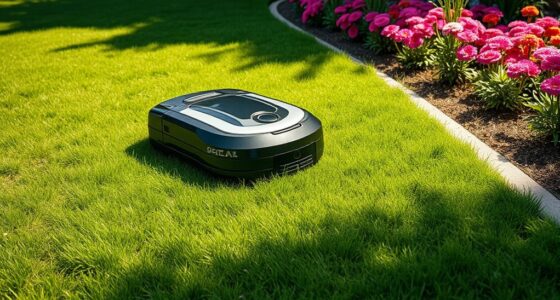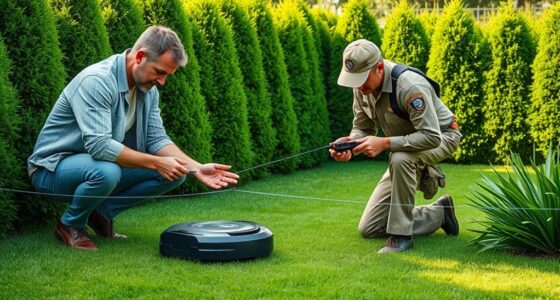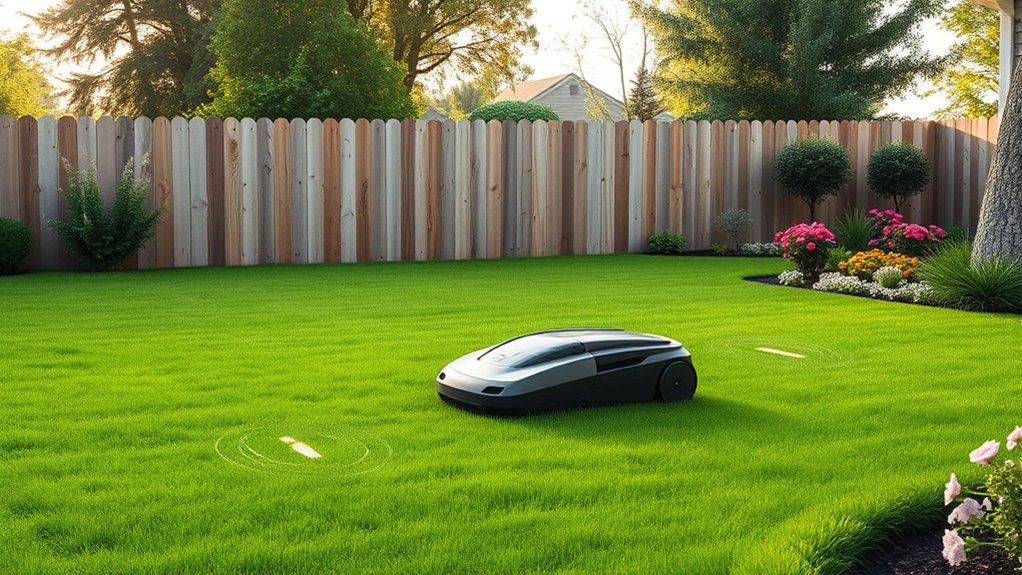

You don’t necessarily need a physical fence for your robot mower to operate safely, as virtual boundaries created through an app or GPS can be effective in keeping it within designated areas. These virtual borders are flexible and easy to adjust, helping prevent accidental access to gardens or play zones. However, adding a fence can provide extra security and peace of mind. Keep exploring to learn how combining both options maximizes your yard’s safety and protection.
Key Takeaways
- Robot mowers can operate safely with virtual boundaries set via app or GPS, reducing the need for physical fences.
- Physical fences provide a clear barrier, but virtual boundaries offer flexible, cost-effective yard confinement.
- Combining virtual boundaries with sensors enhances mower security and prevents unauthorized access or accidents.
- Properly mapping your yard ensures virtual boundaries effectively contain the mower without physical fencing.
- The choice depends on yard size, layout, and desired security level; both methods can be used together for optimal protection.
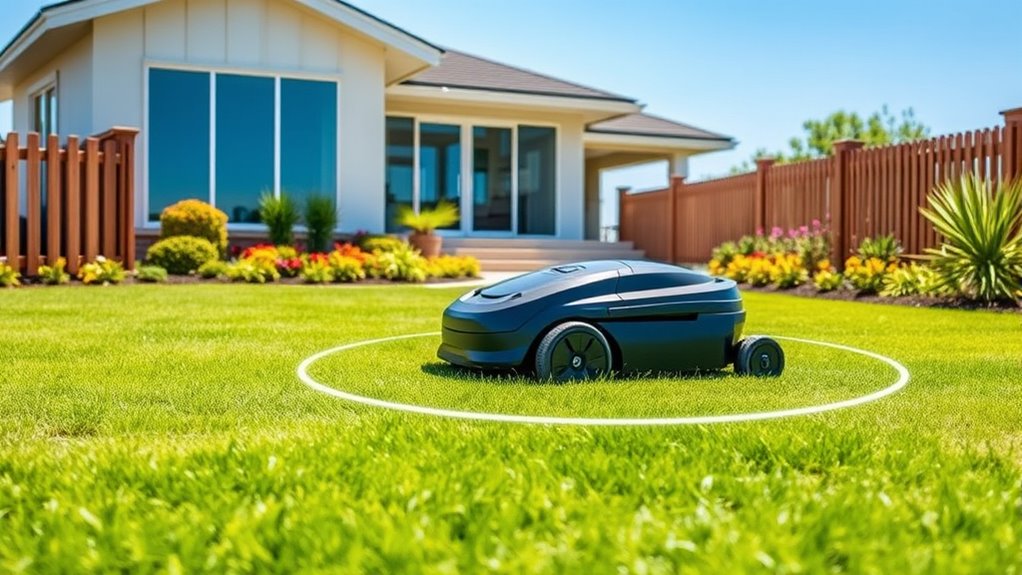
A secure yard is essential for keeping your family and property safe. When it comes to maintaining your lawn, robot mowers are a popular choice because they save you time and effort. But to get the most out of your robot mower, you need to understand its features and setup options, especially whether you need a traditional fence or if a virtual boundary can suffice.
Many robot mower features are designed to enhance safety and efficiency. For example, most models include sensors that prevent the mower from crossing into restricted areas or colliding with obstacles. These sensors help keep your children and pets safe while the mower is operating. Additionally, some robot mowers come with anti-theft features, such as alarms or GPS tracking, to deter theft and give you peace of mind. But to guarantee the mower stays within your yard, you’ll need to set up a boundary.
Most robot mowers feature sensors for safety and anti-theft alarms to protect your yard and loved ones.
Traditionally, a physical fence has been the go-to solution for containing a robot mower. Fences provide a clear, physical barrier that prevents the mower from leaving your property. However, installing or maintaining a fence can be costly and time-consuming. This is where virtual boundary setup comes into play. Many modern robot mowers now support virtual boundaries, which are defined via a mobile app or control panel. With these virtual boundaries, you can outline no-go zones or specific areas where the mower shouldn’t go, without the need for physical fencing.
Using a virtual boundary setup is straightforward. You simply map out your yard’s perimeter and any restricted zones through the mower’s app. Once set, the mower’s sensors and GPS work together to keep it within these virtual borders. This setup is especially useful if you have landscaped gardens, flower beds, or play areas you want to protect. Plus, virtual boundaries are flexible; you can easily adjust them if your yard layout changes or if you want to exclude certain sections temporarily.
While virtual boundaries are convenient, they rely heavily on the mower’s GPS accuracy and sensors. As a result, it’s important to choose a model with reliable features and ensure your yard is properly mapped. Some models even combine virtual boundaries with physical boundary wires for enhanced security. Additionally, proper yard mapping is crucial for optimal boundary setup and mower performance. Ultimately, whether you opt for a fence or virtual boundary setup, the goal remains the same: to keep your robot mower within safe, designated areas, protecting your loved ones and your property. By understanding your mower’s features and setting up boundaries correctly, you can enjoy a beautifully maintained yard without worries about safety or boundaries being crossed.
Frequently Asked Questions
Can Robot Mowers Operate Effectively Without Any Boundary Systems?
Robot mowers can operate effectively without boundary systems thanks to advanced sensor technology and remote navigation. These features help the mower detect obstacles, boundaries, and the lawn’s edges, allowing it to navigate safely and efficiently. With sensors and GPS guiding its movements, you don’t necessarily need a fence or virtual boundary, making setup easier. Just guarantee your mower has the latest navigation tech for peak performance without traditional barriers.
What Are the Risks of Not Installing a Fence or Virtual Boundary?
Without a fence or virtual boundary, you risk privacy concerns and theft. Your robot mower might wander into neighbors’ yards or public spaces, potentially causing disputes. It also becomes an easier target for theft, especially if left unattended. You might find it difficult to control where the mower goes, leading to unintentional damage or loss. To keep your mower safe and your yard secure, setting boundaries is a wise decision.
Do Virtual Boundaries Require Special Equipment or Subscriptions?
Virtual boundaries typically require boundary sensors installed on your mower or around your yard, and some models may need a subscription for advanced features like GPS mapping or app control. These subscription costs vary, so you should check your mower’s specifications. The sensors create a virtual fence, preventing your mower from crossing into unwanted areas. You’ll find that investing in these features enhances safety and efficiency without needing physical fencing.
How Do Robot Mowers Detect Obstacles Without Physical Fences?
Robot mowers detect obstacles using advanced sensor technology, which enables obstacle detection without needing physical fences. These sensors, like infrared, ultrasonic, or collision sensors, actively scan the environment as the mower moves. When they identify an obstacle, the mower automatically changes direction to avoid collisions. This proactive obstacle detection guarantees your yard stays safe and well-maintained without the need for physical barriers, making your mowing experience seamless and efficient.
Are There Legal Restrictions on Using Virtual Boundaries for Robot Mowers?
Yes, there are legal restrictions on using virtual boundaries for robot mowers. You should consider privacy concerns, as virtual boundaries often rely on GPS or other signals that might track your property or nearby areas. Zoning regulations can also impact where and how you set up these boundaries. Always check local laws to guarantee compliance, and consider how virtual boundaries might affect your neighbors’ privacy or property rights.
Conclusion
To keep your yard safe and tidy, consider your options carefully. Whether you choose a fence or a virtual boundary, think of it as building a gatekeeper for your garden’s peace. A fence is like a sturdy fortress, while virtual boundaries are an invisible shield. Whichever route you pick, make sure it suits your space and peace of mind. After all, a well-protected yard is like a well-guarded treasure — it’s worth every effort.