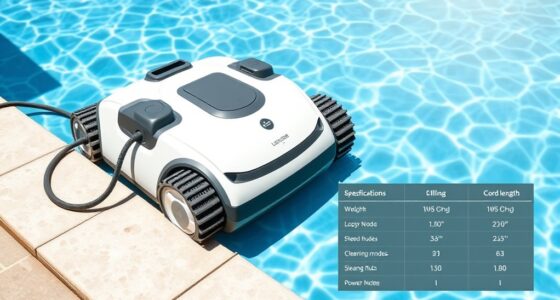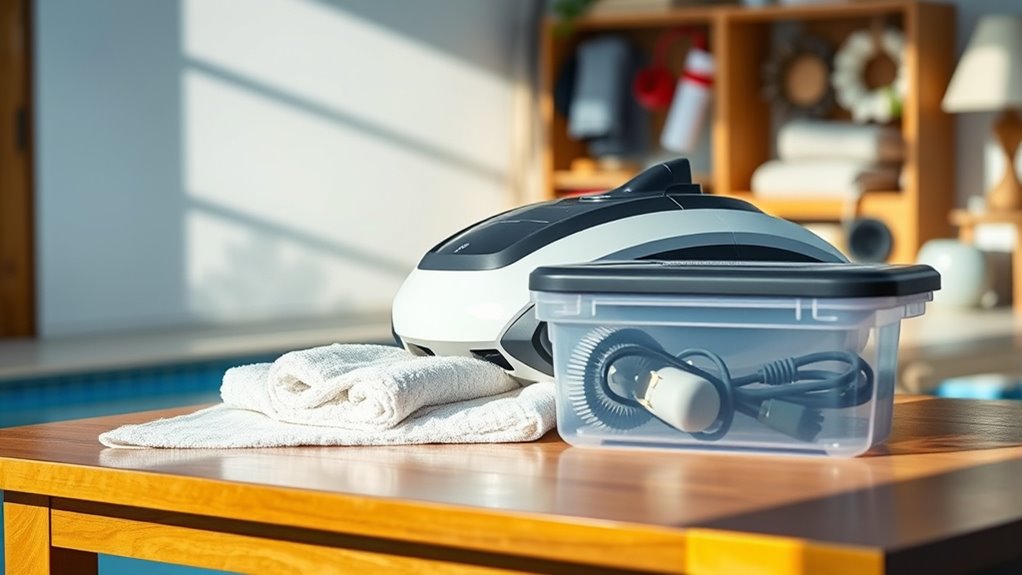
To store your robotic pool cleaner off-season, start by cleaning and drying all removable parts, especially filters. Fully charge the battery, then disconnect or store it in a cool, dry place away from extreme temperatures and humidity. Keep the device in a neutral position, like on a stand, and guarantee it’s protected from moisture and pests. Taking these steps now helps ensure it works smoothly when you need it again, and there’s more to learn about proper winter storage techniques.
Key Takeaways
- Fully charge the battery before storage and disconnect it to prevent discharge damage.
- Clean and dry all filters and components to prevent corrosion and mold growth.
- Store the cleaner in a cool, dry, and temperature-controlled environment away from direct sunlight.
- Keep the device in a neutral or slightly elevated position, following manufacturer instructions for storage.
- Periodically inspect the cleaner during storage, recharge the battery if needed, and prepare it for spring use.
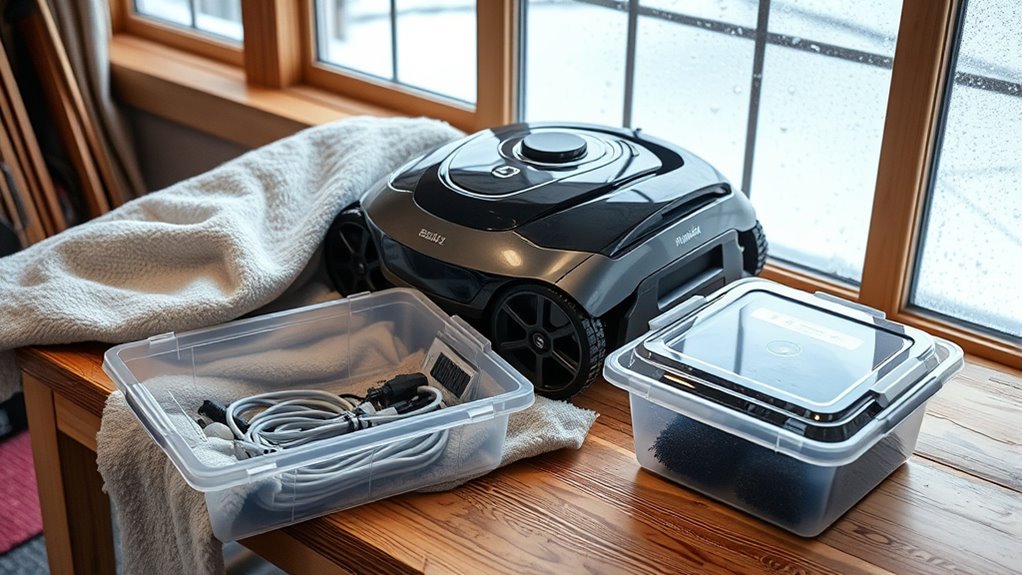
Winter can be tough on your body, your home, and your belongings, but with some simple preparations, you can stay comfortable and safe. When it comes to your robotic pool cleaner, proper off-season storage is essential to keep it in good shape for next year’s swimming season. The first step is to focus on battery maintenance. If your robotic cleaner has a rechargeable battery, you should fully charge it before storing. A full charge helps prevent the battery from discharging completely, which can damage the cells and reduce overall lifespan. Once charged, it’s best to disconnect the battery from the device if possible, especially if you’ll be storing it for an extended period. This prevents any potential battery drain or corrosion that can occur if the battery remains attached and partially drained during cold months. Additionally, battery preservation techniques can help extend the life of your device’s power source over multiple seasons. Next, you need to think about the storage environment. Cold temperatures can harm the electronic components and reduce the lifespan of your robotic cleaner. Find a cool, dry place away from direct sunlight, moisture, and temperature fluctuations. A basement or a closet in your home usually works well, provided it’s not exposed to freezing conditions. Avoid storing your cleaner outdoors or in unheated garages where temperatures can dip below freezing, as this can cause damage to the internal electronics and the battery. Additionally, humidity can lead to corrosion, so ensure the storage space is dry. If your device has a removable filter, clean and dry it thoroughly before storing to prevent mold or odors from developing. During storage, you’ll want to keep the robotic cleaner in a neutral position—preferably on a stand or in a position that prevents strain on any moving parts. Some manufacturers recommend storing the device in a slightly elevated position to prevent dust buildup or accidental damage. Check your user manual for specific instructions regarding storage position and any additional precautions. Regularly inspecting the storage environment during the off-season is also a good idea. Keeping the area clean and free of dust or pests will help maintain your robot’s condition. When spring arrives and you’re ready to reopen your pool, give your robotic cleaner a quick inspection, recharge the battery if needed, and ensure all parts are in working order before using it again. Proper storage and battery maintenance now will save you time and money later, ensuring your robotic pool cleaner performs flawlessly season after season.
Frequently Asked Questions
Can I Leave the Robotic Pool Cleaner Outside During Winter?
You shouldn’t leave your robotic pool cleaner outside during winter. Outdoor storage exposes it to harsh weather, which can damage the electronics and mechanical parts. Instead, store it indoors in a dry, protected area like a garage or shed. Before storing, verify it’s clean and dry, and consider applying winter wear or protective covers if you must leave it outside temporarily. Proper winter care prolongs your cleaner’s lifespan and keeps it ready for next season.
How Do I Prevent Mold and Mildew During Storage?
Think of mold and mildew as sneaky invaders that thrive in damp spaces. To prevent them, guarantee proper moisture control by thoroughly drying your robotic pool cleaner before storage. Store it in a cool, dry place with good ventilation. You can also use silica gel packets or a dehumidifier to absorb excess moisture. Regularly inspect and clean your device to stay ahead of mold prevention, keeping it fresh and ready for next season.
Is It Necessary to Remove the Batteries Before Storing?
Yes, you should remove the batteries before storing your robotic pool cleaner. This is a key part of battery maintenance and storage precautions, preventing corrosion and prolonging battery life. By removing batteries, you avoid potential leaks or damage during off-season storage. Always store the batteries in a cool, dry place separately from the device, and check them periodically to verify they remain in good condition for when you need your cleaner again.
What Tools Are Recommended for Cleaning Before Storage?
Imagine your robotic pool cleaner resting quietly, ready to spring into action next season. To keep it in top shape, gather cleaning supplies like a soft brush, microfiber cloth, and mild detergent. Use these tools to remove dirt and debris gently, especially from the brushes and filters. Follow storage tips by thoroughly drying the unit, ensuring it’s free of grime. This prep keeps your cleaner ready for when swimming season returns.
How Often Should I Check on the Cleaner During Winter Storage?
You should check your robotic pool cleaner at least once every two to four weeks during winter storage. Follow a maintenance checklist to make sure it’s in good condition, inspecting for any damage or debris. Keep it in a suitable storage environment, away from extreme temperatures and moisture. Regular checks help prevent issues, so you can resume use quickly when swimming season starts again.
Conclusion
Now that you know how to store your robotic pool cleaner properly, you can enjoy peace of mind during the off-season. Store it in a dry, protected spot, clean and dry it thoroughly, and keep it away from harsh elements. By following these simple steps, you guarantee your cleaner stays ready for next season. Protect your investment, prolong its life, and keep your pool maintenance hassle-free. Prepare, preserve, and enjoy a worry-free winter!