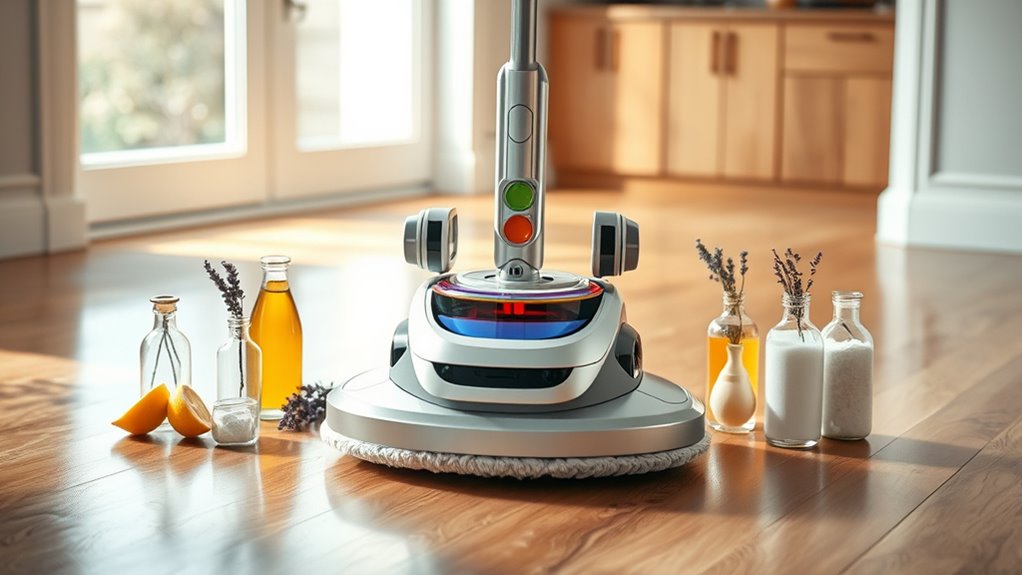

To make a DIY robot mop solution, mix warm water with a few drops of gentle dish soap and a splash of white vinegar for disinfection. Adding essential oils like tea tree or lavender can boost antibacterial benefits and leave a fresh scent. Be careful not to use too much vinegar to avoid surface damage. For more tips on creating effective and safe homemade cleaners, keep exploring these simple recipes.
Key Takeaways
- Use a simple mix of warm water, a few drops of gentle dish soap, and a splash of white vinegar for an effective, safe cleaning solution.
- Add essential oils like tea tree or lavender to boost antibacterial properties and impart a fresh scent.
- Test the homemade cleaner on small, inconspicuous areas to ensure surface compatibility before full use.
- Keep ingredient concentrations balanced to prevent suds or sensor interference, extending your robot mop’s lifespan.
- Regularly clean your robot mop and prepare small batches of homemade solutions for optimal, eco-friendly maintenance.
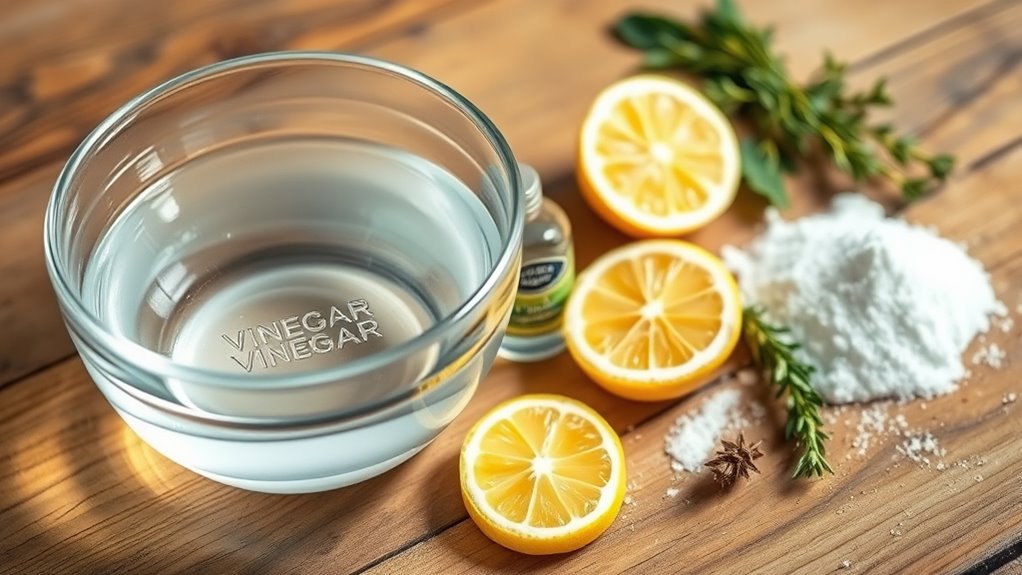
Cleaning your floors with a DIY robot mop solution is an easy and cost-effective way to keep your home spotless. When you choose to make your own floor cleaner, you gain control over the ingredients, guaranteeing a safe and eco-friendly solution that works well with your robot mop. Proper robot mop maintenance becomes simpler because homemade recipes tend to be gentler on your device, reducing wear and tear over time. Plus, crafting these solutions at home saves you money compared to commercial cleaning products, making it a smart choice for budget-conscious households.
Homemade robot mop solutions are safe, eco-friendly, and cost-effective for long-lasting device performance.
To get started, you’ll want to gather basic ingredients that are safe for both your floors and your robot mop. A popular homemade robot mop recipe involves mixing warm water with a few drops of gentle dish soap. This creates a mild cleaning solution that effectively breaks down dirt and grime without leaving residue that could clog or damage your device. For added disinfectant power, a splash of white vinegar is often included, but be cautious not to overuse it, especially on natural stone floors, as vinegar can etch certain surfaces. Always test a small area first to ensure compatibility.
If you prefer a more natural approach, you can incorporate essential oils like tea tree or lavender, which have antibacterial properties and leave a fresh scent. Just a few drops in your homemade robot mop recipes provide a pleasant aroma while boosting cleaning power. When preparing your solution, remember to keep the concentration balanced; too much soap or vinegar can create suds or interfere with your robot’s sensors. Additionally, using gentle ingredients helps extend the lifespan of your device by preventing buildup and corrosion.
Maintaining your robot mop isn’t just about replacing parts or charging batteries. It also involves regular cleaning of the device itself and using the right homemade solutions to prevent buildup that can impair its functioning. Using homemade recipes ensures you’re not introducing harsh chemicals that may cause damage over time. Instead, you’re opting for gentle, effective ingredients that keep your device working smoothly for longer periods.
Frequently Asked Questions
Are Homemade Solutions Safe for All Robot Mop Models?
Homemade solutions can be safe for most robot mop models if you consider chemical reactions and material compatibility. You should always check your mop’s manufacturer guidelines before using homemade cleaners, as some ingredients may harm the device or cause adverse chemical reactions. Stick to gentle, natural ingredients like vinegar or baking soda, and avoid harsh chemicals to guarantee your robot’s longevity and safe operation across various models.
How Often Should I Change My Homemade Floor Cleaner?
You should change your homemade floor cleaner every 3 to 4 uses to maintain cleaning frequency and guarantee solution freshness. If you notice it smells sour or isn’t cleaning well, change it sooner. Regularly replacing the solution prevents bacteria buildup and keeps your robot mop working efficiently. Always keep an eye on how long your solution lasts, and don’t reuse old cleaner to protect your floors and robot.
Can I Add Essential Oils for Better Cleaning?
You can definitely add essential oils for better cleaning, and it’s a lovely coincidence that their benefits include natural antibacterial properties and a pleasant natural fragrance. The fresh scent uplifts your mood while helping to disinfect surfaces. Just a few drops of lavender or tea tree oil can enhance your homemade cleaner, making your floors smell wonderful and feel cleaner, all while harnessing the natural benefits essential oils bring.
Will Homemade Cleaners Damage My Floors Over Time?
Homemade cleaners generally won’t damage your floors if you consider surface compatibility and avoid harsh ingredients. However, over time, incorrect chemical reactions between certain natural ingredients and your flooring material could cause deterioration. To prevent this, test your homemade solution on a small area first and use gentle, compatible ingredients. Regularly rinsing and avoiding excessive buildup will help maintain your floors’ condition and prevent long-term damage.
How Do I Store Homemade Cleaning Solutions Safely?
Think of your homemade cleaner as a precious treasure. Store it in sturdy, leak-proof storage containers, preferably glass or plastic with tight lids. Always label safety, including ingredients and date made, so you know what’s inside and avoid confusion. Keep your solutions out of reach of children and pets, in a cool, dark place. Proper storage guarantees your cleaner stays effective and safe for future use.
Conclusion
Now that you have these simple, homemade recipes, your robot mop will never be the same. But here’s the thing—there’s one secret ingredient that could elevate your cleaning game even further. Are you ready to discover what it is and access the ultimate shine? Keep experimenting, stay curious, and don’t be surprised if your floors become the talk of the neighborhood. The best part? The next cleaning breakthrough could be just around the corner.