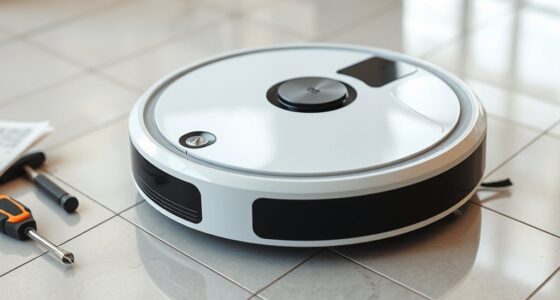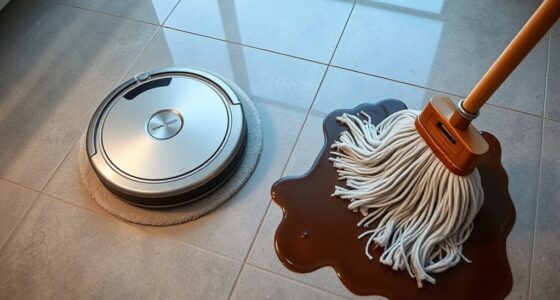
Robot mops in bathrooms can effectively clean tiles and handle toilet drips if you keep them properly maintained and programmed. Regularly clean brushes, replace mop pads, and guarantee your device’s sensors are clear. Pre-clean stubborn spots and set schedules to maximize their efficiency. By managing obstructions and using compatible cleaning solutions, you’ll help your robot tackle bathroom messes with confidence. Keep exploring to learn more tips for ideal bathroom cleaning with robot mops.
Key Takeaways
- Robot mops efficiently clean tile surfaces by scrubbing and removing dirt with proper maintenance.
- They can handle toilet drip areas if the floor is clear of obstructions and pre-cleaned.
- Regularly cleaning brushes and pads ensures effective tile cleaning and prevents grime buildup.
- Robot mops can reach tight spots and grout lines, improving overall bathroom hygiene.
- Addressing water splashes and drips promptly helps maintain device performance and floor cleanliness.

Robot mops are revolutionizing bathroom cleaning by making it faster and more effortless for you. Instead of scrubbing tiles or reaching into tight spots manually, you can rely on your robot mop to handle the task, freeing up your time for other chores or relaxation. But to keep your device performing at its best, proper robot mop maintenance is essential. Regularly checking the brushes and cleaning the water tank prevents buildup of grime and guarantees ideal cleaning power. After each use, wipe down the sensors and the mop’s exterior to keep it free of dust and soap residue. You should also replace the mop pads when they become worn or stained to maintain effective cleaning — dirty pads can transfer dirt instead of removing it. Additionally, empty and rinse the water tank frequently, especially if you notice less efficient mopping, to avoid mold or bacteria growth. Understanding your robot mop’s navigation and mapping features can help optimize its cleaning routes and coverage for bathroom floors.
When it comes to bathroom cleaning tips, setting your robot mop on a consistent schedule helps keep your bathroom spotless without you lifting a finger. Most devices allow you to program cleaning times, so you can have it run overnight or during times when you’re away. To tackle tiles and grout lines effectively, clear the floor of any loose objects or bath mats that might obstruct the mop’s path. For stubborn bathroom stains, especially around the toilet or in grout lines, you might need to do a quick pre-clean with a brush or a damp cloth. This helps your robot mop focus on general floor cleaning rather than trying to scrub through heavy grime.
For toilet drips and splashes, a robot mop can be quite effective if the area is regularly maintained and kept dry. However, it’s wise to address drips or spills promptly with a cloth or paper towel to prevent water from seeping into hard-to-reach spots or causing mold. Keep in mind that some bathroom surfaces may require special cleaning solutions; check your robot mop’s compatibility with different cleaning agents to avoid damage. Also, ensure that your bathroom is well-ventilated, as humidity can affect the longevity of both your bathroom surfaces and your robot mop’s components. With routine maintenance and smart cleaning tips, your robot mop will become an invaluable tool for keeping your bathroom pristine, tackling tiles, grout, and even the mess around the toilet with minimal effort on your part.
Frequently Asked Questions
Can Robot Mops Clean Bathroom Grout Lines Effectively?
Yes, robot mops can clean bathroom grout lines effectively. They excel at grout cleaning by moving precisely along tile edges and applying scrubbing motions, which helps remove dirt and stains. While they handle tile scrubbing well, you might need to do a deep clean with a manual brush for stubborn grime. Overall, robot mops make maintaining clean grout lines easier and save you time on routine bathroom cleaning.
Are Robot Mops Safe to Use Around Bathroom Fixtures?
Yes, robot mops are safe to use around bathroom fixtures if you follow proper cleaning schedules. They’re designed to avoid damage, much like floor polishers do. Just make certain the area is clear of obstacles and fixtures are secure. Regularly check your robot for debris or water buildup, and schedule cleanings to keep everything safe. With careful use, your bathroom fixtures stay protected while maintaining a spotless, hygienic space.
How Do Robot Mops Handle Bathroom Spills and Stains?
Robot mops handle bathroom spills and stains by scrubbing and absorbing messes efficiently, especially with proper robot mop maintenance. To keep them effective, regularly check and clean their brushes and pads. Battery life considerations are key—ensure your robot mop charges fully before cleaning, as longer sessions help tackle stubborn stains. With consistent care and awareness of battery limits, your robot mop can keep bathroom surfaces spotless and stain-free.
Do Robot Mops Disinfect Bathroom Surfaces Properly?
They say, “Trust, but verify,” and that’s true for disinfecting bathroom surfaces. Robot mops with UV sterilization can kill germs effectively, ensuring cleaner results. They also pick up pet hair, preventing buildup. However, for thorough disinfection, you might still need to manually scrub tricky spots. Regular use of UV sterilization on your robot mop helps maintain a healthier bathroom environment.
Can Robot Mops Operate in Damp or Humid Bathroom Environments?
Yes, robot mops can operate in damp or humid bathroom environments. Look for models with high mop durability and humidity resistance, ensuring they withstand moisture without malfunctioning. These features help prevent rust and damage, allowing your robot mop to efficiently clean tile floors and around toilets even in high-humidity settings. Choose a device designed for such conditions, and you’ll enjoy hands-free cleaning without worrying about moisture-related issues.
Conclusion
Don’t worry about tough bathroom messes—modern robot mops are more capable than you think. They handle tiles, grout, and even those stubborn toilet drips with ease, saving you time and effort. Some might doubt their effectiveness in such a tricky space, but advancements in cleaning technology prove otherwise. So, give a robot mop a chance; it’ll keep your bathroom spotless without you lifting a finger. Trust me, it’s worth it!