To effectively clean greasy kitchen floors with a robot mop, start by thoroughly preparing the area—clear debris, sweep or vacuum, and pre-treat stubborn grease with a degreaser or warm soapy water. Keep your robot well-maintained by cleaning sensors, brushes, and pads regularly. Use suitable settings for grease, run multiple passes if needed, and guarantee the floor is dry before starting. For detailed tips, explore the key steps that’ll keep your floors spotless and your robot running smoothly.
Key Takeaways
- Pre-treat greasy areas with degreaser or warm soapy water to loosen stubborn grease before robot mopping.
- Clear the floor of loose debris and dry the surface thoroughly for optimal robot performance.
- Use appropriate cleaning settings and run the robot multiple times or in sections for heavy grease buildup.
- Regularly inspect and clean the robot’s sensors, brushes, and pads to maintain cleaning efficiency.
- Perform routine maintenance and store the robot in a dry area to prolong its lifespan and ensure effective cleaning.

Keeping greasy kitchen floors clean can be a challenge, especially when using a robot mop. Grease buildup tends to cling stubbornly to surfaces, making regular cleaning insufficient. To get the best results, you need to understand proper robot mop maintenance and implement effective floor prepping techniques. These steps guarantee your robot can handle tough grease and keep your floors spotless.
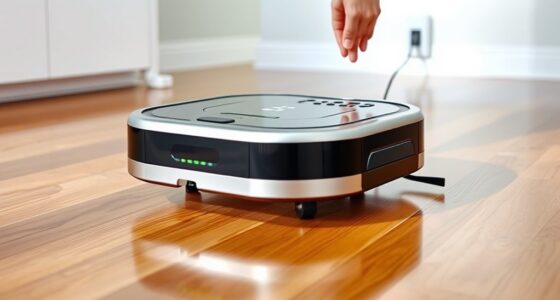
First, focus on robot mop maintenance. Regularly checking and cleaning the mop’s components is essential. Wipe down the sensors to prevent dirt from interfering with navigation, and inspect the brush and pad for accumulated grease or debris. If your robot mop has a washable pad, rinse it thoroughly after each use, especially when dealing with greasy messes. Replacing pads periodically is also vital because worn-out pads lose their ability to pick up grease effectively. Remember, a well-maintained robot mop performs better and lasts longer, saving you money in the long run. Additionally, robot mop technology continues to evolve, offering more advanced features for tackling greasy messes.
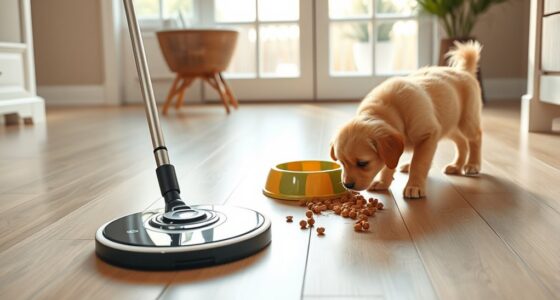
Next, floor prepping techniques play a significant role in guaranteeing efficient cleaning. Before starting the robot, clear the area of loose objects, and sweep or vacuum to remove loose dirt and debris. This prevents the robot from pushing dirt around or getting stuck. For greasy floors, pre-treat the surface with a suitable degreaser or a mixture of warm water and a few drops of dish soap. Use a mop or cloth to loosen and lift grease from the surface. Let the solution sit for a few minutes to break down stubborn grease, then wipe or sweep it away. This initial step reduces the workload on your robot mop and assures it can focus on removing residual grime.
When it’s time to run the robot, make sure the floor is dry and free of excess water, which could cause slipping or interfere with the sensors. If your robot has specific settings for sticky or greasy messes, select those for a more thorough clean. Running the robot multiple times or in sections can also improve results, especially if the grease buildup is significant.
Finally, after cleaning, perform a quick maintenance check on your robot mop. Remove and clean the brush or roller, and wipe down the body to keep it in top condition. Storing it in a dry, clean area will prevent dust buildup and guarantee it’s ready for your next greasy kitchen cleanup. By combining diligent robot mop maintenance with effective floor prepping techniques, you’ll make quick work of greasy kitchen floors, leaving them cleaner and safer with less effort.
Frequently Asked Questions
Can Robot Mops Handle Extremely Sticky or Burnt-On Grease?
Robot mops struggle with extremely sticky or burnt-on grease, especially burn residue. They can handle light grease removal but often can’t fully clean stubborn, thick layers of grease or charred residue. To improve results, pre-treat the area with a degreasing solution or manually remove the toughest spots first. This guarantees the robot can do its best job, but for heavy grease, manual cleaning is still your best bet.
How Often Should I Replace the Robot Mop’s Cleaning Pads?
You should replace your robot mop’s cleaning pads every 2-3 months, depending on cleaning frequency and pad lifespan. If you mop frequently or notice reduced cleaning effectiveness, replace the pads sooner. For maximum results, inspect pads regularly for wear and tear, especially after cleaning greasy or sticky floors. Changing pads regularly ensures your robot maintains proper cleaning performance and keeps your kitchen floors spotless.
Is It Safe to Use Chemical Cleaners With Robot Mops?
Yes, you can use chemical cleaners with robot mops, but beware of chemical residue left behind. These residues can cause buildup and damage your device over time. Plus, they might have a negative environmental impact if not eco-friendly. To stay safe and protect your floors, opt for environmentally safe, diluted cleaning solutions specifically designed for robotic mops. Always check your robot’s manufacturer guidelines before use.
Do Robot Mops Work on Textured or Uneven Kitchen Floors?
Robot mops can handle textured or uneven kitchen floors, but texture compatibility varies by model. Some are designed with flexible wheels and adaptive navigation to effectively clean uneven surfaces, ensuring thorough removal of grease and debris. However, you should check your robot’s specifications to confirm its ability to manage uneven surface cleaning. For best results, choose a robot mop built specifically for textured floors, and always follow the manufacturer’s guidelines.
Can Robot Mops Avoid Obstacles Like Spilled Liquids or Utensils?
Yes, robot mops can avoid obstacles like spilled liquids or utensils, thanks to advanced obstacle detection technology. They use sensors to identify objects and navigate around them, making spill management easier and preventing damage. However, some spills or small items might still be missed. To guarantee thorough cleaning, it’s best to clear the floor beforehand and regularly update your robot’s software for ideal obstacle detection.
Conclusion
To keep your greasy kitchen floors spotless, stick to these best practices like a magnet to metal. Regularly clean your robot mop’s brushes and sensors, use the right cleaning solutions, and schedule routine cleanings. Think of your robot as a diligent worker sweeping away grime like a broom dancing across the floor. By following these tips, your floors will shine brighter than a diamond, making your kitchen a cleaner, happier place to cook and gather.