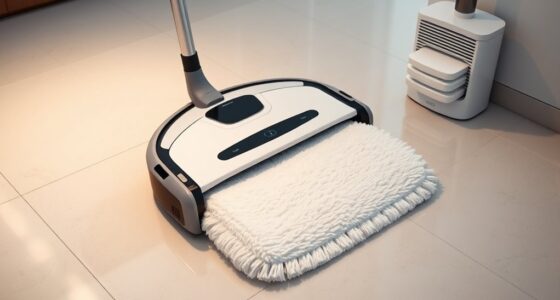
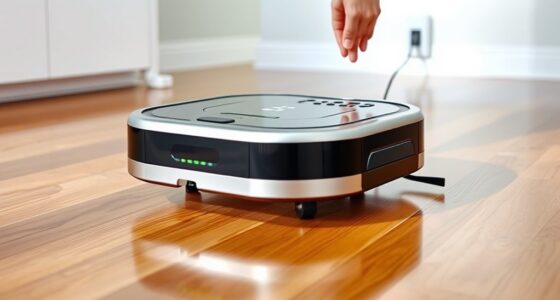
When choosing between a robot mop and a floor scrubber, consider your cleaning needs. Robot mops are great for light, routine tasks on small to medium areas and are easy to operate with less maintenance. Floor scrubbers are more powerful and suited for large, demanding jobs, but they require more upkeep and are often more complex. To find out which tool fits your messes best, keep exploring the differences and capabilities.
Key Takeaways
- Robot mops are ideal for small, routine cleaning, while floor scrubbers handle large, demanding areas effectively.
- Floor scrubbers typically have larger batteries or are corded, enabling continuous operation for extensive cleaning tasks.
- Robot mops require less maintenance and are simpler to operate, suitable for quick, regular cleaning sessions.
- Floor scrubbers are more durable with complex mechanisms, making them better for heavy-duty, frequent cleaning.
- Maintenance needs influence tool selection; robot mops need minimal upkeep, whereas floor scrubbers demand regular, thorough servicing.
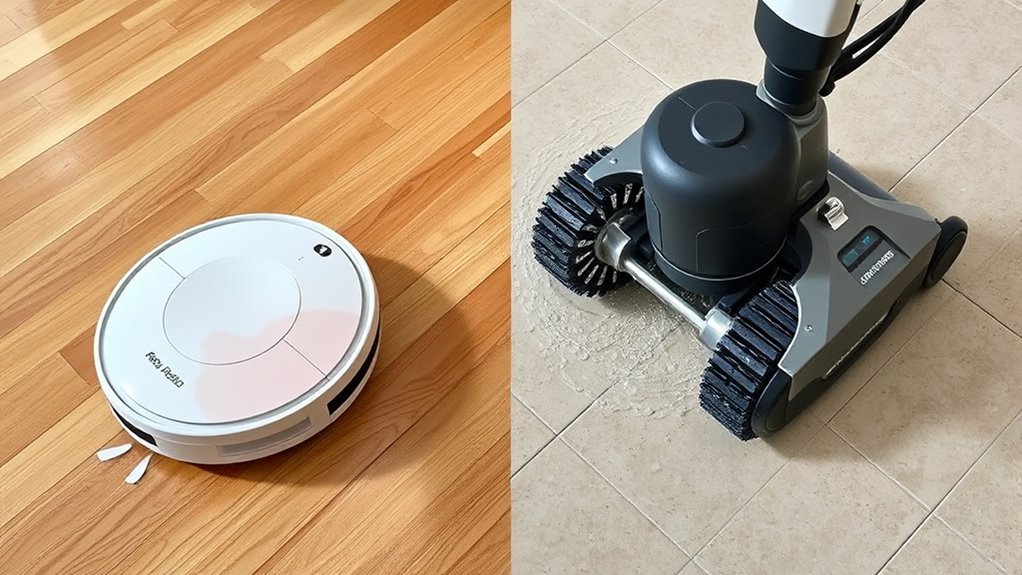
When choosing the right cleaning device for your floors, understanding the differences between a robot mop and a floor scrubber is vital. These tools serve different purposes, and their features can substantially impact your cleaning routine. One of the first aspects to consider is battery life. A robot mop typically comes with a rechargeable battery designed to last between 60 to 120 minutes, depending on the model and usage. If you have a large area to cover or want to minimize charging stops, look for a robot mop with a longer battery life. Floor scrubbers, on the other hand, often have larger batteries or even corded power options, which means they can operate continuously without concern for battery depletion. This makes them ideal for extensive cleaning jobs where uninterrupted operation is necessary. Knowing how long each device can run is vital for planning your cleaning sessions efficiently. Additionally, battery management features can help extend the lifespan and efficiency of your cleaning devices over time.
Maintenance requirements also differ between these two devices. Robot mops generally have smaller components, such as water tanks and rotating pads, which need regular cleaning to prevent mold and bacteria buildup. The filters and brushes may require periodic replacement, but overall, maintenance is straightforward and less time-consuming. Floor scrubbers are more robust and often feature larger tanks and more complex mechanisms. They typically demand more frequent and thorough maintenance, including cleaning or replacing brushes, filters, and solution tanks. Additionally, floor scrubbers may have more moving parts that can wear out over time, so you’ll need to stay attentive to their upkeep to ensure longevity and performance. While both devices require some maintenance, the robot mop’s simpler design usually means less downtime and effort on your part.
Frequently Asked Questions
Can a Robot Mop Handle Heavy-Duty Cleaning Tasks?
A robot mop generally can’t handle heavy-duty challenges effectively. While it’s great for daily light cleaning, its cleaning effectiveness drops when faced with stubborn dirt, grime, or large spills. For heavy-duty tasks, you’ll need a floor scrubber or industrial cleaning machine designed for tough messes. Relying solely on a robot mop might leave your floors less than spotless, so choose the right tool based on the cleaning challenge at hand.
Are Floor Scrubbers Suitable for All Types of Flooring?
Floor scrubbers aren’t suitable for all flooring types, so you need to consider surface compatibility. For example, they work well on tile, concrete, and sealed hardwood floors, but may damage delicate surfaces like unsealed wood or certain vinyl. Always check the manufacturer’s recommendations to ensure your specific flooring type can handle the scrubber’s brushes and cleaning methods. This way, you protect your floors and get the best cleaning results.
How Long Does Battery Life Typically Last on Robot Mops?
You’ll typically get around 1 to 2 hours of battery longevity on robot mops, depending on the model and usage. Most robot mops handle about 300 to 500 charging cycles before battery performance declines. To keep your device running smoothly, avoid overcharging and follow manufacturer guidelines. Regularly replacing the battery when needed ensures peak cleaning sessions, so plan for eventual battery replacement as part of your maintenance routine.
Do Floor Scrubbers Require Professional Maintenance?
A stitch in time saves nine, and that’s true for floor scrubbers. They do require professional upkeep to guarantee peak performance and extend equipment longevity. Regular maintenance, such as cleaning filters and inspecting brushes, keeps your machine running smoothly. While some minor upkeep is manageable on your own, professional servicing helps address complex issues early, preventing costly repairs and ensuring your floor scrubber remains effective for years to come.
Can Both Tools Be Used Simultaneously for Cleaning?
Yes, you can use both tools simultaneously for dual cleaning, but it depends on their compatibility. Make sure they’re designed to work together or can be coordinated easily. Using a robot mop along with a floor scrubber can cover different mess types efficiently, but always check the manufacturer’s guidelines to confirm tool compatibility and avoid damage. Proper setup helps you achieve a thorough, efficient cleaning session.
Conclusion
So, whether you choose a robot mop or a floor scrubber, you’re stepping into a cleaning revolution that could save you from hours of scrubbing hell. Imagine never sweating over stubborn stains again—your floors will be so spotless, even a tornado wouldn’t dare leave a mess behind! With the right tool, you’ll conquer dirt faster than you can say “clean house,” turning your messy floors into a sparkling sanctuary in no time.