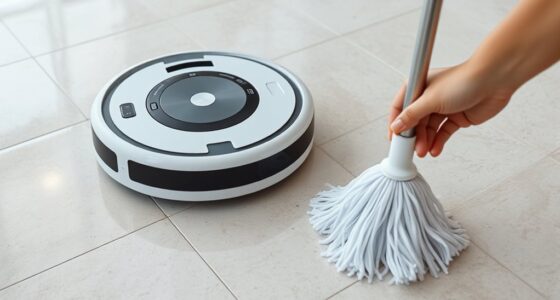
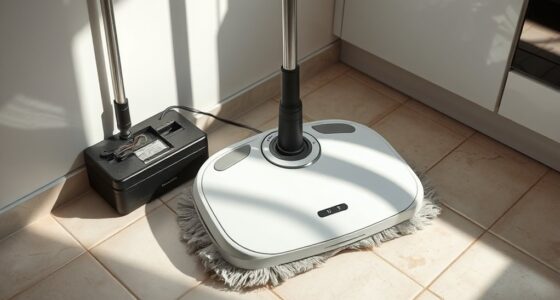
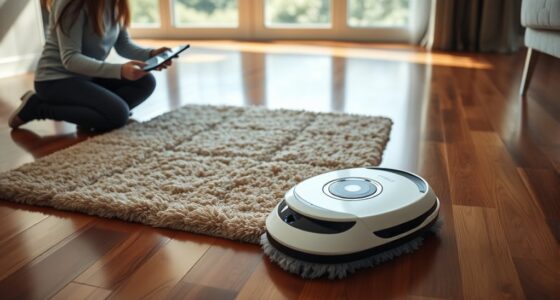
When tackling sticky spills, hand mops are your best bet because they give you direct control and more power to scrub and target stubborn spots. Robot mops are designed for light, routine cleaning and often struggle with dried, sticky messes. They lack the precision and force needed to fully remove tough spills. If you want to learn more about effective cleaning options for sticky messes, keep exploring how each tool can work for you.
Key Takeaways
- Hand mops excel at cleaning sticky spills due to direct control, scrubbing, and tailored cleaning solutions.
- Robot mops are less effective on sticky, dried, or stubborn spills, often requiring multiple passes or pre-treatment.
- Hand mops allow targeted spot cleaning, making them better suited for immediate, heavy-duty messes.
- Robot mops are ideal for routine maintenance but lack the power and precision needed for sticky spills.
- Combining both tools ensures effective cleaning—robot mops for regular upkeep and hand mops for stubborn messes.
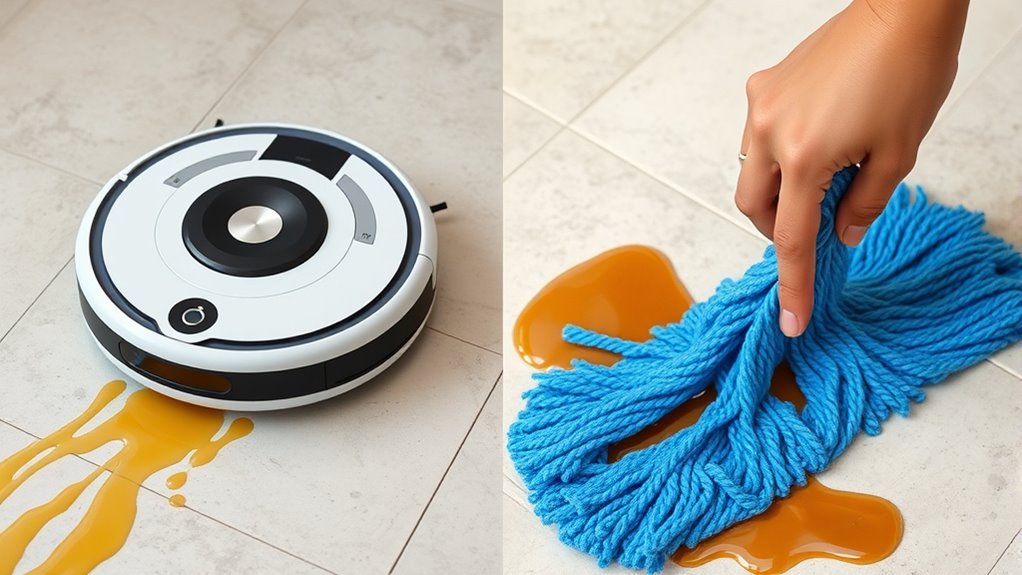
When it comes to keeping your home spotless, choosing between a robot mop and a hand mop depends on your cleaning needs and lifestyle. If you’re faced with sticky spills and heavy messes, understanding the differences in how each tool handles cleaning can help you make the right choice. Robot mop technology has advanced considerably, allowing these devices to navigate floors autonomously, detect dirt, and deliver consistent cleaning results. They often come equipped with sensors that avoid obstacles and optimize their routes, making them ideal for regular maintenance. However, when it comes to sticky spills that require immediate, thorough attention, a robot mop might not always have the power or precision to tackle the job effectively. That’s where hand mop techniques shine, giving you direct control to focus on stubborn spots, apply the appropriate pressure, and use specific cleaning solutions tailored to the mess.
Robot mops excel in convenience. Once set up, they can operate on their own, freeing you from manual labor for routine cleaning. Their brushes and mopping pads are designed to handle everyday dirt and light stains, but when faced with sticky or dried spills, they might struggle to fully lift or dissolve the mess. You may find yourself needing to go over the area multiple times or pre-treat the spill, which somewhat diminishes their time-saving appeal. On the other hand, hand mops provide immediate, hands-on control. With the right technique, you can target sticky spills directly, applying more pressure or using specific cleaning agents to loosen stubborn grime. Hand mop techniques involve a variety of motions—scrubbing, twisting, and pressing—that can be adjusted based on the spill’s severity. This direct contact allows you to assess the mess in real time and adapt your approach to ensure thorough cleaning.
While robot mop technology continues to improve, especially with features like spray mops and adjustable settings, it still may not match the versatility of hand mopping for sticky spills. Hand mops give you the flexibility to use different pads, cleaning solutions, and techniques suited for tougher stains. If you have small children or pets, a hand mop might be preferable because you can control the cleaning agents and ensure no residual chemicals are left behind. Conversely, if your lifestyle demands quick, consistent maintenance with minimal effort, a robot mop can keep your floors reasonably clean without much intervention. Additionally, incorporating connected home fitness technology can help you stay on top of your cleaning routines by integrating smart home devices that monitor and schedule chores. Ultimately, for sticky spills, your best approach combines both tools: rely on a robot mop for regular upkeep, but keep a hand mop handy for those stubborn spots that need extra attention.
Frequently Asked Questions
How Do Robot Mops Handle Uneven Floor Surfaces?
Robot mops handle uneven floor surfaces by adapting to different floor textures and maneuvering obstacles effectively. They use advanced sensors to detect bumps, cracks, or uneven patches, adjusting their movement and cleaning pattern accordingly. This guarantees thorough coverage without getting stuck or missing spots. So, you don’t have to worry about the robot struggling on textured or uneven floors—it intelligently adjusts to deliver a consistent clean across various surfaces.
Can Hand Mops Clean Large Spills Faster Than Robot Mops?
Yes, hand mops can clean large spills faster because you can perform manual scrubbing and target the spill directly. They allow for quick absorption of liquids and more control over the cleaning process. With a hand mop, you can swiftly apply pressure, scrub stubborn sticky spots, and cover bigger areas quickly, making them more effective for large spills than robot mops, which may take longer to navigate and clean thoroughly.
Are Robot Mops Suitable for Cleaning Carpets or Just Hard Floors?
Robot mops are mainly designed for hard floors and aren’t suitable for carpet cleaning or upholstery maintenance. They can’t effectively remove dirt or stains from carpets, so you’ll need a vacuum or specialized cleaner for that. If you want to keep your carpets and upholstery in top shape, stick with traditional methods, and use a robot mop only on your hard floors for regular cleaning.
What Maintenance Do Robot Mops Require Over Time?
You need to regularly clean the robot mop’s brushes and sensors to maintain robot longevity. Check the battery life periodically; you might need a battery replacement after a few years to keep it running efficiently. Keep the charging dock clean and ensure the vacuum’s software updates are installed. Proper maintenance prevents breakdowns and extends your robot mop’s lifespan, guaranteeing it continues to effectively clean your floors over time.
Do Hand Mops Require Special Cleaning Solutions for Sticky Spills?
When tackling sticky spills, you need to consider cleaning solution compatibility. A regular hand mop doesn’t require special solutions, but using the right one can make cleanup easier—think of it as giving your mop a recipe tailored for stubborn messes. After cleaning, store your hand mop properly in a dry place to prevent mold. Just like a chef keeps their tools in top shape, you should care for your mop to keep it effective.
Conclusion
So, which mop suits your needs better—robot or hand? While a robot mop offers convenience and consistent cleaning for routine messes, a hand mop gives you more control for stubborn, sticky spills. Think about your cleaning habits and the messes you face most. Isn’t it worth choosing the tool that truly tackles your toughest spots? Ultimately, both have their strengths—are you ready to pick the one that keeps your floors spotless?