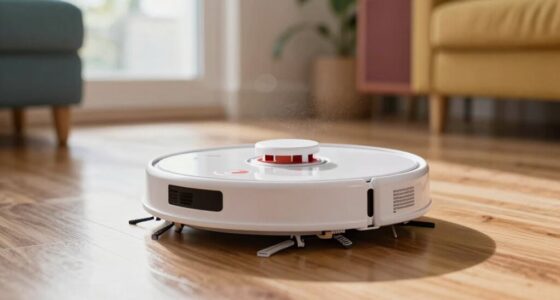
To help your pet get along with your robot vacuum, start by observing their reactions and introducing the device gradually with positive reinforcement like treats. Teach commands such as “leave it” or “stay” to redirect their attention and keep the vacuum out of reach when not in use. Keep the environment calm and organized, scheduling cleaning when your pet is less active. For more effective tips on harmony at home, continue exploring these strategies.
Get ready for Prime Big Deal Days — try Prime free
Exclusive member deals on October 6–7, plus fast free delivery. Cancel anytime.
As an affiliate, we earn on qualifying purchases.
Key Takeaways
- Gradually introduce the robot vacuum while rewarding your pet with treats and praise to build positive associations.
- Use commands like “leave it” or “stay” to redirect pet attention away from the vacuum during cleaning.
- Schedule cleaning sessions when pets are less active or in another room to reduce stress and confrontation.
- Keep the vacuum’s path clear of toys and furniture to prevent surprises and ensure smooth operation.
- Create a calm environment with designated quiet spaces to help your pet feel secure during vacuuming.
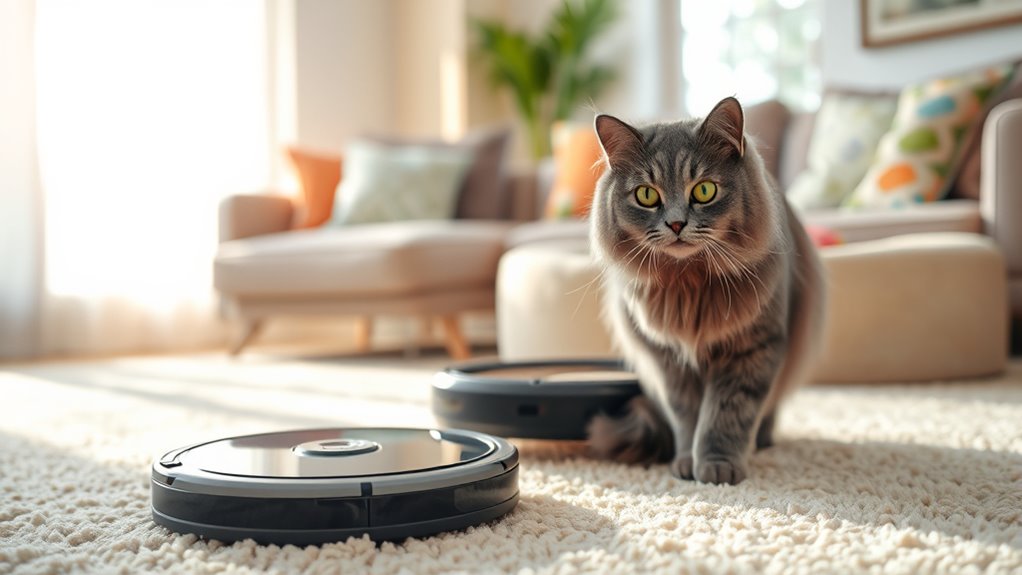
Pets and robot vacuums both aim to make your life easier, but their coexistence often leads to amusing and challenging moments. You might find your furry friend curious about the moving device or even wary of it, which can disrupt your cleaning routine. To help your pet get along with your bot, it’s essential to understand their behavior and implement effective training tips. Your goal is to create a peaceful environment where both your pet and your robot vacuum can coexist without stress.
Start by observing your pet’s natural behavior around the vacuum. Does your pet seem curious, scared, or aggressive? Recognizing their reaction allows you to tailor your approach. If your pet is wary or anxious, gradually introduce them to the robot. Turn it on while your pet is nearby, so they get used to the sound and movement. Use positive reinforcement—offer treats, praise, or playtime—whenever your pet remains calm around the device. This helps associate the vacuum with positive experiences rather than fear or threat.
Training tips are essential for modifying pet behavior. If your pet tends to attack or chase the vacuum, teach them commands like “leave it” or “stay” to redirect their attention. Practice these commands in different scenarios, rewarding compliance consistently. When the vacuum is running, give your pet a toy or a designated quiet space to retreat to, reducing their instinct to confront the moving object. Consistency and patience are key; over time, your pet will learn that the vacuum isn’t a threat but just another part of their environment.
Additionally, consider the layout of your home. Keep the vacuum’s path clear of pet toys or furniture that could cause sudden movements or surprises. Schedule cleaning sessions when your pet is less active or in another room, if possible, to minimize stress. You might also want to train your pet to stay in a specific area during cleaning, making the process smoother for everyone. Furthermore, understanding the importance of contrast ratio in projectors can help you create a calm viewing environment, reducing the need for frequent cleaning or adjustments caused by glare or poor visibility.
As an affiliate, we earn on qualifying purchases.
Frequently Asked Questions
How Can I Prevent My Pet From Chasing the Robot Vacuum?
You can prevent your pet from chasing the robot vacuum by implementing pet training techniques and gradually desensitizing them to the noise. Use positive reinforcement when they stay calm around the vacuum, and create a safe space for your pet during cleaning. Additionally, reducing noise levels with noise reduction mats or quiet modes can help. Consistent routines and patience will teach your pet to stay relaxed and avoid chasing the vacuum.
What Should I Do if My Pet Is Scared of the Robot?
When your pet is scared of the robot vacuum, it’s like a thunderstorm in their little world. You should use calming techniques like gentle praise and treats, creating positive associations with the device. Gradually introduce the vacuum at a distance, and let your pet observe it calmly. Patience is key; over time, these pet behavioral issues will lessen, helping your pet feel safe and secure around your cleaning buddy.
Are There Robot Vacuums Designed Specifically for Homes With Pets?
Yes, there are robot vacuums designed specifically for homes with pets. These models focus on pet hair removal and noise reduction, making them less startling for your furry friends. You can find vacuums with special brushes to pick up pet hair efficiently and quieter motors to minimize noise. This helps your pet stay comfortable while the vacuum keeps your home clean, creating a peaceful environment for everyone.
How Can I Train My Pet to Tolerate the Robot Vacuum?
You can train your pet to tolerate the robot vacuum by gradually introducing it during pet training sessions, keeping the noise level low initially, and rewarding calm behavior. Use positive reinforcement like treats or praise when your pet stays relaxed around the vacuum. Over time, increase exposure and noise, helping your pet get accustomed to the sound and movement. Consistent, patient training ensures your pet learns to accept the vacuum calmly.
What Safety Features Should I Look for in a Pet-Friendly Robot Vacuum?
Look for a pet-friendly robot vacuum with safety features like sensors for pet hair management and noise reduction. These features prevent the vacuum from damaging your pet or getting stuck. Opt for models with bump sensors to avoid collisions and soft bumpers for gentle contact. Noise reduction guarantees your pet isn’t scared or stressed. Prioritize these safety features to create a safe, calm cleaning environment for your furry friend.
pet training treats for obedience
As an affiliate, we earn on qualifying purchases.
As an affiliate, we earn on qualifying purchases.
Conclusion
Remember, your pet and robot vacuum are like old friends learning to share a space. With patience, gentle guidance, and understanding, you’re helping them build a new bond—one that’s as steady as a tree’s roots and as clear as a sunny sky. Soon, they’ll coexist peacefully, turning your home into a harmonious garden where both can thrive. Embrace this journey, and watch as trust blossoms amidst the dance of companionship and technology.
noise reducing pet calming device
As an affiliate, we earn on qualifying purchases.
As an affiliate, we earn on qualifying purchases.
As an affiliate, we earn on qualifying purchases.
Fall yard work Picks
leaf blowers
As an affiliate, we earn on qualifying purchases.