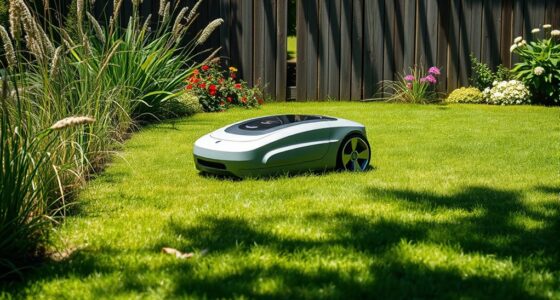
Robot mowers are eco-friendly because they produce no emissions, operate quietly, and often run on renewable energy like solar power. However, their batteries, typically lithium-ion, can pose ecological challenges if not properly recycled, due to mining and disposal issues. Advances in battery recycling are helping to reduce these concerns, making them a greener choice overall. To find out how these innovations impact sustainability, keep exploring the eco-friendly features of robot mowers.
Key Takeaways
- Robot mowers operate quietly and emit no local air pollution, making them environmentally friendly in use.
- Many robot mowers are powered by solar energy, reducing reliance on fossil fuels and lowering carbon footprint.
- Battery technology, especially lithium-ion, poses environmental challenges related to mining, production, and disposal.
- Recycling initiatives for batteries help mitigate ecological impacts and promote sustainable use of battery materials.
- Overall, robot mowers are eco-friendly during operation, but battery life and recycling practices are crucial for full environmental sustainability.

As more homeowners seek sustainable alternatives to traditional lawn care, robot mowers stand out as an eco-friendly option. Unlike gas-powered mowers that emit harmful fumes, these devices operate quietly and with minimal environmental impact. Many models are designed to run on renewable energy sources, making solar power a popular choice. When your robot mower is equipped with solar panels, it can harness sunlight to recharge, reducing reliance on grid electricity and cutting down on fossil fuel consumption. This integration not only lowers your carbon footprint but also helps you save on energy costs over time. Solar-powered robot mowers exemplify how renewable energy can be seamlessly incorporated into everyday tasks, promoting a greener lifestyle without sacrificing convenience.
Noise pollution is another significant advantage of robot mowers. Traditional gas-powered mowers can be loud and disruptive, especially if you have a large yard or multiple outdoor spaces. In contrast, robot mowers operate at a whisper-quiet level, often producing sound levels comparable to a soft conversation. This means you can enjoy your outdoor space without the constant hum or roar of a traditional mower, making it suitable for early mornings, late evenings, or even if you have neighbors nearby. Reducing noise pollution not only benefits your peace of mind but also minimizes disturbance to local wildlife, contributing to a healthier environment overall.
However, while robot mowers are eco-friendly in many ways, their batteries do raise some concerns. Most models are powered by rechargeable lithium-ion batteries, which contain materials that can be difficult to recycle and may pose environmental risks if not disposed of properly. The production of these batteries involves mining and manufacturing processes that have their own ecological footprint. Additionally, the lifespan of batteries can influence the overall sustainability of the mower—once they reach the end of their useful life, replacing or recycling them becomes essential. Some manufacturers are working toward developing more sustainable battery options or encouraging proper disposal and recycling programs, but the environmental impact of batteries remains an important consideration.
Furthermore, advancements in European battery recycling initiatives are helping to mitigate some of these environmental concerns by promoting more sustainable disposal and reuse of battery materials.
Frequently Asked Questions
How Long Do Robot Mower Batteries Typically Last?
Robot mower batteries usually last about 2 to 3 years, depending on usage and maintenance. You should expect around 300 to 500 charging cycles before performance declines markedly. To extend battery lifespan, it’s best to avoid overcharging and keep the batteries cool. Proper care ensures your robot mower stays efficient and reliable, reducing the need for frequent replacements and keeping your lawn well-maintained with minimal environmental impact.
Are Robot Mowers Recyclable at the End of Their Life?
Think of your robot mower as a wise traveler with a recyclable backpack. When it’s time to retire, you can participate in battery recycling programs, ensuring its components find new purpose instead of ending up in landfill. Proper environmental disposal of batteries reduces pollution and conserves resources. So, yes, your robot mower is recyclable, and caring for it responsibly helps protect the planet’s future.
Do Robot Mowers Produce Noise Pollution?
Robot mowers produce less noise pollution than traditional gas-powered mowers, but they still generate some noise impact. You might notice their quiet hum during operation, which can disturb wildlife if used excessively or at certain times. To minimize wildlife disturbance, you should operate your robot mower thoughtfully, avoiding early mornings or late evenings. Overall, they’re a quieter, eco-friendlier choice, but some noise impact remains.
What Is the Environmental Impact of Manufacturing Robot Mower Batteries?
You might feel good about your robot mower’s quiet operation, but its battery production impacts the environment. Manufacturing batteries involves sourcing raw materials like lithium and cobalt, which can harm ecosystems. Luckily, recycling batteries reduces waste and raw material extraction. By choosing brands committed to sustainable sourcing and recycling, you help minimize environmental harm, turning your mower into a greener choice for your yard and the planet.
Are Solar-Powered Robot Mowers Available?
Yes, solar-powered robot mowers are available, offering eco-friendly lawn care with solar options that harness sunlight for energy. You can choose models that use rechargeable batteries, which you should recycle properly to minimize environmental impact. Solar-powered mowers reduce reliance on grid electricity and decrease emissions, making them a sustainable choice. By selecting these options, you contribute to a greener environment while maintaining a well-manicured lawn effortlessly.
Conclusion
So, while robot mowers don’t emit fumes like traditional gas-powered ones, their batteries raise questions about eco-friendliness. You might think they’re the shining armor of lawn care, but remember, even the most modern knight needs a fair share of energy—like a turn-of-the-century steam engine. Ultimately, they’re a step forward, but not a perfect solution. Keep an eye on advancements; perhaps someday they’ll be as green as the lush lawns they tend to.