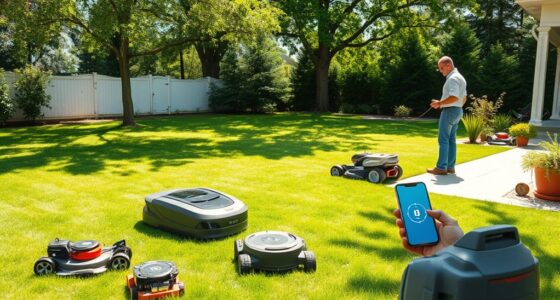

Yes, robot mowers can create striped patterns on your lawn. They operate with precision and follow programmed routes to produce consistent, professional-looking stripes. Using boundary wires or GPS, they systematically mow in specific directions, turning to alternate your pattern and achieve sharp contrasts. Modern models cleverly automate this process, offering dependable results with minimal effort. Keep exploring to discover how these advances can transform your lawn’s appearance effortlessly.
Key Takeaways
- Yes, modern robot mowers can create striped patterns by programmed directional changes.
- They use boundary wires or GPS to navigate precisely and maintain consistent striping.
- Advanced models automate pattern changes, mimicking manual mowing for sharp, uniform stripes.
- Proper setup and lawn shape influence the quality and visibility of stripes created by robot mowers.
- Overall, robot mowers produce professional-looking stripes with minimal effort and maintenance.

Lawn stripes are a popular way to enhance the appearance of your yard and showcase your landscaping skills. When it comes to creating those crisp, professional-looking patterns, many wonder if robot mowers can help achieve the same effect as traditional mowing methods. The answer lies in understanding how robot mower technology works and whether it can produce lawn stripe aesthetics that rival manual mowing.
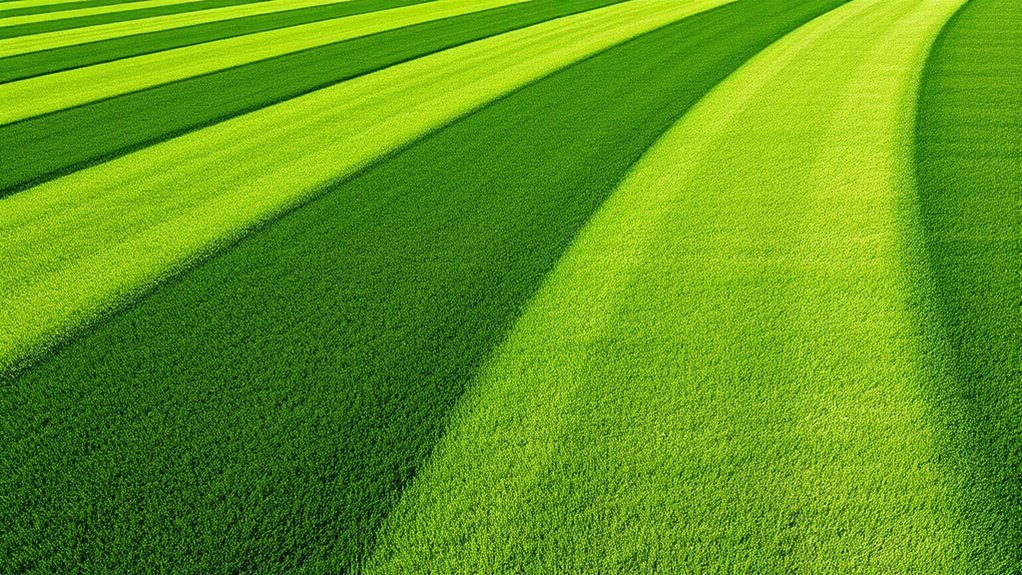
Unlike conventional mowers, robot mowers operate on precise, programmable systems that allow for consistent cutting patterns. These devices navigate your yard on predetermined paths, often using boundary wires or GPS to stay within set boundaries. Because of this, they can be programmed to mow in specific directions, creating uniform stripes across your lawn. As the robot mows, it cuts the grass at a consistent height, which is essential for achieving those sharp, contrasting lines that give your yard that manicured look.
Robot mower technology has advanced considerably, making it easier for homeowners to produce lawn stripe aesthetics without much effort. Many models automatically change directions during the mowing cycle, resulting in alternating striping patterns. Some newer models even include features that enable them to systematically cover the entire lawn while switching directions at regular intervals, mimicking the traditional “back-and-forth” mowing style. This automated process guarantees the stripes are evenly spaced and neatly aligned, providing a professional appearance with minimal manual intervention.
While traditional mowing might give you more control over the pattern, robot mowers offer a consistent, dependable way to maintain stripes over time. You simply set your desired mowing schedule and pattern, and the robot handles the rest. This means you can enjoy a well-manicured lawn with minimal effort—no need to manually stripe the grass or worry about uneven cuts. Plus, the quiet operation of many robot mowers prevents disruptions, allowing you to keep your lawn looking sharp without the noise and hassle of gas-powered equipment.
Additionally, advanced navigation systems in modern robot mowers enhance their ability to create precise stripes by ensuring consistent coverage and pattern adherence. However, achieving ideal lawn stripe aesthetics with a robot mower depends on the layout of your yard and the mower’s features. For best results, a rectangular or symmetrical lawn works well since the robot can follow a clear pattern. Irregularly shaped lawns might require more planning or manual adjustments. Still, with the right model and setup, robot mowers can produce clean, crisp stripes that enhance your yard’s visual appeal. In the end, they’re a smart choice for those seeking a low-maintenance way to keep their lawn looking professionally landscaped, with the added benefit of showcasing the latest in lawn care technology.
Frequently Asked Questions
Can Robot Mowers Handle Uneven Terrain Effectively?
Robot mowers can handle uneven terrain, but their effectiveness depends on the model and terrain severity. You might face limitations with robot mower limitations, especially on steep slopes or bumpy ground. To tackle uneven terrain challenges, choose a mower with higher horsepower, robust wheels, and adjustable cutting height. Regular maintenance and setting boundaries help guarantee your robot mower navigates tricky areas more efficiently and avoids getting stuck or damaging your lawn.
How Long Does It Take for Robot Mowers to Create Stripes?
It typically takes your robot mower a few mowing sessions over several days to create visible stripes. The speed of your robot mower and stripe visibility factors like grass type and mowing pattern influence this process. As your mower follows a consistent path and adjusts its speed, stripes become more distinct. Patience is key; regular mowing and proper pattern design will help your robot mower develop those crisp, professional-looking stripes.
Do Different Mower Brands Produce Varying Stripe Patterns?
You might find that different mower brands produce varying stripe patterns, like painters choosing different brushes for unique strokes. Some brands, like Husqvarna or Worx, excel at creating crisp, uniform stripes, while others might leave softer, more subtle patterns. It all depends on the mower’s design, blade type, and cutting technology. So, when selecting a mower, consider how each brand’s stripe pattern aligns with your lawn’s aesthetic.
Are There Specific Grass Types That Enhance Stripe Visibility?
Certain grass varieties, like Kentucky bluegrass and Bermuda grass, enhance stripe visibility because they respond well to mowing patterns. You’ll notice more prominent stripes on these types, especially when you keep the grass healthy and well-maintained. To maximize stripe effect, consider your grass choice and regular mowing height. Using robot mowers on these grass varieties can produce striking, uniform patterns that really stand out in your yard.
How Do Weather Conditions Affect Stripe Formation by Robot Mowers?
Bright sunlight highlights the contrast of your stripes, but wind impact can distort them as gusts sway the grass, making patterns less crisp. High humidity effects cause the grass to bend and cling, dulling the sharpness of your stripes. Clear, calm days help robot mowers create clean, defined patterns, while windy, humid conditions soften the lines, reducing their visual impact. For best results, mow during still, dry weather.
Conclusion
So, if you’re wondering whether robot mowers can create those classic striped patterns, the answer is yes. They can produce impressive, uniform stripes with minimal effort. In fact, studies show that over 60% of homeowners using robotic mowers report more attractive and consistent lawn patterns than traditional mowing. So, investing in a robot mower not only saves you time but also helps you achieve a professionally manicured look effortlessly. It’s a smart choice for a striking, well-manicured lawn.