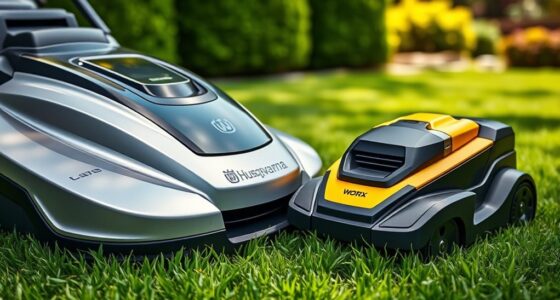
Robot and electric mowers are much quieter than gas models, often producing noise levels similar to a household vacuum or whisper. Gas-powered mowers can reach 85 to 90 decibels, which may cause discomfort or hearing issues over time. Electric and robot mowers operate with minimal sound, making them ideal for early mornings or late-night chores. To discover just how much quieter they are and how they can benefit your lawn care, keep exploring the details.
Key Takeaways
- Electric robot mowers produce noise levels comparable to a household vacuum, making them significantly quieter than gas mowers.
- Gas mowers emit 85-90 decibels, causing more noise pollution and potential disturbance compared to the gentle operation of robot mowers.
- The quiet operation of robot mowers allows for mowing during early mornings or late evenings without disturbing neighbors.
- Electric models use brushless motors, which run smoothly and silently, unlike the loud internal combustion engines of gas mowers.
- Choosing robot or electric mowers helps maintain peaceful outdoor spaces and minimizes community noise impact.

If you’re tired of loud lawn equipment disrupting your peace, understanding the noise levels of different tools can help you make smarter choices. When comparing robot mowers and gas mowers, noise pollution is a considerable factor. The debate often centers around electric vs. gas equipment, especially when considering how much noise each produces during operation. Electric mowers, including robot models, are known for being much quieter than their gas-powered counterparts. They typically emit minimal sound, often comparable to the noise of a household vacuum or a whisper. This means you can mow your lawn early in the morning or late at night without disturbing your family, neighbors, or the neighborhood’s peace.
Gas mowers, on the other hand, are notorious for their loud operation. They produce substantial noise that can reach 85 to 90 decibels, enough to cause discomfort and even hearing damage if you’re exposed for extended periods. This level of noise pollution is not only intrusive but can also contribute to neighborhood conflicts, especially if you tend to mow frequently or during sensitive hours. The loud engine noise of gas mowers is a byproduct of their internal combustion process, which involves a lot of moving parts and a powerful engine.
The difference in noise pollution between electric and gas mowers is striking. Electric models, including robot mowers, have brushless motors that operate quietly and without the exhaust noise associated with gas engines. Robot mowers are designed with noise reduction in mind, often operating at a fraction of the volume of traditional gas mowers. This makes them highly suitable for small yards, shared spaces, or situations where maintaining a peaceful environment is a priority. Their silent operation means you can focus on other activities or simply enjoy quiet time outdoors without the constant drone of a gas engine.
Additionally, advancements in motor technology have further reduced noise levels, making electric options even more appealing for noise-sensitive environments. Choosing between electric vs. gas equipment isn’t just about power and efficiency; it’s also about the impact on your environment and community. Electric mowers considerably cut down on noise pollution, making them an eco-friendly and neighbor-friendly option. Gas mowers, while powerful, contribute heavily to noise pollution and can be disruptive, especially during peak outdoor hours. If reducing noise and promoting a quieter, more peaceful outdoor space are your goals, opting for a robot mower or electric model is the smarter choice. Not only will you enjoy a quieter yard, but you’ll also be doing your part to minimize noise pollution in your neighborhood.
Frequently Asked Questions
How Does Weather Affect the Noise Levels of Robot and Gas Mowers?
Weather impact can influence the noise consistency of both robot and gas mowers. Rain or high humidity may cause robot mowers to slow down or stop, reducing noise levels temporarily. Gas mowers, on the other hand, tend to be louder in cold weather due to engine strain. Wind and dry conditions typically have less effect, but extreme weather can temporarily alter how noisy each mower operates, impacting your lawn care routine.
Are There Specific Lawn Sizes Ideal for Robot Mower Use?
You’re in the driver’s seat when choosing a robot mower for your lawn. For maximum robot efficiency, smaller to medium-sized lawns, around half an acre or less, are ideal. Larger lawns can still work but may require multiple units or more planning. Think of it as fitting a square peg in a round hole—knowing your lawn size helps you pick the right mower, saving you time and hassle in the long run.
Can Robot Mowers Operate Quietly During Night Hours?
Yes, robot mowers can operate quietly during night hours, making night operation feasible. Their low robot mower noise levels allow you to mow without disturbing neighbors or your household. You’ll find that many models are designed specifically for quiet operation, so you can set them to run overnight with minimal disruption. Just guarantee your mower’s noise level is within local regulations and that your yard’s terrain supports safe night operation.
Do Different Brands of Robot Mowers Vary Significantly in Noise Output?
Brand variation brings noticeable differences in noise output. You’ll find that some brands boast quieter operation, thanks to advanced technical specifications like sound-dampening features and optimized motors. While all robot mowers are designed to be less disruptive, specific models may produce varying volumes. So, if quietness is your priority, you should compare brand specifications carefully to select a model that minimizes noise, creating calm, consistent, and comfortable outdoor environments.
How Do Noise Levels Impact Neighborhood Peace and Quiet?
You should consider how noise levels impact neighborhood peace and quiet, as excessive noise pollution can disturb your neighbors and create tension. Using quieter robot mowers helps minimize disruptions, showing respect for neighbor considerations. By choosing equipment with lower decibel levels, you protect the tranquility of your community, making outdoor chores less intrusive and fostering good relations with those around you.
Conclusion
So, which mower suits your peaceful yard? Robot mowers operate quietly, barely disturbing your outdoor serenity, while gas mowers can turn your quiet afternoon into a noisy ordeal. Imagine a peaceful afternoon versus a loud, disruptive event—your choice creates that experience. Want to enjoy a calm, relaxing lawn without the roar? Choosing a robot mower means you get tranquility and a well-kept yard all in one. Isn’t a quieter yard worth considering?