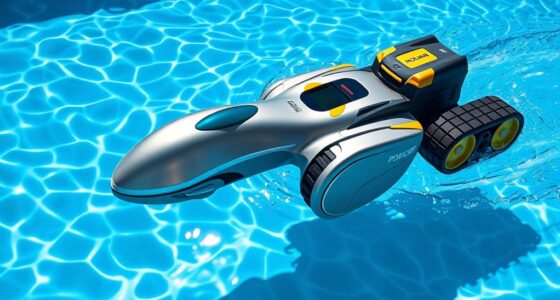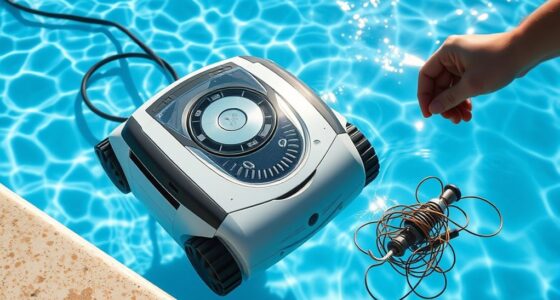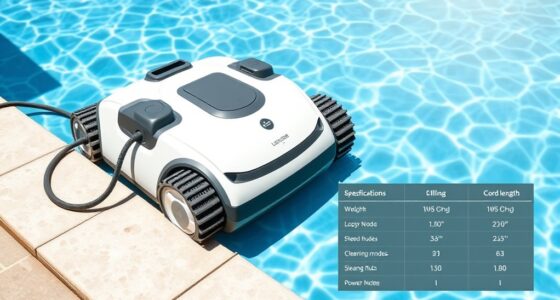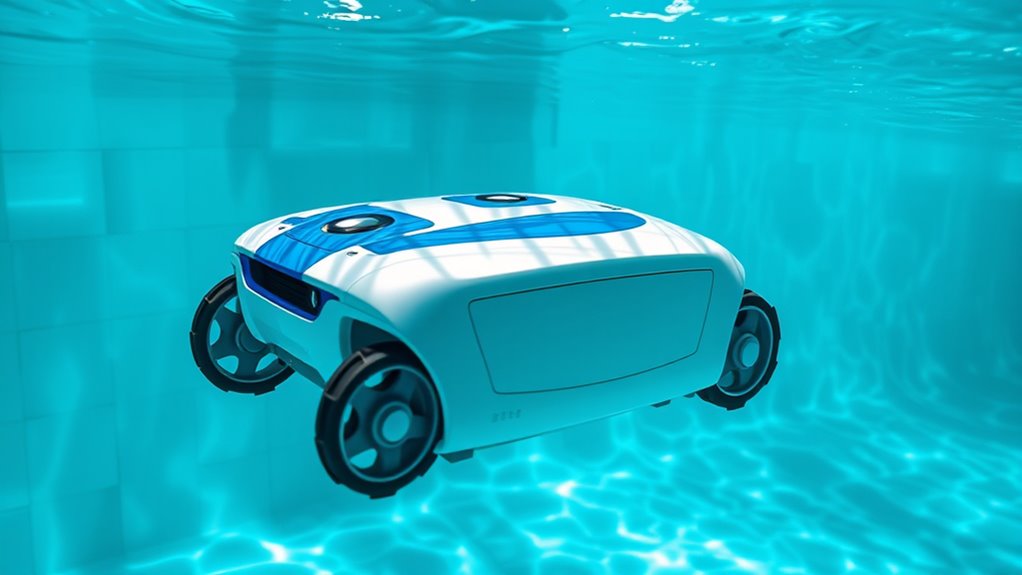
Robotic pool cleaners use sensors, advanced algorithms, and efficient motors to navigate your pool, detect dirt, and clean surfaces automatically. They move intelligently, avoiding obstacles while scrubbing and vacuuming debris from walls, floors, and stairs. These devices filter water using built-in systems to trap dirt and organic matter, reducing your chemical use. With customizable features and simple controls, they make pool maintenance effortless. Keep exploring to discover how to maximize their performance and lifespan.
Key Takeaways
- Robotic pool cleaners use sensors and smart navigation algorithms to map and thoroughly clean the pool’s surfaces while avoiding obstacles.
- They operate with drive systems that transmit power from motors to wheels or tracks, enabling efficient movement across the pool.
- These devices combine scrubbing brushes and vacuum motors to remove dirt, debris, algae, and organic matter from pool surfaces.
- They typically feature filtration systems like debris bags or filters to trap particles, which should be regularly maintained for optimal performance.
- Users can customize cleaning schedules and modes via smartphone apps or remotes, with routine maintenance ensuring longevity and effectiveness.
Overview of Robotic Pool Cleaners
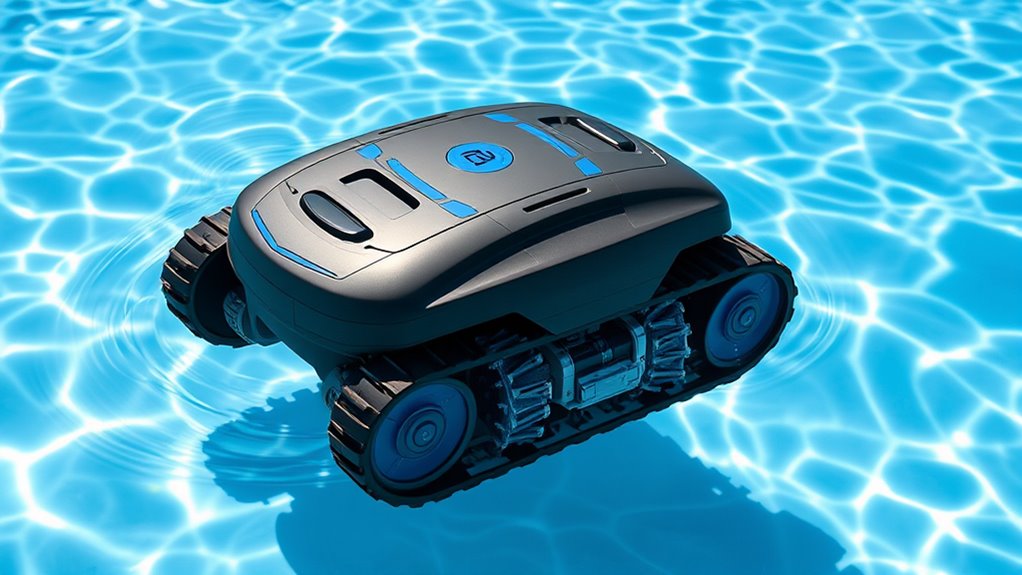
Have you ever wondered how robotic pool cleaners keep your pool spotless without much effort? These devices are designed to navigate your pool efficiently, reducing the need for manual scrubbing. They help maintain pool safety by preventing algae buildup and debris that could cause slips or health issues. Additionally, robotic cleaners contribute to balanced pool chemistry by regularly removing dirt and organic matter that can disrupt water pH levels. With sensors and smart navigation, they target trouble spots, ensuring thorough cleaning. This not only keeps your pool looking inviting but also minimizes chemical use, saving you money in the long run. Overall, robotic pool cleaners are a smart investment for maintaining a safe, healthy, and clean swimming environment effortlessly.
Key Components and Design Features
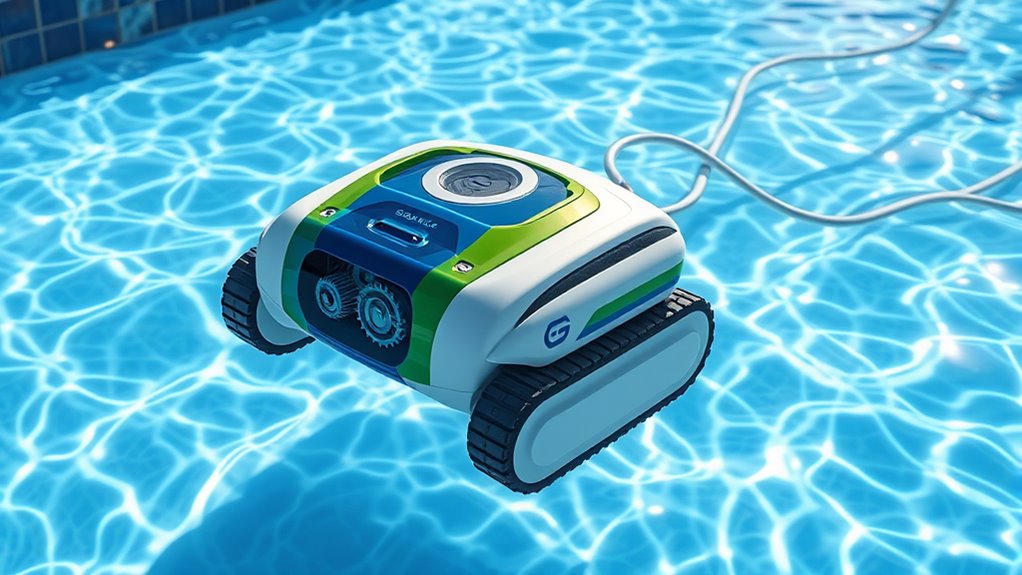
Your robotic pool cleaner’s drive system mechanics determine how efficiently it moves across surfaces. Navigation and sensors help it map the pool and avoid obstacles, ensuring thorough cleaning. Understanding these key components reveals how modern designs deliver smarter, more reliable performance.
Drive System Mechanics
The drive system mechanics of robotic pool cleaners are critical for their efficient movement and cleaning performance. Central to this system is the drive train, which transmits power from the motor to the wheels or tracks, enabling the robot to navigate the pool’s surfaces. Motor control plays a essential role, regulating speed and direction to ensure thorough coverage. Many models feature multiple drive motors, allowing for precise maneuvering and better traction across various pool types. The design often includes gear systems that optimize torque and efficiency, while some cleaners use belt drives or direct drive mechanisms for smoother operation. By combining robust drive trains with sophisticated motor control, these cleaners can effectively move around obstacles, climb walls, and reach all areas of your pool.
Navigation and Sensors
Navigation and sensors are essential for robotic pool cleaners to move efficiently and cover every area of your pool. These features help your cleaner navigate around obstacles, ensuring thorough cleaning without missing spots. Advanced sensors detect walls, stairs, and pool features, preventing the robot from getting stuck or causing damage. Proper navigation also promotes better circulation, which supports maintaining balanced pool chemistry and overall pool safety. By intelligently mapping your pool, the cleaner avoids redundant paths, saving energy and time. Some models use optical or acoustic sensors for precise movement, while others rely on gyroscopes. With effective navigation, your robotic cleaner maximizes cleaning coverage, reduces manual intervention, and contributes to a safer, cleaner swimming environment.
How Robotic Cleaners Navigate Your Pool
Robotic pool cleaners use advanced algorithms and sensors to effectively move around your pool. They analyze the environment to navigate efficiently, avoiding obstacles and ensuring full coverage. These devices adapt their paths based on pool size, shape, and water conditions, including factors like pool water chemistry. During seasonal maintenance, they compensate for changes in water levels or cleanliness, optimizing their routes. Their sensors detect walls, steps, and debris, guiding the cleaner to avoid retracing the same spots repeatedly. This smart navigation minimizes energy use and maximizes cleaning efficiency.
Robotic pool cleaners intelligently navigate, adapt, and optimize cleaning for full coverage and efficiency.
- Map out pool layouts for thorough coverage
- Detect obstacles and adjust routes automatically
- Adapt to changes in water chemistry and debris levels
Cleaning Mechanisms and Techniques
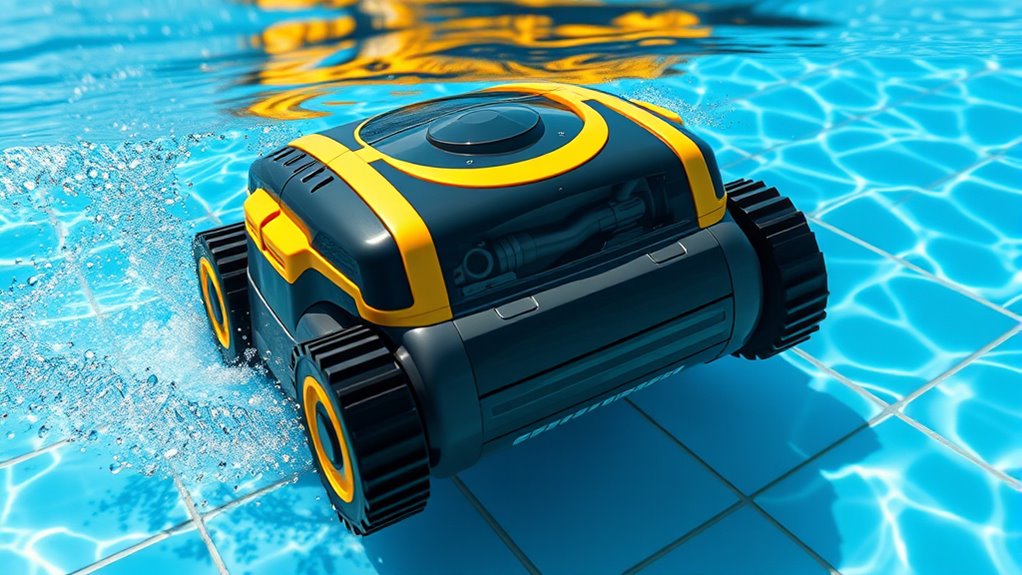
Robotic pool cleaners use scrubbing and vacuuming methods to effectively remove dirt and debris. Their efficient navigation strategies guarantee they cover the entire pool surface without missing spots. Understanding these techniques helps you choose a cleaner that keeps your pool spotless with less effort.
Scrubbing and Vacuuming Method
Many robotic pool cleaners use a combination of scrubbing brushes and powerful vacuum motors to effectively remove dirt and debris from pool surfaces. This method guarantees thorough cleaning, especially when the pool’s chemical balance is ideal, helping prevent algae buildup and surface stains. As you rely on scrubbing and vacuuming, keep in mind some pool safety tips, like removing obstacles that could hinder the robot’s movement or cause damage. Proper maintenance of the cleaner’s brushes and filters is essential for efficiency. Additionally, a well-balanced pool chemistry reduces the strain on the vacuum system, extending its lifespan. Remember, regular cleaning with the right techniques keeps your pool inviting and safe, making your robotic cleaner’s job easier and more effective.
Efficient Navigation Strategies
To guarantee thorough cleaning, robotic pool cleaners utilize advanced navigation strategies that optimize their movement across pool surfaces. They rely on sensor calibration to accurately detect walls, obstacles, and water levels, ensuring efficient coverage without missing spots or re-cleaning the same area. These sensors help the cleaner adapt to different pool shapes and obstacle arrangements. Additionally, navigation algorithms are designed to maximize battery longevity by minimizing unnecessary movements and optimizing routes. Some models use random patterns, while others follow systematic grid or wall-following paths, enhancing efficiency and thoroughness. Proper sensor calibration assures consistent performance, while smart navigation conserves battery power, allowing longer cleaning cycles. Together, these strategies enable your robotic cleaner to operate effectively, saving you time and maintaining a clean pool surface.
Filtration Systems and Debris Handling

Effective filtration systems are essential for robotic pool cleaners to maintain a spotless and healthy swimming environment. They trap dirt, leaves, and microscopic particles, ensuring your pool stays clean. Most models feature a filter bag or debris basket that captures larger debris, preventing clogs and maintaining ideal operation. Regularly checking and emptying these components keeps the cleaner functioning efficiently.
Key points to take into account include:
- A clean filter bag or debris basket ensures maximum suction power.
- Proper maintenance prevents the buildup that can hinder cleaning performance.
- Some models have easily accessible compartments for quick debris removal.
Power Sources and Connectivity
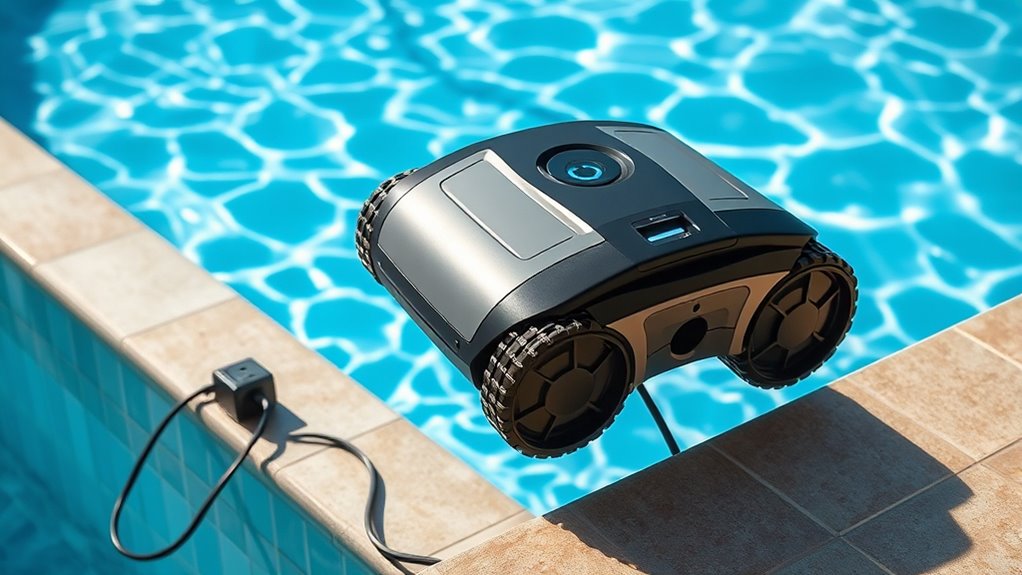
Robotic pool cleaners rely on various power sources and connectivity options to operate efficiently and conveniently. Most models are powered by rechargeable batteries, so battery life is essential for extended cleaning sessions. High-capacity batteries ensure your cleaner can cover the entire pool without frequent recharging. Wireless connectivity enhances ease of use, allowing you to control and monitor your cleaner remotely through smartphone apps. This feature offers real-time updates on cleaning status and battery levels, so you know when to recharge. Some cleaners also connect via Wi-Fi or Bluetooth, providing seamless communication between your device and the robot. Overall, choosing a model with reliable power sources and strong wireless connectivity helps guarantee your pool stays clean with minimal hassle.
Programming and Customization Options
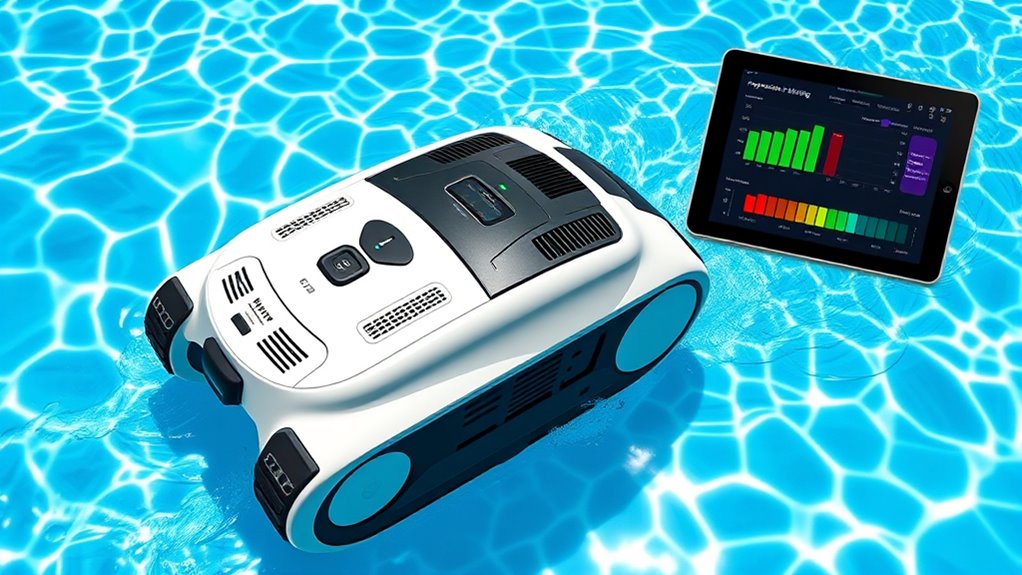
Many robotic pool cleaners offer programming and customization options that let you tailor their operation to suit your specific needs. With features like adjustable schedules, cleaning modes, and targeted zones, you can optimize performance. The user interface, often available via a smartphone app or remote control, makes customization straightforward. Confirm your device’s software compatibility with your mobile device or home network for smooth updates and seamless control. By customizing cleaning cycles, you can focus on problem areas or conserve energy.
- Set specific cleaning times to fit your schedule
- Choose from various cleaning modes for different surfaces
- Adjust navigation paths for thorough coverage
These options give you greater control and ensure your pool stays spotless with minimal effort.
Maintenance and Troubleshooting

Regular maintenance is essential to keep your robotic pool cleaner functioning properly and to prevent common issues. Start by regularly checking the water chemistry and ensuring the chemical balance is correct, as poor water chemistry can cause debris buildup or damage the cleaner’s components. Clean the filters and brushes after each use to prevent clogs and maintain ideal performance. Inspect the power cord and connection points for damage, and remove any debris tangled in the brushes or wheels. If your cleaner isn’t working correctly, verify that the water level is adequate and that the robot’s sensors are clean. Troubleshooting often involves simple steps like resetting the device or replacing worn parts. Proper maintenance keeps your robotic cleaner efficient and extends its lifespan.
Frequently Asked Questions
How Long Do Robotic Pool Cleaners Typically Last Before Needing Replacement?
You can expect your robotic pool cleaner to last around 3 to 8 years before needing replacement. Battery life decreases over time, so regular maintenance tips like rinsing filters and checking for wear help extend its lifespan. Proper care guarantees peak performance, and replacing batteries or worn parts when needed keeps it running smoothly. Keep up with maintenance, and your cleaner will serve you well for years to come.
Are Robotic Pool Cleaners Safe for All Pool Types and Surfaces?
Robotic pool cleaners are generally safe for most pool surfaces, but you should check their pool surface compatibility first. They’re designed to handle materials like tile, fiberglass, and concrete, but some models might not be suitable for delicate surfaces like vinyl linings. Always follow safety considerations, such as removing debris that could damage the cleaner, and supervise its operation to prevent accidents. Proper use guarantees safe, effective cleaning.
Can Robotic Pool Cleaners Be Used in Saltwater Pools?
Yes, you can use robotic pool cleaners in saltwater pools. Look for models with saltwater compatibility and corrosion resistance features to guarantee they withstand the salty environment. These cleaners are designed to handle the increased moisture and salt, preventing rust and damage. Regular maintenance, like rinsing the unit after use, helps prolong its lifespan in saltwater pools, making your cleaning routine hassle-free and effective.
What Is the Average Energy Consumption of These Devices?
Think of robotic pool cleaners as the energy-efficient sprinters of pool maintenance. They typically consume between 150 to 250 watts during operation, making them quite economical. Their power consumption is designed for peak energy efficiency, so you won’t see your electric bill skyrocket. On average, running your cleaner for an hour uses about the same energy as a standard light bulb, ensuring your pool stays spotless without draining your wallet.
Do Robotic Pool Cleaners Require Professional Installation or Setup?
You typically don’t need professional installation for robotic pool cleaners; manual setup usually suffices. Most models are designed for easy setup, allowing you to simply plug them in, place them in the pool, and let them do their work. However, if your pool has complex features or you’re unsure about connecting the power supply safely, consulting a professional for installation guarantees everything is set up correctly and securely.
Conclusion
Now that you know how robotic pool cleaners work, you’ll find it’s almost like having a tiny, hardworking assistant in your pool. Their clever navigation and efficient cleaning mean you might just forget about those pesky debris days. Plus, with user-friendly features, it’s no surprise that many homeowners discover their pool stays spotless when they least expect it—almost as if the robot itself knew exactly when to do its magic.