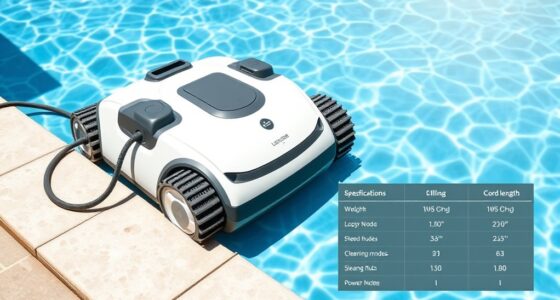
If your robotic pool cleaner keeps getting stuck on the drain, start by inspecting and smoothing out the drain cover and edges to prevent snagging. Regularly clean and maintain the filter for better suction and navigation. Use boundary markers or physical guides to steer the robot away from problem areas. Consider upgrading to models with advanced obstacle detection or adding rubber gaskets for smoother movement. Following these tips can help keep your cleaner running smoothly and avoid future hang-ups.
Key Takeaways
- Regularly inspect and clean the filter to prevent debris buildup that can cause jams near the drain.
- Secure and smooth out drain covers, possibly adding a gasket for better clearance and reduced snagging.
- Use boundary markers or physical guides to steer the cleaner away from problematic drain areas.
- Upgrade to models with AI obstacle detection or firmware updates for improved navigation around drains.
- Guide the robot manually during initial runs to identify and address potential snag points proactively.
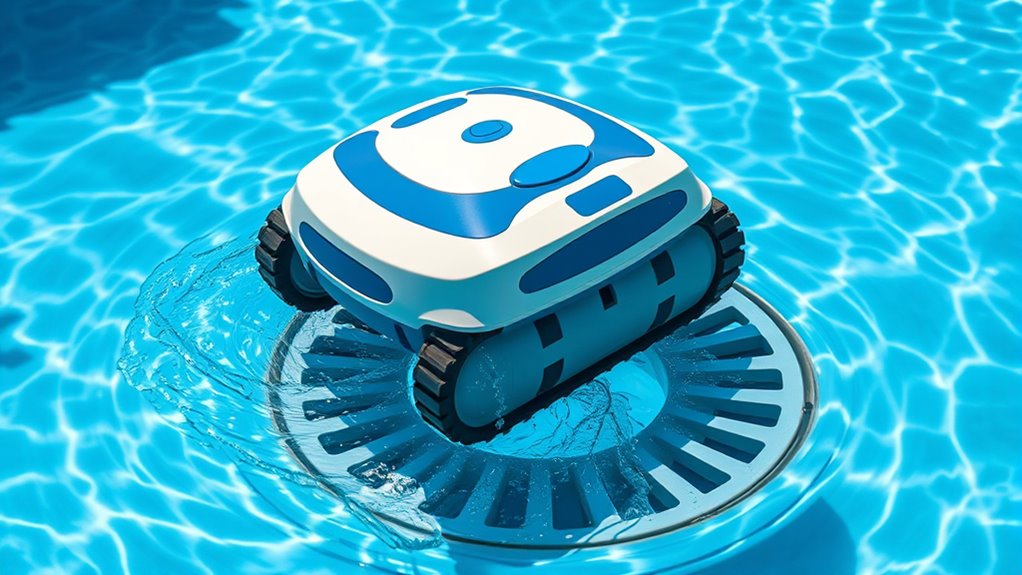
Keeping your pool spotless has never been easier with a robotic pool cleaner, but to get the best results, it’s important to understand some key tips. One common issue is your cleaner getting stuck on the drain. While it can be frustrating, a few simple precautions can prevent hang-ups and keep your cleaner running smoothly. First, pay attention to filter maintenance. A clean filter ensures ideal suction and prevents debris from clogging the system, which can cause the robot to lose traction or get caught on obstacles like the drain cover. Regularly check and clean the filter according to the manufacturer’s instructions. This not only improves performance but also extends the lifespan of your cleaner, minimizing the chances of it getting stuck due to debris buildup.
Next, consider obstacle navigation. Your robotic cleaner relies on sensors and programmed navigation paths to move efficiently across your pool. If the drain cover is a common snag point, you might want to adjust the cleaner’s route or position. Some models allow you to set boundary markers or use a physical guide to steer the robot away from problematic areas. Before starting your cleaner, inspect the pool for any sharp edges or irregular drain covers that could interfere with navigation. Covering or smoothing out these surfaces can help your robot glide past without hesitation. Additionally, ensure the drain cover itself is in good condition; a loose or uneven cover can trap the robot or cause it to get stuck. Incorporating AI-based obstacle detection features can further enhance navigation and prevent such issues. Another practical tip is to manually guide the cleaner during its initial runs to identify potential trouble spots. If you notice it repeatedly gets caught on the drain, reposition the cover slightly or add a protective barrier like a rubber gasket to smooth out the surface. Some advanced models come with obstacle sensors that detect when the robot is approaching a problematic area, prompting it to change direction before getting stuck. Regularly updating your robot’s firmware, if applicable, can also improve obstacle detection capabilities.
Frequently Asked Questions
How Often Should I Clean My Robotic Pool Cleaner’s Brushes?
You should clean your robotic pool cleaner’s brushes at least once a week to maintain ideal brush maintenance. Regular cleaning helps prevent debris buildup that can cause hang-ups or reduce cleaning efficiency. Follow a consistent cleaning schedule, especially after heavy pool use or storms, to keep the brushes in top condition. This simple routine ensures your cleaner works smoothly and extends its lifespan, saving you time and hassle.
Can a Robotic Pool Cleaner Handle Uneven Pool Floors?
Think of your robotic pool cleaner as a skilled mountain climber maneuvering uneven surfaces. It can handle floor irregularities, but its effectiveness depends on the model. Some cleaners have adjustable brushes and sensors to better adapt to uneven floors, preventing hang-ups. Regularly check for debris and guarantee the cleaner’s wheels and brushes are in good condition, helping it conquer every corner of your pool efficiently.
What’s the Best Way to Store My Robotic Pool Cleaner?
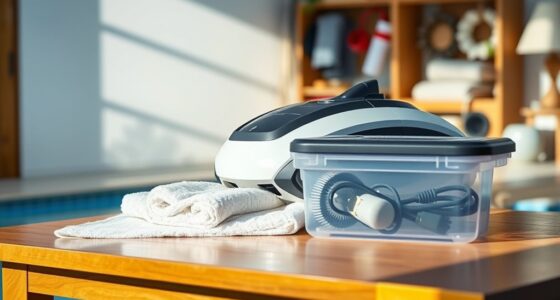
To store your robotic pool cleaner properly, follow these storage tips and maintenance routines. Always rinse off the cleaner after use to remove chlorine and debris, then let it dry completely to prevent mold. Store it in a cool, dry place away from direct sunlight. Keep the power cord neatly coiled to avoid damage. Regular maintenance guarantees your cleaner stays in top shape, ready for your next swim.
Are There Specific Pool Types That Are Incompatible With Robotic Cleaners?
Some pool types can turn your robotic cleaner into a stubborn rock, especially if your pool has incompatible surfaces or unusual design features. For example, very rough or textured surfaces, or steep slopes, may prevent your cleaner from working effectively. Always check your pool’s design and surface type before buying a robotic cleaner. If unsure, consult the manufacturer’s recommendations to guarantee compatibility and avoid frustration.
How Do I Troubleshoot if My Robotic Cleaner Stops Mid-Cycle?
If your robotic cleaner stops mid-cycle, start troubleshooting by checking its battery life; a low battery can cause it to halt. Listen for unusual motor noise, which might indicate a jam or motor issue. Make certain the power source is stable and the brushes are clear of debris. Reset the device if needed, and consider charging it fully before the next use to prevent future interruptions.
Conclusion
To keep your robotic pool cleaner running smoothly, regularly check for obstacles and clean the brushes. Did you know that over 60% of pool owners experience issues with their robots getting stuck? By taking simple preventive steps, you can avoid costly repairs and enjoy a crystal-clear pool all season long. Stay proactive, and your cleaner will thank you with flawless performance every time. Keep your pool properly maintained and avoid those frustrating hang-ups!