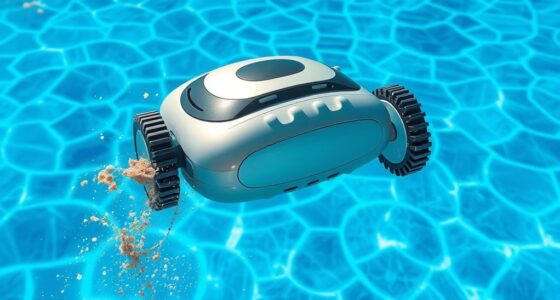
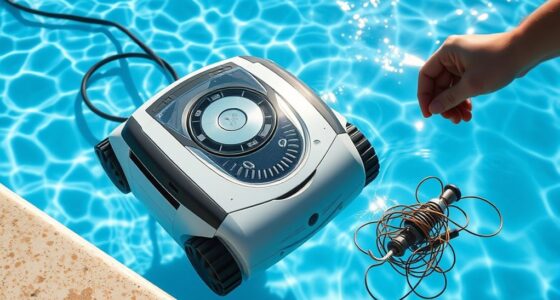
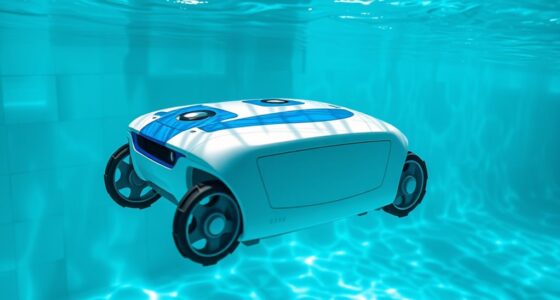
Robotic pool cleaners are a game changer because they work independently, maneuvering and cleaning various surfaces and pool shapes more effectively than manual vacuuming. They save you time, effort, and often do a more thorough job, especially in tricky spots like corners and steps. While manual vacuums are cheaper upfront, they require more effort and may miss areas. Want to discover how each option fits your pool needs? Keep exploring for more insights.
Key Takeaways
- Robotic pool cleaners offer automated, thorough cleaning, saving time and effort compared to manual vacuuming.
- They adapt to various pool shapes and surfaces, ensuring comprehensive coverage and better cleaning performance.
- Manual vacuums are cheaper initially but require more time, physical effort, and ongoing maintenance.
- Robotic cleaners can be more cost-effective long-term by reducing chemical and manual labor costs.
- Technological advances are making robotic pool cleaners smarter, more efficient, and a significant upgrade over manual methods.
How Robotic Pool Cleaners Work

Robotic pool cleaners operate independently by maneuvering your pool’s surface and floor using built-in sensors and algorithms. They scan the pool to map out the most efficient cleaning path, ensuring thorough coverage. These robots adapt to your pool’s shape and obstacles, avoiding walls and ladders effortlessly. To keep your pool chemistry balanced, you should maintain proper chemical levels, as robotic cleaners don’t handle chemical adjustments. They follow scheduled cleaning routines, often programmable through apps or timers, so your pool stays clean without manual effort. As they work, they pick up debris, dirt, and algae, reducing your need for manual vacuuming. Understanding how these devices function helps you optimize their use, making maintenance easier and your pool more inviting year-round.
The Benefits of Using a Robotic Pool Cleaner

Using a robotic pool cleaner offers numerous advantages that can make maintaining your pool substantially easier. It helps you keep the pool clean without constant manual effort, saving you time and energy. These devices work continuously to remove debris, dirt, and algae, which improves water circulation and keeps the water clearer. Proper water circulation is essential for maintaining balanced pool chemistry, preventing issues like algae growth and pH imbalance. Robotic cleaners are designed to reach all areas of your pool, including corners and steps, ensuring thorough cleaning. This consistent maintenance reduces the need for chemical adjustments, making it easier to keep your water balanced. Overall, a robotic pool cleaner simplifies pool care, providing cleaner water and more free time for you to enjoy your pool.
Limitations and Challenges of Robotic Pool Cleaners
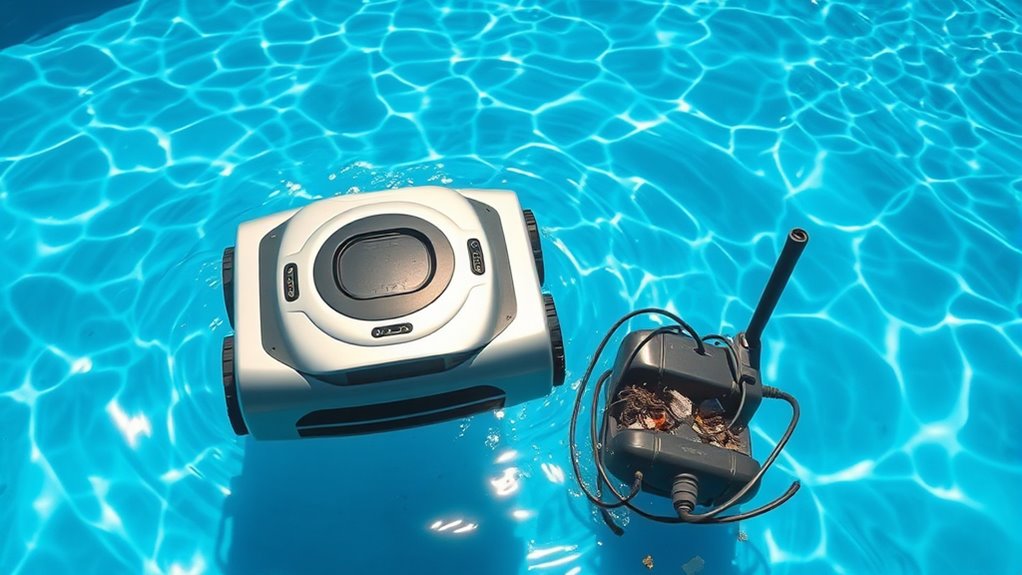
While robotic pool cleaners offer many benefits, they also come with certain limitations that can affect their performance and convenience. One major issue is sensor limitations, which can hinder their ability to detect obstacles or dirty areas accurately. Additionally, navigation challenges often cause these cleaners to miss spots or get stuck, especially in complex pool shapes. Here are some key challenges you might face:
- Sensor Limitations: Poor obstacle detection can lead to inefficient cleaning or damage.
- Navigation Challenges: Difficulties in mapping irregular pool layouts may result in missed areas.
- Limited Battery Life: Shorter cleaning cycles can require multiple sessions for thorough coverage.
Understanding these limitations helps you set realistic expectations and plan your pool maintenance accordingly.
The Advantages of Manual Vacuuming

Have you ever considered how manual vacuuming offers precise control that robotic cleaners can’t match? When you clean your pool manually, you can target specific spots that need extra attention, ensuring a thorough clean. This process requires manual effort, but it allows you to adapt quickly to different pool conditions or stubborn debris. Many find this hands-on approach rewarding, as it provides personal satisfaction knowing you’ve directly contributed to maintaining your pool’s cleanliness. Unlike robotic cleaners, which follow preset paths, manual vacuuming lets you focus on problem areas without missing corners or corners. This active involvement gives you a sense of accomplishment and confidence that your pool is spotless. Ultimately, manual vacuuming combines control, effort, and personal satisfaction in a way that automated options can’t fully replicate.
Drawbacks of Manual Pool Cleaning Methods

Manual pool cleaning can take up a lot of your time and effort, making the task feel tedious. It also requires physical exertion, which can be tiring or challenging, especially over long periods. These drawbacks often make manual methods less convenient than automated options.
Time-Consuming Process
Manual pool cleaning demands significant time and effort, often taking several hours to complete thoroughly. You need to skim debris, brush walls, and vacuum the pool floor, which can be tedious. This process also risks disrupting pool safety and chemical balance if not done carefully. To make the most of your time, focus on these key tasks:
- Skimming surface debris to prevent clogging and maintain clarity.
- Brushing walls to remove algae and prevent buildup.
- Vacuuming to eliminate dirt and sediments that affect water quality.
Each step requires precision to ensure proper chemical balance and safe swimming conditions. The lengthy process can be frustrating, especially when balancing thorough cleaning with maintaining pool safety. This is where automated solutions can save you time and effort.
Physical Strain Involved
Cleaning your pool by hand can be physically demanding, often leaving you exhausted after just a short session. You might experience muscle fatigue from bending, stretching, and lifting heavy equipment. An ergonomic design helps reduce strain, but manual tools still require considerable effort. To illustrate, consider the following:
| Task | Physical Impact |
|---|---|
| Scrubbing the pool walls | Strains back and shoulders |
| Moving the vacuum pole | Causes muscle fatigue in arms |
| Bending to reach corners | Leads to lower back discomfort |
| Lifting debris | Tiring on muscles and joints |
| Extended cleaning sessions | Results in overall fatigue |
Despite effort, manual cleaning takes a toll, making robotic options appealing for less strain and better ergonomics.
Cost Comparison Between Robotic and Manual Options

When comparing costs, robotic pool cleaners typically require a higher upfront investment but can save you money over time through reduced labor and maintenance costs. Over the long term, they offer several financial advantages:
- Lower ongoing maintenance costs, especially if you choose eco-friendly options that consume less power and use sustainable materials.
- Less frequent manual labor, saving you time and energy.
- Decreased chemical use by maintaining cleaner water, which can reduce chemical expenses.
While manual vacuums are less expensive initially, they often lead to higher costs due to more frequent replacements, increased labor, and higher energy use. Overall, robotic cleaners can be more cost-effective, especially when considering long-term savings and environmental impact.
Ease of Use and Maintenance Requirements

Robotic pool cleaners are designed to simplify your pool maintenance routine, making them generally easier to operate and maintain than manual vacuums. With intuitive user interfaces, you can easily select cleaning modes and monitor progress without hassle. Most models come with programmable cleaning cycles, allowing you to set schedules that fit your needs. Maintenance is straightforward: you typically just remove debris, clean filters, and occasionally check the brushes.
| Feature | Manual Vacuum | Robotic Pool Cleaner | Ease of Use |
|---|---|---|---|
| User Interface | Manual operation | Digital controls | User-friendly controls |
| Cleaning Cycles | Manual, on-demand | Programmable, automatic | Set-and-forget convenience |
| Maintenance | Frequent, hands-on | Minimal, filter cleaning | Simple, less time-consuming |
Effectiveness in Different Pool Types and Sizes
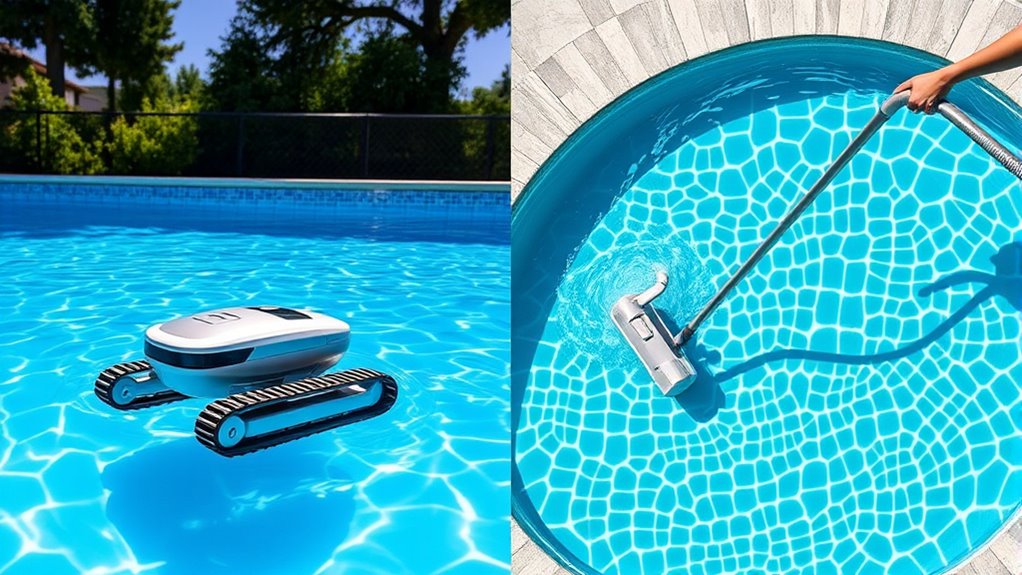
Robotic pool cleaners generally excel at handling various pool types and sizes due to their adaptability and advanced navigation systems. They effectively manage different pool surfaces like concrete, vinyl, and fiberglass, ensuring thorough cleaning. For pools with high mineral content, robotic cleaners can adjust their cleaning patterns to avoid streaks or missed spots. Here’s what makes them versatile:
Robotic pool cleaners adapt to various surfaces and pool sizes for thorough, reliable cleaning.
- They adapt to shallow or deep pools, maintaining efficiency regardless of depth.
- They navigate complex shapes and tight corners with precision.
- They optimize cleaning on diverse pool surfaces, including textured or smooth materials.
Manual vacuums may struggle with larger or irregular pools, but robotic cleaners consistently deliver a exhaustive clean, regardless of size or surface, making them a reliable choice for various pool setups.
Making the Choice: Factors to Consider

Choosing between a robotic pool cleaner and a manual vacuum depends on several important factors that can influence your overall satisfaction and convenience. One key consideration is how pool chemicals are managed, as some cleaners work better in chemically balanced water, preventing damage or inefficiency. Water temperature also plays a role; robotic cleaners often adapt better to varying temperatures, while manual vacuums require more effort in colder or warmer conditions. Your pool’s size and shape impact your choice, as well as your budget and preferred level of involvement. If you value convenience and consistent cleaning, a robotic cleaner might be preferable. However, if you enjoy manual control and lower upfront costs, a manual vacuum could be suitable. Ultimately, balancing these factors helps you pick the right option for your pool.
Future Trends in Pool Cleaning Technology
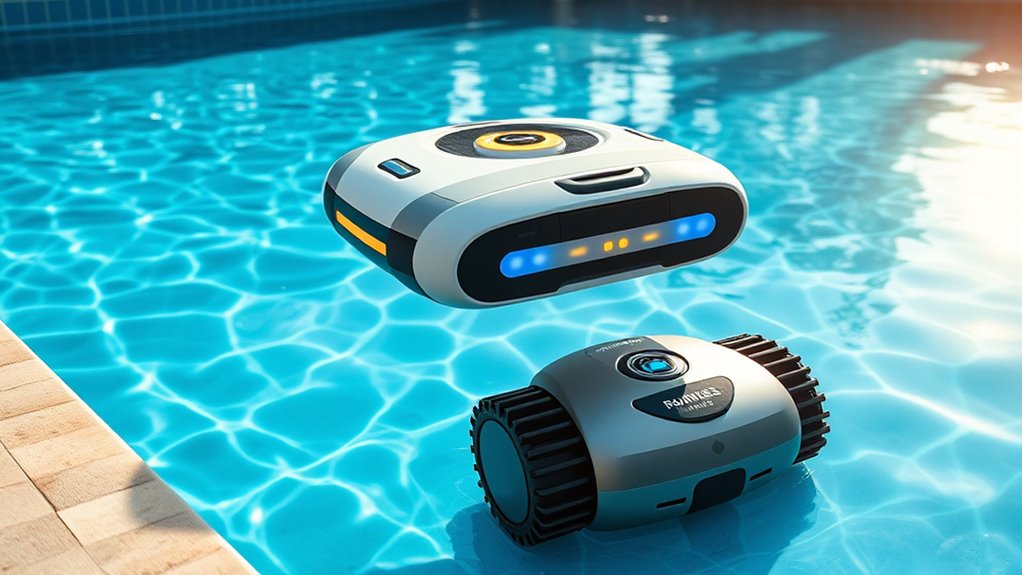
As technology continues to advance, pool cleaning systems are becoming smarter, more efficient, and more integrated with home automation. Expect future innovations to focus on reducing environmental impact while enhancing performance. Here are three trends to watch:
Future pool cleaning systems will be smarter, eco-friendly, and seamlessly connected for effortless maintenance.
- Smart technology integration: Devices will use AI and sensors to map pools precisely, optimizing cleaning routes automatically.
- Eco-friendly designs: New systems will prioritize energy efficiency and water conservation, minimizing environmental impact.
- Connectivity and automation: Pool cleaners will seamlessly connect with smart home systems, allowing remote control and scheduling via apps.
These advancements will make pool maintenance easier, more sustainable, and more personalized, transforming how you care for your pool in the years ahead.
Frequently Asked Questions
How Do Robotic Pool Cleaners Impact Energy Consumption?
Robotic pool cleaners generally improve energy efficiency because they use less power compared to manual vacuums. They are designed to optimize power consumption, operating efficiently while cleaning your pool. By automating the process, they reduce the time and energy you’d spend on manual cleaning. This means you save on energy costs and lessen your environmental impact, making robotic cleaners a smart, energy-efficient choice for maintaining your pool.
Are Robotic Pool Cleaners Suitable for Saltwater Pools?
Yes, robotic pool cleaners are suitable for saltwater pools. Look for models with saltwater compatibility and corrosion resistance, so they can handle the salt without damage. These cleaners are designed to withstand the harsh environment of saltwater pools, ensuring durability and effective cleaning. By choosing a saltwater-compatible robotic cleaner, you’ll enjoy hassle-free maintenance and a sparkling pool without worrying about corrosion or frequent replacements.
Can Robotic Cleaners Replace Manual Cleaning Entirely?
You can’t rely solely on robotic cleaners to replace manual maintenance entirely. While they handle regular cleaning and reduce your workload, you still need to use your pool skimmer and perform occasional manual vacuuming for stubborn debris and specialized tasks. Robotic cleaners are excellent for routine upkeep, but manual efforts guarantee your pool stays pristine and well-maintained, especially during heavy use or after storms.
What Safety Features Do Robotic Pool Cleaners Have?
Robotic pool cleaners come equipped with safety features like safety sensors that detect obstacles, preventing collisions or entrapment. They also have emergency shutdown functions, which automatically turn the cleaner off if something goes wrong or if they’re lifted out of the water. These features guarantee safe operation, giving you peace of mind while maintaining your pool. You can trust that your robotic cleaner prioritizes safety during every cleaning session.
How Long Do Robotic Pool Cleaners Typically Last?
You can expect your robotic pool cleaner to last around 5 to 8 years, but maintenance costs and replacement parts influence longevity. While they save you time and effort, neglecting regular maintenance can shorten their lifespan. Investing in quality models and replacing worn parts guarantees your cleaner performs well longer. Ultimately, proper care and timely replacements keep your robotic pool cleaner running smoothly for many seasons.
Conclusion
Choosing between a robotic pool cleaner and manual vacuuming is like picking between a trusty steed and a hand-held tool—each has its own charm. Robots glide effortlessly, turning pool cleaning into a breeze, while manual methods put you in control, like sculpting a masterpiece. Consider your pool’s size, your lifestyle, and your patience. Whichever you choose, you’re steering your pool’s sparkle toward a future where clean water feels like a invigorating breeze on a summer day.