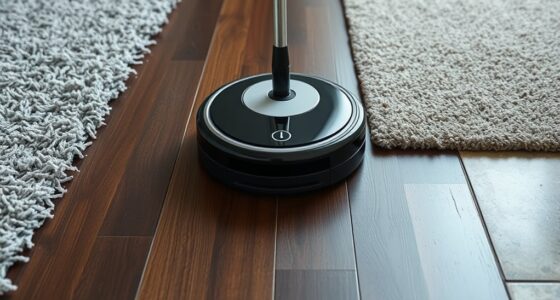
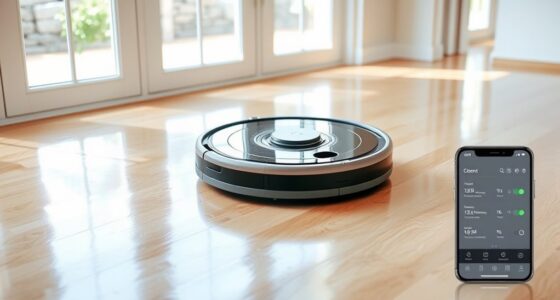
Robot mops use advanced sensors, smart navigation, and water control to clean your floors automatically. They detect obstacles, map your space, and adjust their routes for thorough coverage. These devices handle various hard, sealed floors like tile, vinyl, and sealed hardwood, without much input from you. By automating the cleaning process, they save you time and effort while maintaining spotless floors. Discover more about how these intelligent cleaners can make your life easier.
Key Takeaways
- Robot mops use sensors, motors, and navigation systems to detect obstacles and map your space for efficient cleaning.
- They create detailed room maps through advanced algorithms, enabling thorough coverage and obstacle avoidance.
- Features like dirt sensors and water control optimize cleaning performance and prevent over-wetting.
- Suitable for hard, sealed floors such as tile, vinyl, and sealed laminate, but require care on hardwood.
- They save time, ensure consistent cleaning, and operate on scheduled routines for maintenance and convenience.
The Technology Behind Robot Mops
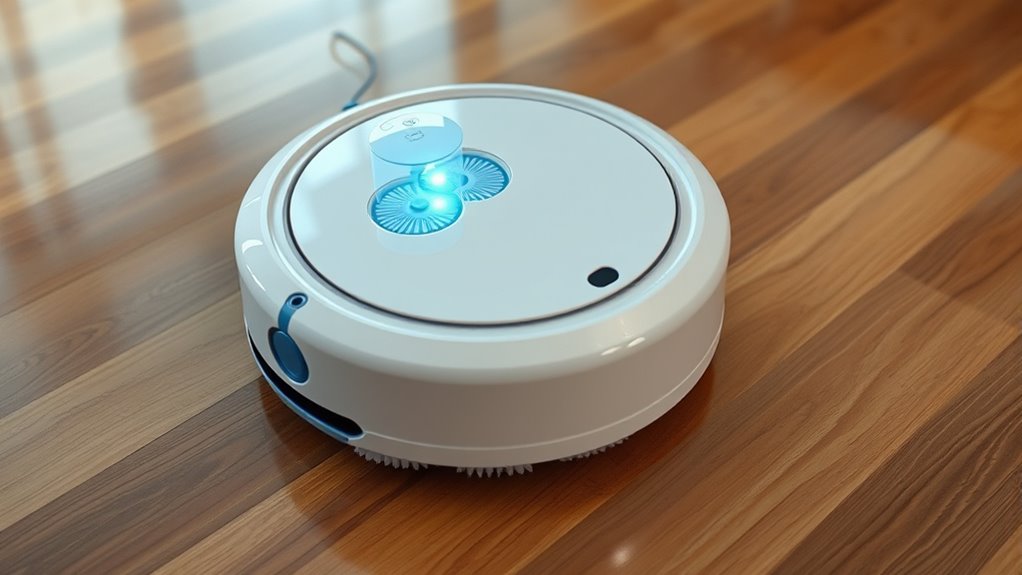
Robot mops rely on a combination of advanced sensors, powerful motors, and smart navigation systems to clean efficiently. Sensor technology plays a vital role, allowing the device to detect obstacles, measure cleaning areas, and adjust its path accordingly. These sensors help prevent collisions and guarantee thorough coverage. Battery life is also a key factor; high-quality robot mops are equipped with long-lasting batteries that enable extended cleaning sessions without frequent recharging. This guarantees you don’t have to interrupt your cleaning routine often. The integration of these technologies results in a device that’s both intelligent and reliable, capable of maintaining your floors with minimal effort while optimizing power use. Overall, the blend of sensor tech and battery efficiency makes robot mops a smart addition to your cleaning arsenal.
How Robot Mops Navigate and Map Your Space
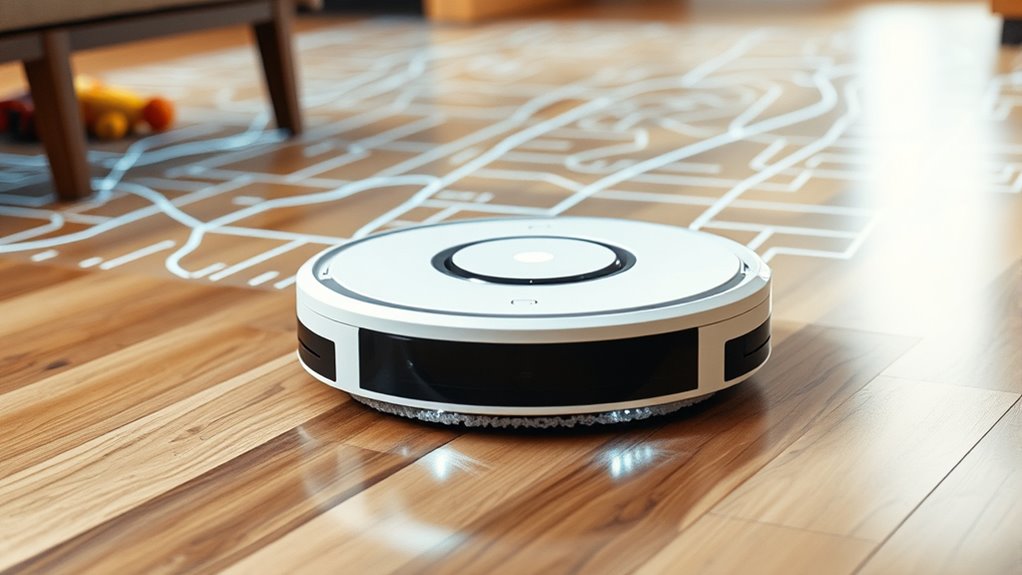
Ever wonder how robot mops efficiently clean your space without missing a spot? They use advanced mapping algorithms to create a detailed layout of your area, allowing them to plan the most effective cleaning path. These algorithms process data from sensors to understand the room’s layout, including obstacles and furniture. Obstacle detection plays a vital role here, enabling the robot to identify and avoid objects in real-time, preventing collisions or getting stuck. As the robot moves, it continuously updates its map, adapting to changes in your environment. This combination of mapping algorithms and obstacle detection ensures thorough coverage, so every corner gets cleaned without redundancy. Thanks to these technologies, your robot mop delivers fast, reliable cleaning with minimal input.
Features and Functions of Modern Robot Mops

Modern robot mops come equipped with a variety of features designed to make cleaning more efficient and user-friendly. They use dirt detection sensors to identify heavily soiled areas, ensuring thorough cleaning without wasting water or energy. Water control systems regulate the amount of water released, preventing over-wetting and damage to floors. Many models include smart navigation, app controls, and scheduling options for convenience.
| Feature | Function |
|---|---|
| Dirt Detection | Finds and targets dirty spots for focused cleaning |
| Water Control | Adjusts water flow based on cleaning needs |
| Navigation System | Maps your space for efficient coverage |
| App Connectivity | Allows remote control and scheduling |
| Auto-Recharge | Returns to dock when battery runs low |
Types of Flooring Suitable for Robot Mopping

Many types of flooring are compatible with robot mopping, but it’s important to choose surfaces that can withstand automated cleaning without damage. Hard, sealed floors tend to perform best, ensuring the mopping patterns effectively clean without issues. Consider these flooring options:
- Tile – Durable and water-resistant, ideal for robot mops.
- Vinyl – Smooth surface that handles mopping patterns well.
- Laminate – Sealed laminate resists moisture and is easy to maintain.
- Hardwood – Needs sealing and careful use to prevent damage.
For ideal results, follow maintenance tips like avoiding excess water and regularly cleaning your robot mop. Proper flooring and care help ensure your robot mop maintains its efficiency and longevity, providing a thorough clean every time.
Advantages of Using a Robot Mop in Your Home
Using a robot mop can substantially reduce the time and effort you spend on cleaning, allowing you to enjoy a consistently tidy home without manual scrubbing. One major advantage is cost savings, as it minimizes the need for professional cleaning services and reduces the use of cleaning supplies. Robot mops also ensure cleaning consistency, covering the same areas regularly and thoroughly, which helps maintain your floors’ appearance and hygiene. They operate on scheduled routines, so you don’t have to remember to clean, saving you mental effort too. Additionally, their intelligent navigation prevents missed spots and excess water, extending your flooring’s lifespan. Overall, investing in a robot mop offers a practical, efficient way to keep your home spotless while saving money and ensuring reliable cleaning results.
Frequently Asked Questions
How Long Do Robot Mops Typically Last Before Needing Replacement?
You can expect your robot mop to last around 2 to 4 years before needing a replacement, depending on usage and maintenance. The battery life typically diminishes over time, so keep an eye on performance. Follow the recommended replacement schedule for parts like batteries and brushes to guarantee peak cleaning. Regular upkeep extends your robot mop’s lifespan, saving you money and maintaining effective cleaning.
Can Robot Mops Handle Pet Hair and Allergens Effectively?
Yes, robot mops can handle pet hair removal and allergen control effectively. They are designed with specialized brushes and suction features that pick up pet hair from hard floors, preventing buildup. Many models also have HEPA filters, which trap allergens and improve air quality. Regular use helps maintain a cleaner home by reducing pet hair and controlling allergens, making your environment healthier and more comfortable for everyone.
Are Robot Mops Safe for Delicate or Antique Flooring?
Robot mops are generally safe for delicate surfaces, including antique flooring, but you should check their specifications first. Did you know that over 60% of antique preservation experts recommend gentle cleaning tools? You can trust robot mops if they feature soft microfiber pads and adjustable settings, ensuring they won’t damage your delicate surface or compromise antique preservation. Always test on a small area before full cleaning to be safe.
What Maintenance Routines Are Necessary to Keep Robot Mops Functioning?
To keep your robot mop functioning well, you should regularly clean the brushes to prevent buildup and guarantee ideal cleaning. Check the battery life often and replace the battery when it no longer holds a charge. Also, empty the water tank after each use and inspect for debris. Performing these maintenance routines helps extend your robot mop’s lifespan and keeps it operating efficiently.
Do Robot Mops Support Integration With Smart Home Systems?
Ever wondered if your robot mop can become part of your smart home? Yes, many models support smart home compatibility and voice control integration, making cleaning even easier. You can command your device with a simple voice command or through your home automation system. Just check your specific model’s features to guarantee it supports these functions, and you’ll enjoy seamless, hands-free control for a cleaner home.
Conclusion
Robot mops make cleaning effortless, seamlessly fitting into your daily routine. As they navigate your space and adapt to various floors, they save you time and effort. With advanced features, they tackle messes efficiently, leaving your home spotless. It’s almost like they’re designed to make life easier—bringing clean floors and peace of mind. In the end, a robot mop isn’t just a gadget; it’s your new cleaning partner, quietly working while you enjoy more of what matters most.