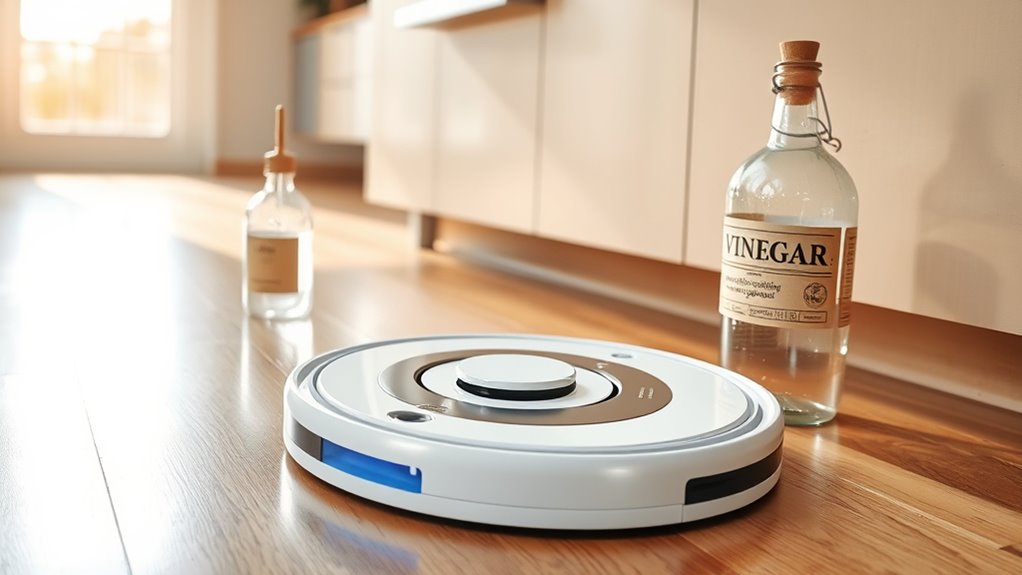

Whether you can put vinegar in your robot mop depends on your device’s manufacturer instructions. Many models warn against using acidic solutions like vinegar because they can damage internal parts, seals, or electronics. If your user manual confirms vinegar is safe, then you can use it in diluted form occasionally. However, to protect your device and guarantee ideal performance, it’s best to stick to recommended cleaning solutions. Want to discover how to use vinegar safely and effectively? Keep exploring to learn more.
Key Takeaways
- Check the user manual or manufacturer guidelines to confirm if vinegar is safe for your robot mop.
- Use only diluted vinegar (e.g., 1 cup per gallon of water) if permitted by the device.
- Avoid daily vinegar use to prevent potential damage to internal components and seals.
- Regularly clean and rinse the water tank after using vinegar to prevent residue buildup.
- Consider natural or manufacturer-recommended cleaning solutions if unsure about vinegar’s safety.
Using vinegar in a robot mop can be an effective and natural way to enhance cleaning performance. Many people seek eco-friendly cleaning solutions, and vinegar fits perfectly into that category. However, before pouring vinegar into your robot mop’s water tank, it’s essential to understand how it affects robot mop maintenance and whether it’s a safe choice. While vinegar is celebrated for its ability to cut through grime and disinfect, not all robot mops are designed to handle acidic solutions. Some manufacturers warn against using vinegar because it might damage the internal components or the materials of the water reservoir and mopping pads.
If your robot mop’s user manual explicitly states that vinegar is safe, then you can incorporate it into your cleaning routine. Typically, a mixture of about 1 cup of white vinegar to 1 gallon of water works well for eco-friendly cleaning, providing a natural disinfectant without harsh chemicals. Using vinegar in this way can help break down stubborn stains, eliminate odors, and reduce bacteria, making your floors cleaner and healthier. Remember, though, that frequent use of vinegar might wear down rubber seals or other parts over time, so it’s wise to use it occasionally rather than as a daily solution.
Maintaining your robot mop with natural solutions like vinegar can extend its lifespan and improve its overall performance. Regularly checking the water tank and cleaning the brushes and filters will prevent buildup and keep your device running smoothly. When using vinegar, consider rinsing the tank thoroughly afterward to prevent any residual acidity from lingering. This simple step helps avoid potential corrosion or damage to sensitive components. Additionally, using vinegar can be more environmentally friendly than chemical cleaners, reducing your household’s carbon footprint while still achieving a thorough clean. Incorporating proper maintenance practices can further safeguard your device from potential damage caused by natural cleaning agents.
Despite its benefits, it’s essential to be cautious. Not all robot mops are compatible with vinegar, especially those with delicate electronic parts or sealed motors. Always consult your device’s manual or contact the manufacturer if you’re unsure. Sometimes, manufacturers offer specially formulated cleaning solutions designed for robotic devices, which are safer and equally effective. If you prefer to stick with natural cleaning methods, consider using diluted vinegar carefully and sparingly, ensuring you don’t compromise your mop’s longevity.
Frequently Asked Questions
Will Vinegar Damage the Robot Mop’s Sensors or Electronic Parts?
Vinegar can potentially cause sensor damage or electronic corrosion in your robot mop. The acidic nature of vinegar may harm sensitive sensors and electronic components over time, leading to malfunction or reduced lifespan. To keep your device safe, avoid using vinegar directly in the mop’s water tank. Instead, opt for manufacturer-approved cleaning solutions that safeguard the electronics and ensure your robot mop stays in good working condition.
How Often Should I Add Vinegar to My Robot Mop?
You shouldn’t be adding vinegar to your robot mop often; in fact, stick to the frequency guidelines. Typically, every few cleanings or when you notice buildup works best. Keep the dilution ratios in check—usually one part vinegar to three parts water—to avoid damage. Overusing vinegar risks harming your device, so use it sparingly and follow manufacturer instructions to keep your robot happy and functioning well.
Can Vinegar Prevent Mold and Bacteria Buildup in the Mop?
Vinegar can help prevent mold buildup and control bacteria in your robot mop, thanks to its natural disinfectant properties. Regularly adding a small amount of vinegar to your cleaning routine can keep mold at bay and maintain a hygienic environment. Just make certain you’re using it in moderation and following your mop’s manufacturer guidelines to avoid damage. This simple step boosts mold prevention and bacteria control effectively.
Does Vinegar Affect the Robot Mop’s Battery Life or Performance?
Vinegar won’t substantially impact your robot mop’s battery life or performance if used properly. However, excessive or concentrated vinegar can cause buildup or damage over time, leading to potential performance concerns. To avoid this, dilute vinegar with water and use it sparingly. Regular cleaning and maintenance ensure your mop runs smoothly, preserving battery health and overall performance without risking damage from vinegar.
Are There Specific Types of Vinegar Recommended for Robot Mop Cleaning?
Did you know that white distilled vinegar accounts for over 80% of household vinegar sales? For your robot mop, stick to plain white distilled vinegar as it’s the safest and most effective for cleaning solutions. Avoid flavored or specialty vinegars, as their added ingredients could harm your device. Using the right vinegar type guarantees your robot mop cleans effectively without risking damage, keeping it in top condition.
Conclusion
While vinegar offers natural cleaning power, pouring it into your robot mop can be risky—like expecting a gentle breeze to handle a storm. The delicate electronics inside the device aren’t built for acidity, risking damage instead of cleanliness. Think of your robot as a high-tech partner, not a vinegar-soaked sponge. To keep it running smoothly, stick to manufacturer-recommended solutions—preserving both your device and peace of mind, like a safe harbor amid the chaos.