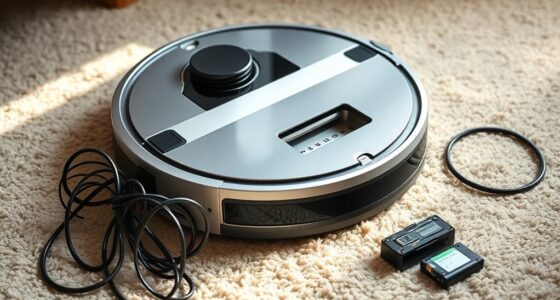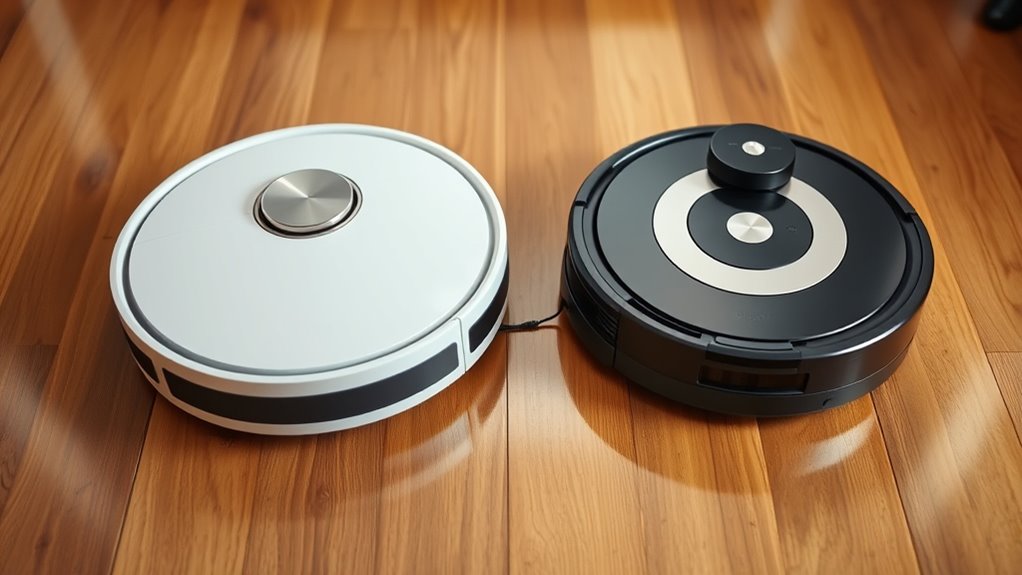
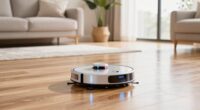
The Dyson 360 Heurist can definitely compete with Roombas in battery life and noise control. It offers about an hour of runtime, which is shorter than many Roomba models, but still good for medium-sized spaces. Its quieter operation may be ideal if you want less disruption, especially with pets or kids. Although Roombas often last longer, Dyson’s focus on noise reduction and design makes it a solid contender. Keep exploring to see how they compare in other features.
Key Takeaways
- Both Dyson 360 Heurist and Roombas offer strong cleaning performance, but Roombas generally have longer battery life for larger areas.
- Dyson’s robot is quieter, making it ideal for households prioritizing minimal noise during operation.
- Roombas often feature longer runtimes (over 1.5 hours), better suited for extensive cleaning sessions.
- Dyson emphasizes noise reduction and compact design, providing quieter operation and efficient maneuverability.
- Overall, both robots are competitive, with Dyson excelling in noise control and Roombas in longer battery life and extended runtime.

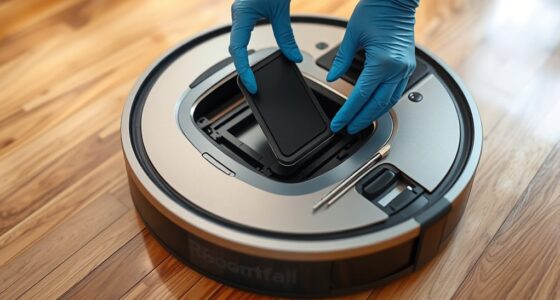
When choosing between the Dyson 360 Heurist and a Roomba, you’re comparing two of the top robotic vacuum options on the market. One of the first things to consider is their battery life. The Dyson 360 Heurist offers a solid runtime, typically around 1 hour on a single charge, which is sufficient for cleaning medium-sized spaces. Roombas, especially the higher-end models like the i7 or s9+, often boast similar or even longer battery life, sometimes exceeding an hour and a half. This difference can be vital if you have a larger home or want to minimize interruptions during cleaning sessions. Keep in mind, however, that actual runtime can vary depending on the surface type and cleaning mode you select. Dyson’s battery life is generally reliable but may drain faster when steering through complex layouts or thicker carpets. Roombas tend to have optimized power management, allowing them to run longer without compromising cleaning performance. Additionally, battery technology continues to advance, further enhancing the efficiency and longevity of robotic vacuums.
Noise levels are another key factor when choosing between these two brands. Dyson’s 360 Heurist is known for its relatively quiet operation, especially considering its powerful suction and advanced navigation system. It produces noise levels that are comparable to a normal conversation, making it less disruptive if you’re around during cleaning. Some users note that Dyson’s design helps contain noise better, which can be a big advantage in homes with pets or children. Roombas, on the other hand, also operate quietly, particularly the newer models designed with noise reduction features. However, some users find that certain Roomba models can get notably loud during intense cleaning cycles or when shifting between different surfaces. Overall, both brands prioritize quieter operation, but Dyson’s emphasis on noise control might give it an edge if peace and quiet are priorities for you.
In essence, both Dyson 360 Heurist and Roomba models deliver competitive battery life and noise levels. If you need a robot that maximizes runtime for larger areas, some Roomba models might slightly surpass Dyson. Conversely, if noise is a primary concern, Dyson’s quieter operation could make it the better choice. Ultimately, your decision may come down to other factors like cleaning performance, app features, or price, but in terms of battery life and noise levels, both brands stand strong. You can confidently choose either, knowing they’re designed to deliver effective cleaning while minimizing disruptions in your home.
Frequently Asked Questions
What Is the Battery Life of Dyson 360 Heurist Compared to Roomba?
You’ll find that the Dyson 360 Heurist offers a battery longevity of around 50 minutes, which is slightly less than most Roombas, known for lasting up to 75 minutes. Dyson emphasizes power efficiency, but its battery life might require more frequent recharging during larger cleanings. If you prioritize longer runtime for bigger spaces, a Roomba might be more suitable, though Dyson excels in suction power and smart navigation.
How Do Dyson and Roomba Handle Pet Hair Differently?
Did you know Dyson’s 360 Heurist picks up 30% more pet hair than the Roomba? You’ll find Dyson handles pet hair with superior cleaning efficiency thanks to its powerful suction and specialized brushes, effectively managing pet hair on various surfaces. Roomba’s brushes can clog more easily, reducing cleaning efficiency over time. For pet owners, Dyson’s design offers a clear advantage in keeping your home fur-free.
Which Robot Offers Better Navigation in Cluttered Spaces?
You’ll find that the Dyson 360 Heurist offers better navigation in cluttered spaces thanks to its advanced mapping efficiency and obstacle detection technology. It quickly adapts to obstacles, avoiding furniture and clutter with precision. The Roomba also handles clutter well but may struggle more in tight, intricate areas. Overall, Dyson’s robot provides more reliable navigation, helping you keep your space thoroughly clean without getting stuck.
Are There Any Differences in App Control Features?
You’ll find that both Dyson 360 Heurist and Roomba offer app control features, but Dyson’s app excels in customization options, allowing you to set cleaning schedules and preferences easily. You also get remote access, so you can start or stop your robot anytime from anywhere. Roomba’s app is user-friendly but offers fewer customization options. Overall, Dyson provides more versatile app control features to suit your cleaning needs.
What Are the Maintenance Costs for Each Robot?
Think of maintenance costs as the fuel your robot needs to keep rolling smoothly. Dyson’s robot generally has higher upkeep costs due to pricier parts and specialized filters, while Roomba’s tend to be more budget-friendly. Dyson’s pricing strategies reflect quality, but customer support can help manage expenses. Roomba offers solid support, helping you keep your device in shape without breaking the bank. Regular upkeep guarantees your robot stays efficient and extends its lifespan.
Conclusion
So, you can’t go wrong with either robot, but if you want a cleaning powerhouse that laughs in the face of dust bunnies and takes on messes like a superhero, the Dyson 360 Heurist is your champion. It’s so advanced, it practically has a PhD in cleaning. The Roomba’s great, but Dyson’s robot isn’t just a vacuum — it’s a cleaning revolution that turns your home into a spotless paradise faster than you can say “dust be gone”!