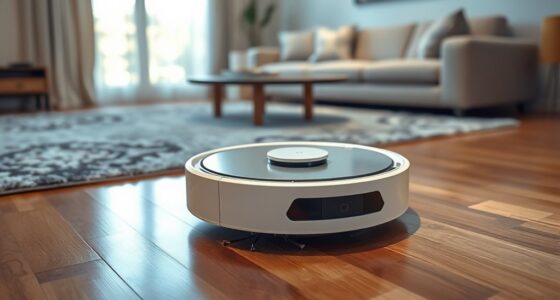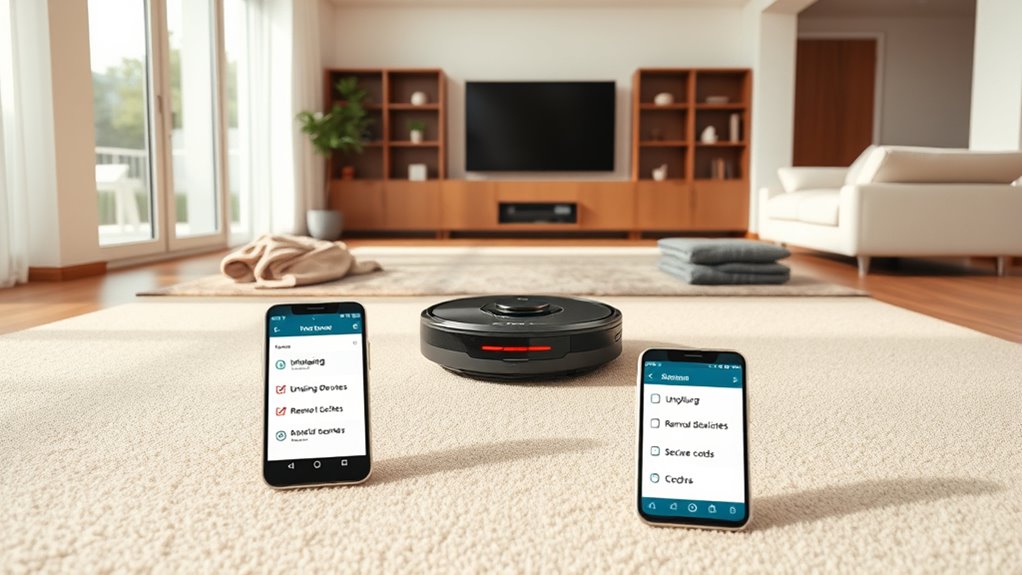
To prepare your home for a robot vacuum’s first run, clear floors of clutter, loose cords, and small objects. Make certain the charging station is accessible and unobstructed, and set boundaries to prevent navigation issues. Familiarize yourself with your vacuum’s features and customize cleaning schedules via the app. Adjust settings as needed and monitor initial cleaning to fine-tune performance. Keep these steps in mind to maximize efficiency—and there’s more to discover for a smooth start.
Key Takeaways
- Clear floors of clutter, cords, and small objects to prevent obstructions and tangling.
- Ensure the charging station is accessible, unobstructed, and placed in a central location.
- Set up boundaries or no-go zones to focus cleaning areas and avoid obstacles.
- Customize cleaning modes and schedules via the app for optimal coverage and efficiency.
- Monitor initial runs to identify navigation issues and adjust settings or furniture placement as needed.
Preparing Your Home and Robot Vacuum for First Use
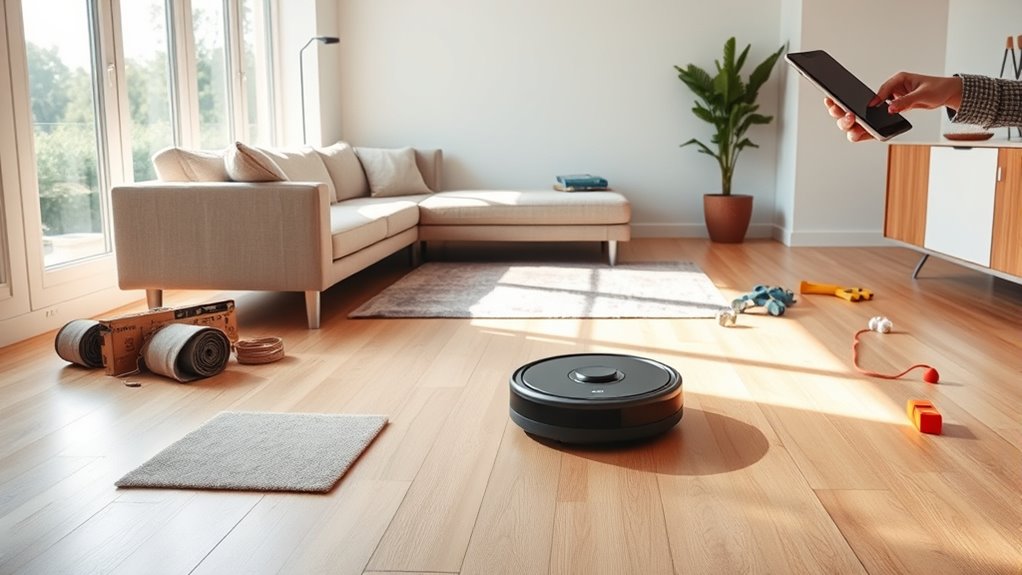
Ever wondered how to guarantee your robot vacuum works efficiently from the start? The key lies in setting it up properly and understanding its features. Modern robot vacuums come equipped with a variety of features designed to make cleaning effortless, but they only work well if you utilize them correctly. Start by familiarizing yourself with your model’s robot vacuum features. Check out the user manual and explore the app if your vacuum connects digitally. Many models allow you to customize cleaning modes, set boundaries, and schedule cleanings, so knowing how these features work can markedly improve your experience. For instance, you can select specific areas to clean or avoid, ensuring your vacuum focuses where it’s needed most. It’s also worth exploring features like cliff sensors, which prevent falls, and obstacle detection, which helps navigate around furniture.
Familiarize yourself with your robot vacuum’s features and customize settings for optimal cleaning efficiency.
Before your first run, perform a thorough home assessment. Clear the floors of clutter, loose cords, or small objects that could trap or obstruct the vacuum. Securing or removing loose wires is especially important because they can get tangled in the brushes or wheels, causing malfunctions. Additionally, consider the placement of charging stations—make sure it’s accessible and free from obstructions so your vacuum can dock easily when needed.
Once your home is prepped, it’s time to optimize your cleaning schedule tips. Consistency is key to maintaining a tidy home, so set your robot vacuum to run regularly. Many models allow you to program daily or weekly schedules through their app or onboard controls. Think about high-traffic areas that need frequent cleaning, like entryways or kitchens, and prioritize those. If your vacuum has multiple cleaning modes, select the one best suited for your home’s needs—such as a quick clean for daily maintenance or a deep clean for weekly sessions. Adjusting the schedule based on your household’s activity helps maximize efficiency and keeps your space consistently fresh.
Monitoring your first few runs will give you insight into how well the vacuum covers your space and whether you need to tweak settings or reposition furniture. Over time, you’ll learn which features help tailor the cleaning process to your home’s layout. Remember, a bit of initial setup and planning goes a long way in ensuring your robot vacuum performs at its best from the very first run. Properly understanding its features and establishing a solid cleaning schedule will save you time and effort, leaving you with a cleaner, more comfortable home effortlessly.
Frequently Asked Questions
How Often Should I Replace the Robot Vacuum’s Filters?
You should replace your robot vacuum’s filters every 2 to 3 months to maintain ideal filter maintenance. Regular replacement ensures your vacuum continues to clean effectively and prevents dust buildup. Keep an eye on the filter’s condition, especially if you notice reduced suction or increased debris. Follow your manufacturer’s recommended replacement schedule, but don’t hesitate to change filters sooner if you see signs of wear or dirt accumulation.
Can the Robot Vacuum Handle Uneven or Textured Flooring?
Yes, your robot vacuum can handle uneven or textured flooring if it has good surface adaptability. Its sensors and brushes are designed to tackle tricky terrain, from tiles to carpets. However, be aware that very rough or deeply textured surfaces might challenge its ability to clean thoroughly. To maximize performance, keep the surface clear of large debris and ensure the vacuum’s brushes are clean and functioning well.
Is It Necessary to Remove All Small Objects From the Floor?
Yes, you should remove all small objects from the floor, including floor clutter and pet toys. These items can block the vacuum’s path, cause it to get stuck, or damage its brushes. Clearing the area guarantees thorough cleaning and prevents frustration. Before your robot vacuum’s first run, pick up loose items, especially small or lightweight objects, to make the process smoother and more effective.
How Do I Troubleshoot if the Vacuum Gets Stuck Frequently?
If your robot vacuum gets stuck frequently, start by checking for navigation issues and obstacle detection problems. Clear any large clutter or objects blocking its path, especially in tight spaces. Make sure sensors are clean and unobstructed, as dirt or dust can impair obstacle detection. Update the vacuum’s firmware if needed, and consider recalibrating the navigation system. These steps help your vacuum move smoothly and avoid getting stuck.
What Safety Precautions Should I Take Before First Use?
Imagine your home as a safe harbor. Before your robot vacuum sails, you take safety measures like unplugging electrical devices and removing cords, so hazards don’t lurk unseen. Check for loose wires and small objects that could trip your device. Keep pets and children clear, like guiding ships away from rocky waters. These precautions protect against electrical hazards, ensuring a smooth, safe voyage on your first run.
Conclusion
Now that your home is prepped and your robot vacuum is ready, it’s time to let it work its magic. Imagine coming home after a busy day, and instead of cleaning, your robot smoothly navigates your living room, leaving everything spotless. With a little preparation, you’ll enjoy the convenience of a cleaner home without lifting a finger. Just sit back, relax, and watch your robot do all the hard work for you.