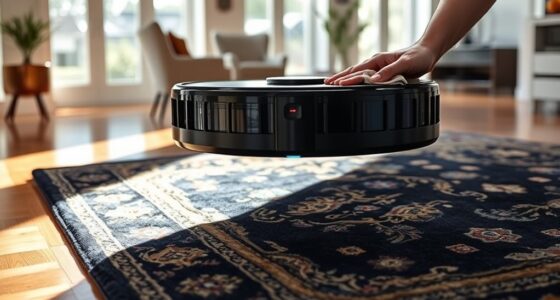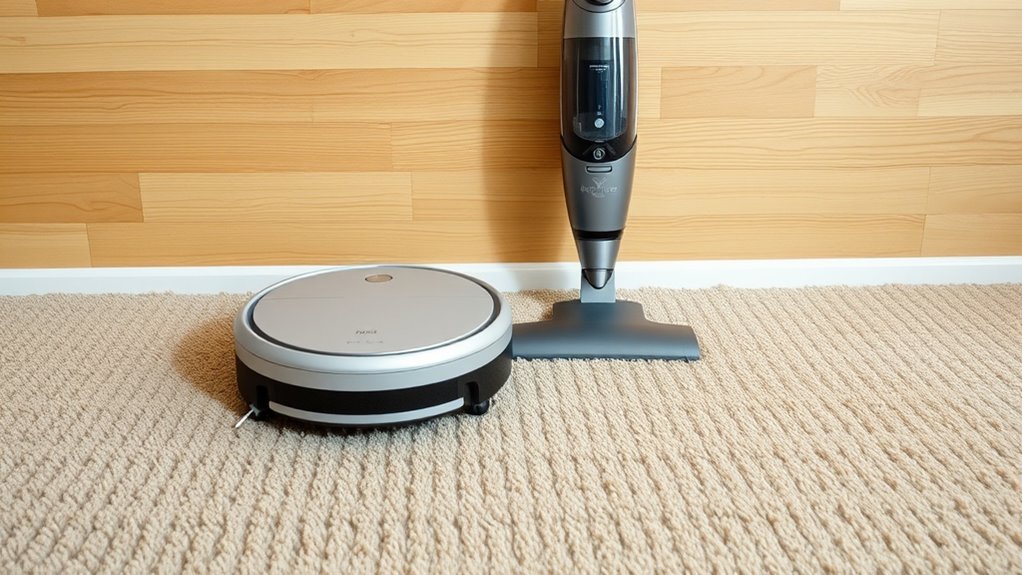

Robot vacuums are improving with better navigation, powerful suction, and smart features, making them a convenient alternative for routine cleaning. However, they still struggle with deep cleaning, stubborn stains, and thick carpets compared to traditional vacuums. While they excel at maintaining daily tidiness and reaching tricky spots, full replacement for your upright model depends on your specific cleaning needs. To see how these gadgets stack up and if they can truly replace your regular vacuum, keep exploring.
Key Takeaways
- Robot vacuums excel in convenience and automation but generally lack the deep cleaning power of traditional uprights.
- Traditional vacuums handle tougher stains and deep carpet cleaning better than most robot models.
- Robot vacuums are ideal for routine maintenance and hard-to-reach areas, reducing manual effort.
- Upfront costs for advanced robot vacuums are higher, but they save time and effort over manual cleaning.
- While robots can supplement cleaning routines, they are unlikely to fully replace traditional vacuums for deep cleaning needs.
How Robot Vacuums Work and Their Core Features

Robot vacuums operate using a combination of sensors, cameras, and sophisticated algorithms that allow them to navigate and clean your space autonomously. They detect obstacles, map rooms, and adjust their path to ensure thorough cleaning. One common concern is robot vacuum noise, which varies by model but generally remains unobtrusive. Many models now feature smart home integration, letting you start, schedule, or monitor cleaning remotely through apps or voice commands. These features make managing your cleaning routine more convenient. The core design emphasizes efficiency, with sensors preventing falls and collisions, while advanced algorithms optimize coverage. Overall, robot vacuums combine smart technology with user-friendly features, making them a practical addition to modern smart homes.
Power and Suction Capabilities Compared

When comparing robot vacuums to traditional models, one of the most noticeable differences lies in their power and suction capabilities. Traditional vacuums generally have higher suction power, making them more effective at deep cleaning carpets and stubborn dirt. Robot vacuums, however, tend to have smaller dust capacities, meaning you’ll need to empty them more often. Additionally, robot vacuums typically operate at lower noise levels, which is beneficial if you prefer a quieter cleaning process or need to run the vacuum while working or relaxing. While they may lack the raw power of upright models, recent advancements have improved their suction efficiency. Ultimately, your choice depends on whether you prioritize raw power and larger dust capacity or quieter, more convenient cleaning.
Maneuverability and Navigation Technologies
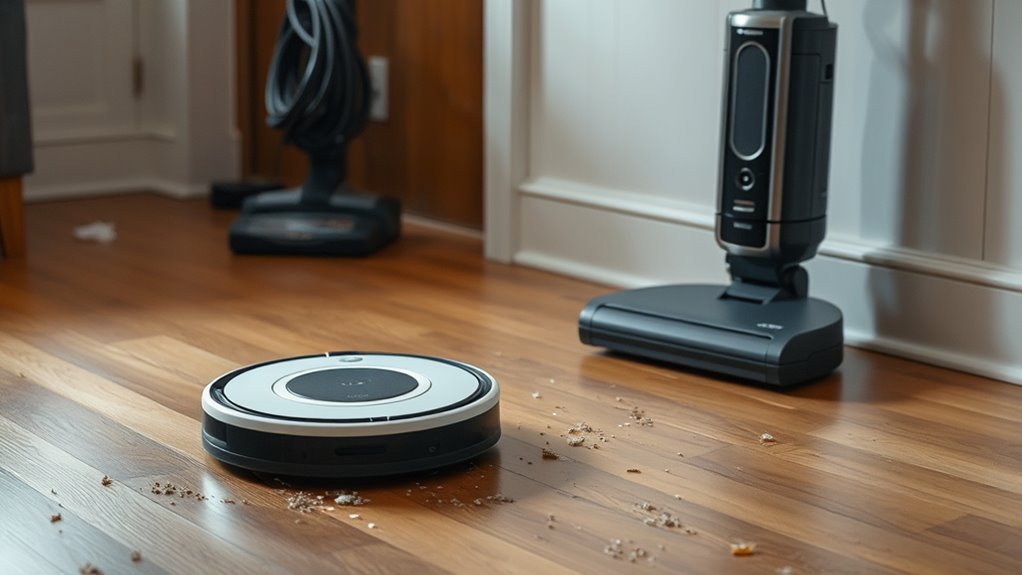
Advancements in maneuverability and navigation technologies have considerably enhanced the efficiency of robot vacuums. Modern bots now offer improved mapping accuracy and obstacle detection, making them more reliable in guiding your home. These technologies allow the vacuum to create detailed maps, so it knows where it’s cleaned and where it still needs to go. Here are three key features:
- Precision mapping for complete coverage
- Real-time obstacle detection to avoid collisions
- Smart path planning to optimize cleaning routes
This combination helps robots maneuver smoothly around furniture and narrow spaces, reducing missed spots and accidents. As a result, your vacuum can clean more thoroughly without getting stuck or missing areas, making it a practical replacement for traditional vacuums in many homes.
Cleaning Performance on Different Surfaces
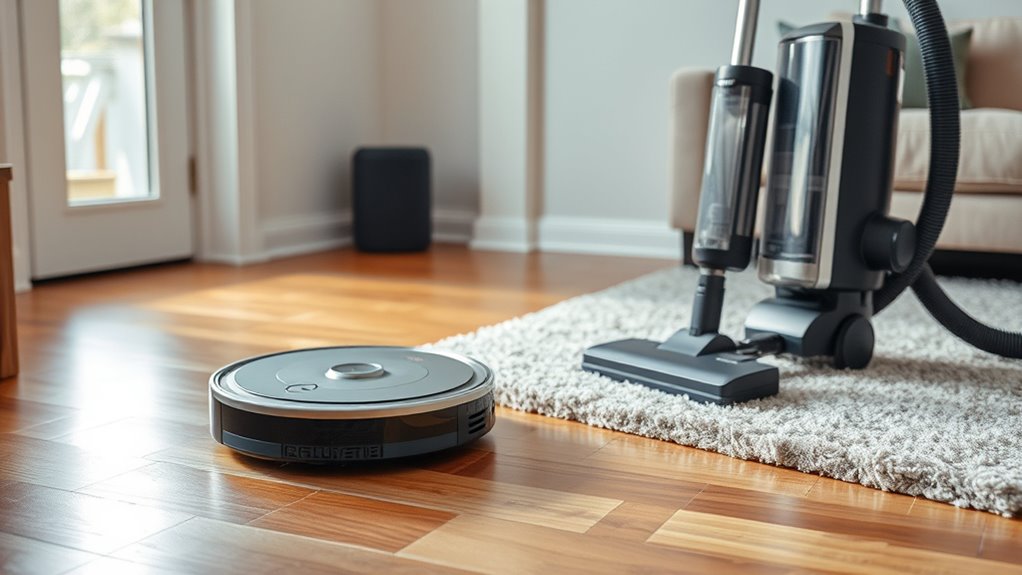
While robot vacuums excel in many areas, their cleaning performance can vary markedly across different surfaces. On hard floors, they usually handle debris and dust effectively, but when it comes to surface stain removal, they might struggle with stubborn spots. Carpets, especially thicker ones, can challenge their suction power, leaving some dirt behind. For upholstery cleaning, robot vacuums are generally limited; they’re not designed to deep-clean fabric surfaces like traditional vacuums. You may notice surface stains on cushions or curtains that bots can’t fully eliminate. Overall, while they work well for routine cleaning on smooth surfaces, their performance drops on heavily stained or textured surfaces, making them less suitable as sole cleaning tools for those tasks.
Handling of Pet Hair and Tough Messes
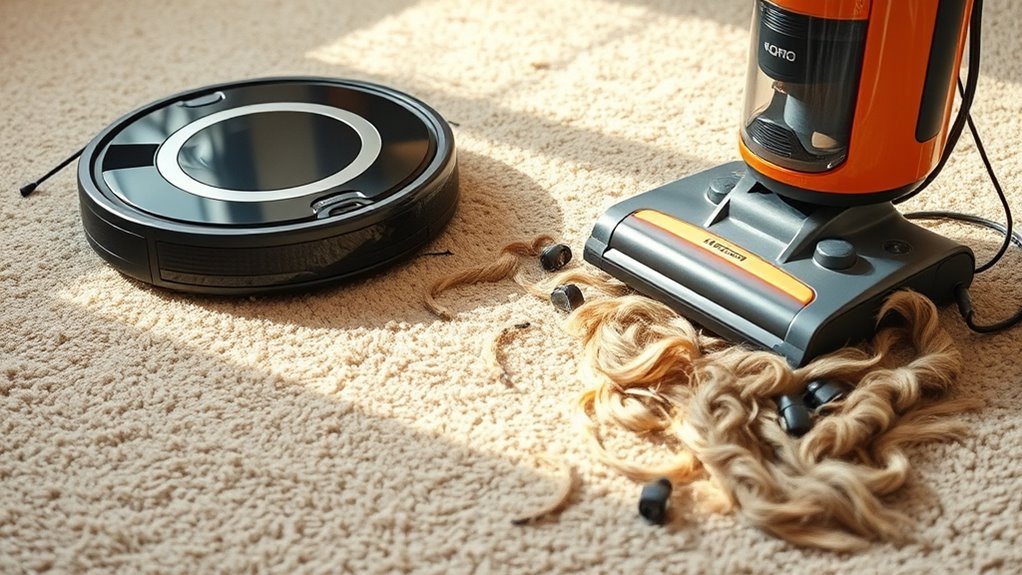
When it comes to pet hair, you need a vacuum that can pick it up efficiently without leaving behind loose strands. Tackling sticky stains on different surfaces also tests a vacuum’s ability to handle tough messes quickly. Both traditional and robot vacuums have their strengths here, but which one performs better?
Pet Hair Pickup Efficiency
Pet hair can be a stubborn mess, but your choice of vacuum makes a big difference in how effectively it gets cleaned up. During shedding seasons, pet fur gets everywhere, and you need a vacuum that can handle it efficiently. Robot vacuums with strong suction and rubber brushes often outperform traditional models in picking up pet fur on hardwood or tile. Here are some key points to weigh:
- Suction Power – Higher suction helps lift pet fur from carpets and upholstery.
- Brush Type – Rubber or silicone brushes trap fur better and prevent tangling.
- Edge Cleaning – Effective edge brushes reach tight corners where fur often hides.
Choosing the right vacuum regards you can keep your home pet fur-free, no matter the season.
Tackling Sticky Stains
Handling sticky stains and tough messes requires a vacuum that can do more than just pick up loose debris. When faced with stubborn spills or sticky stains, a powerful vacuum with strong suction and specialized brushes makes all the difference. Robot vacuums with advanced mopping features or high-performance upright models are better equipped to handle these challenges. They can loosen and lift stubborn spills from carpets and hard floors, preventing stains from setting. Traditional vacuums often come with attachments designed for deep cleaning, making it easier to tackle sticky residues or pet messes. While robot vacuums excel at maintaining daily cleanliness, for stubborn spills, a combination of a good upright vacuum and targeted cleaning tools guarantees your floors stay spotless.
Battery Life and Maintenance Requirements
You’ll want to contemplate how long the vacuum’s battery lasts before needing a recharge. Robot vacuums typically require regular charging and may need battery replacements over time, while traditional vacuums don’t depend on batteries. Additionally, both types need periodic filter checks and maintenance to keep them running efficiently.
Battery Life Expectancy
Battery life expectancy is a crucial factor when comparing robot vacuums to traditional models, as it directly impacts their efficiency and maintenance needs. You’ll want to evaluate the battery durability and rechargeable lifespan, which determine how long your device can operate before needing a replacement or recharge. Generally, robot vacuums have a shorter rechargeable lifespan compared to traditional vacuums’ power cords, but advances are improving their longevity. Key points include:
- Most robot batteries last between 1-3 years with regular use.
- Battery durability varies based on usage and model quality.
- Proper maintenance can extend rechargeable lifespan, ensuring consistent performance.
Understanding these aspects helps you choose a robot vacuum that maintains ideal cleaning power over time without frequent replacements.
Charging and Recharging Needs
While battery longevity influences how often you need to replace or recharge a vacuum, understanding the charging and recharging routines is equally important. Robot vacuums rely on charging stations, where they automatically dock to replenish between cleaning cycles. Many models offer quick recharge times, but some may need several hours to fully power up. If your robot’s battery runs low mid-clean, it may pause and return to its station, then resume once charged. Battery swapping is an alternative for extended use, allowing you to replace batteries instead of waiting for recharges. Unlike traditional vacuums, which don’t need recharging routines, robot vacuums depend heavily on these routines to maintain continuous cleaning. Being familiar with your device’s charging needs helps ensure it’s ready when you need it.
Maintenance and Filter Checks
Regular maintenance and filter checks are essential to keep your robot vacuum running efficiently and to prolong its battery life. Neglecting these tasks can reduce suction power and cause motor strain. To guarantee peak performance, consider these key points:
- Replace filters regularly to maintain airflow and trap dust effectively.
- Perform motor maintenance by clearing debris from brushes and wheels.
- Check the battery health periodically and replace it if you notice reduced runtime.
Cost, Accessibility, and User Experience
When comparing the cost, accessibility, and user experience of robot vacuums versus traditional vacuums, it’s clear that robot models often require a higher upfront investment but offer greater convenience. You might find that pricing options vary, with some models costing more initially but saving time in the long run. Accessibility is improved since robot vacuums can clean hard-to-reach areas automatically. Your user interface plays a role, with many robots offering intuitive controls via smartphone apps or voice commands. Consider this table:
| Aspect | Robot Vacuum | Traditional Vacuum |
|---|---|---|
| Pricing options | Higher upfront, app-controlled features | Lower initial cost |
| Accessibility | Automates cleaning, handles tricky spots | Manual operation, limited reach |
| User experience | Easy to operate, smart navigation | Manual effort, straightforward use |
Future Trends and Technological Developments
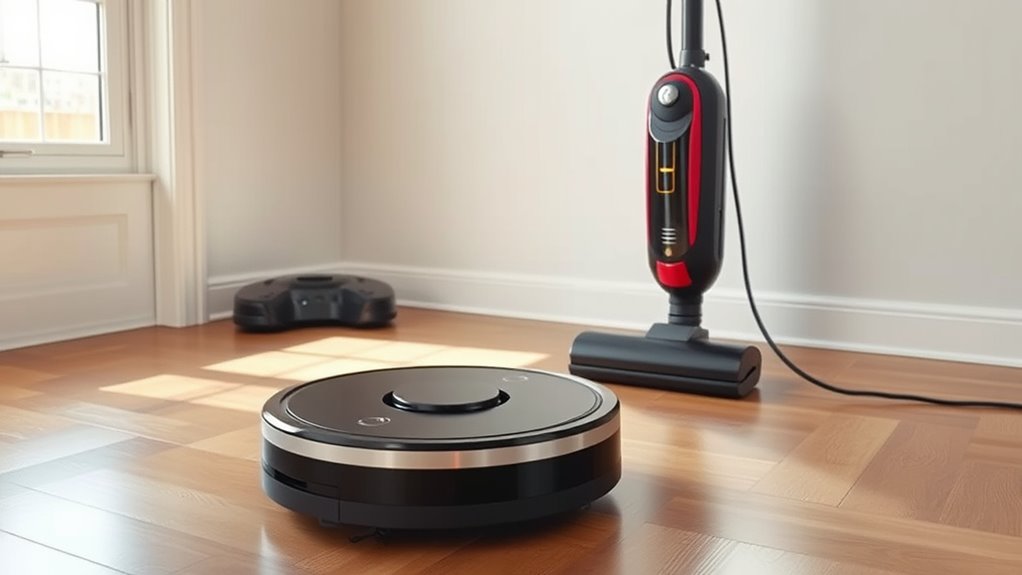
Advancements in robotics and artificial intelligence are rapidly shaping the future of vacuum technology, promising more intelligent and efficient cleaning solutions. You can expect future vacuums to feature enhanced autonomous navigation, allowing them to map your home precisely and avoid obstacles seamlessly. Integration with smart home systems will become more sophisticated, enabling your vacuum to coordinate with other devices for optimized cleaning schedules and voice control. Key developments include:
- Improved obstacle detection and avoidance for safer, more efficient cleaning
- Advanced machine learning algorithms that adapt to your home’s layout and habits
- Deeper smart home integration, enabling coordinated activity with lighting, security, and other IoT devices
These innovations will make your vacuum smarter, more autonomous, and better integrated into your daily life.
Frequently Asked Questions
How Do Robot Vacuums Compare to Traditional Vacuums in Allergy Control?
Robot vacuums generally do a good job of allergen removal, helping improve your air quality. They regularly clean floors, reducing dust and allergens that trigger allergies. However, traditional vacuums with HEPA filters and stronger suction might be more effective for deep cleaning and capturing tiny particles. If you want consistent allergen control, using a robot vacuum for daily maintenance combined with occasional deep cleans from a traditional vacuum can be ideal.
Can Robot Vacuums Replace the Deep Cleaning Abilities of Upright Models?
Robot vacuums can’t fully replace the deep cleaning abilities of upright models, especially for dirt deepening and carpet cleaning. While they excel at daily maintenance, they often miss embedded dirt and stains. Uprights have stronger suction and dedicated brushes, making them better for thorough deep cleaning. So, if you want spotless carpets and deep dirt removal, you’ll still need an upright alongside your robot vacuum.
Are Robot Vacuums Suitable for Large or Heavily Soiled Homes?
For large homes or heavily soiled areas, robot vacuums might not be your best bet. Studies show they clean only about 60% of dirt compared to traditional models. They’re great for maintenance but struggle with deep cleaning or heavy soiling in big spaces. You’ll likely need an upright or canister vacuum for thorough cleaning, especially if you want to keep large homes spotless without constant manual effort.
How Does Maintenance Differ Between Robot and Traditional Vacuums?
You’ll find that maintenance varies between robot and traditional vacuums. With robot vacuums, you mostly focus on cleaning the dustbin and checking the battery life regularly. They typically require less upkeep overall, but you’ll need to empty the dustbin often and guarantee the battery remains charged. Traditional vacuums demand more frequent filter changes, belt replacements, and brush cleaning, making their maintenance a bit more involved.
What Are the Environmental Impacts of Using Robot Vacuums?
You might find robot vacuums more eco-friendly because they often use eco-friendly materials and consume less energy compared to traditional vacuums. Their efficient design reduces overall energy consumption, helping lower your carbon footprint. Plus, some models are rechargeable and have longer-lasting batteries, decreasing waste. By choosing energy-efficient, eco-friendly robot vacuums, you contribute to environmental conservation while keeping your home clean.
Conclusion
While robot vacuums are advancing rapidly, they still can’t fully replace traditional uprights yet. For example, studies show that robot vacuums clean about 80% of standard messes, but uprights handle stubborn stains and deep carpets more effectively. If you value thorough cleaning and quick turnaround, a traditional vacuum remains your best bet. However, for convenience and daily maintenance, bots are a smart, space-saving solution that’s only going to get better.