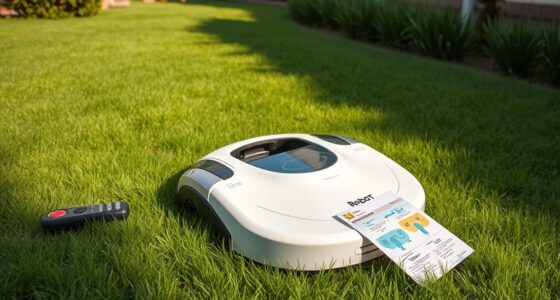
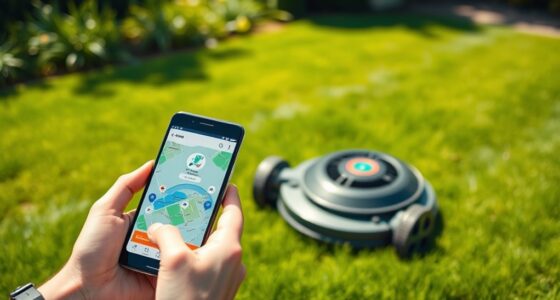
Yes, robot mowers can help feed your lawn by leaving behind fine grass clippings that act as a natural mulch. These small clippings decompose quickly, releasing nutrients and organic matter that improve soil health and promote healthy growth. Using grass as mulch also conserves moisture, suppresses weeds, and reduces waste. If you want to learn how to maximize these benefits and maintain your lawn’s vigor, keep exploring expert tips and techniques.
Key Takeaways
- Robot mowers typically mulch grass clippings into fine particles that naturally fertilize the lawn.
- The small size of clippings from robot mowers allows quick decomposition, releasing nutrients back into the soil.
- Mulched grass from robot mowers helps retain moisture and suppress weeds, promoting healthier turf growth.
- Consistent mowing with robots ensures continuous nutrient recycling and reduces the need for additional fertilization.
- Proper grass clipping management from robot mowers supports eco-friendly, cost-effective lawn maintenance.

Have you ever considered using grass clippings as mulch? It’s a simple, eco-friendly way to nourish your garden without relying on commercial fertilizers. Grass clippings are rich in nitrogen, which provides numerous fertilizer benefits that help your plants thrive. Instead of discarding those trimmings, you can repurpose them to improve soil health and promote lush growth. When you use grass clippings as mulch, you create a natural barrier that conserves moisture, suppresses weeds, and gradually releases nutrients into the soil. This approach not only supports your plants but also reduces waste and minimizes the need for chemical inputs.
Using grass clippings as mulch boosts soil health and reduces waste naturally.
To get the most out of grass clippings, it’s crucial to understand proper composting techniques. Fresh clippings can be incorporated into a compost pile, where they break down quickly when mixed with other organic materials like leaves or straw. Proper layering and aeration are key to avoiding issues like compaction or foul odors. By turning your compost regularly, you guarantee an oxygen-rich environment that accelerates decomposition, producing rich, dark compost that’s perfect for mulching or directly enriching your garden beds. Using composted grass clippings as mulch delivers a slow-release fertilizer benefit, feeding your plants over time and encouraging healthy root development.
When applying grass clippings directly to your garden beds, make sure they’re dry to prevent matting, which can hinder water penetration and air circulation. Spread a thin layer of about one to two inches to avoid smothering young plants or creating a barrier that’s too dense. This layer acts as insulation during hot weather, keeping soil temperatures stable and reducing evaporation. As the clippings decompose, they add organic matter to the soil, improving its structure and fertility. Over time, this organic matter enhances the soil’s capacity to retain nutrients and water, creating a healthier environment for your plants.
Using grass clippings as mulch is a sustainable practice that aligns with eco-conscious gardening. It reduces waste, supports natural soil processes, and minimizes reliance on chemical fertilizers. Plus, it’s a cost-effective solution that leverages what you already have—clippings from your lawn. Just remember that proper composting techniques and mindful application are key to maximizing their benefits. When you treat grass clippings as a valuable resource rather than waste, you’re taking a step toward a more resilient, productive garden. This approach not only feeds your plants but also helps you cultivate a greener, healthier outdoor space with less effort and fewer inputs. Additionally, understanding the role of air circulation in composting ensures that your organic matter decomposes efficiently and safely.
Frequently Asked Questions
Can Grass Clippings Cause Thatch Buildup Over Time?
Yes, grass clippings can cause thatch buildup over time if not managed properly. When clippings decompose slowly or in thick layers, they contribute to thatch accumulation, which hinders water and nutrient absorption. This can lead to grass deterioration, making your lawn more vulnerable to pests and diseases. To prevent this, mow regularly, remove excess clippings, and guarantee proper lawn aeration to promote healthy grass growth.
How Often Should I Mow With a Robot Mower?
You should mow with a robot mower about 3 to 4 times a week for ideal lawn health. Studies show robot mower efficiency is highest when mowing frequently, preventing grass from becoming too tall. Mowing schedule tips include setting the mower to trim small amounts often, which promotes dense, healthy grass. Regular mowing prevents thatch buildup and keeps your lawn looking neat and lush.
Are There Lawn Conditions Unsuitable for Grass Clipping Mulch?
Certain lawn conditions aren’t ideal for grass clipping mulch. If your soil has heavy compaction, the clippings might not decompose properly, leading to thatch buildup. Additionally, uneven growth can cause inconsistent mulching, resulting in patchy areas. In these cases, you should consider aerating your soil or adjusting your mowing technique. Properly managing these conditions helps your robot mower’s clippings enrich the soil rather than hinder your lawn’s health.
Do Grass Clippings Attract Pests or Wildlife?
It’s a common concern that grass clippings might invite pests or wildlife trouble. While they can attract certain pests like insects or small animals, proper mowing and disposal usually keep this in check. If you leave clippings thick or in damp conditions, you risk pest attraction and wildlife disturbance. Think of it as walking a tightrope; balance is key to enjoying the benefits without inviting unwanted visitors.
What Is the Environmental Impact of Using Robot Mowers?
Using a robot mower reduces your environmental impact by saving energy and decreasing emissions compared to traditional gas-powered mowers. Its efficient energy use minimizes your carbon footprint, and the grass recycling benefits are significant—clippings decompose quickly, enriching your soil naturally. Plus, robot mowers operate quietly, reducing noise pollution. Overall, adopting a robot mower helps you maintain a healthy lawn while supporting eco-friendly practices.
Conclusion
So, don’t worry about leaving grass clippings on your lawn—robot mowers actually help nourish it. Some might think leftover clippings cause thatch or attract pests, but when chopped finely and evenly, they decompose quickly, feeding your grass naturally. This eco-friendly practice saves you time and reduces waste. Give it a try; your lawn can thrive with minimal effort, and you’ll enjoy a lush, healthy yard without the fuss of bagging and disposal.