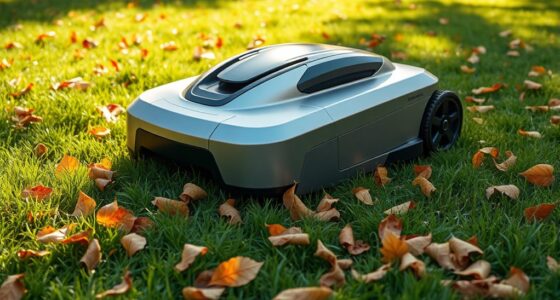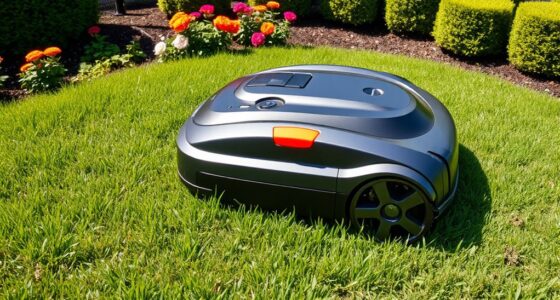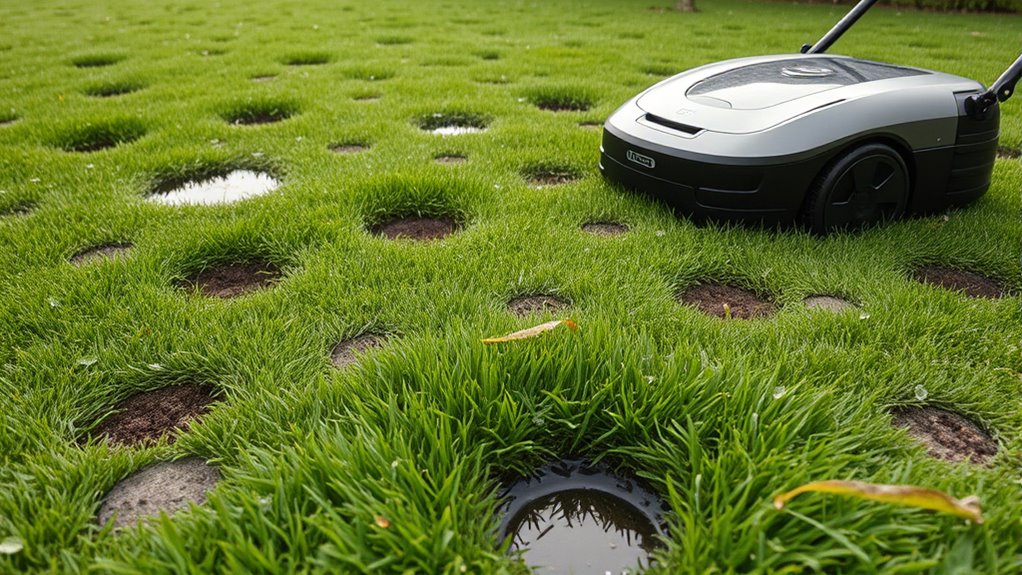

Yes, modern robot mowers can handle holes, puddles, and divots thanks to advanced sensors that detect surface variations and moisture levels. These sensors help the mower navigate around or over irregularities, preventing slipping and damage while maintaining a smooth cut. They adapt to uneven terrain, making lawn care easier and more efficient. Curious about how these sensors work and what they can do for your lawn? Keep exploring to find out more.
Key Takeaways
- Modern robot mower sensors detect surface irregularities like holes, divots, and puddles for better navigation.
- Sensors assess soil moisture and firmness, helping avoid muddy patches and prevent getting stuck.
- They identify small imperfections, enabling precise trimming without worsening surface damage.
- Adaptive sensors allow robot mowers to maintain even cuts and handle uneven terrain effectively.
- Overall, sensors empower robot mowers to manage imperfect lawns by navigating around or over surface irregularities.
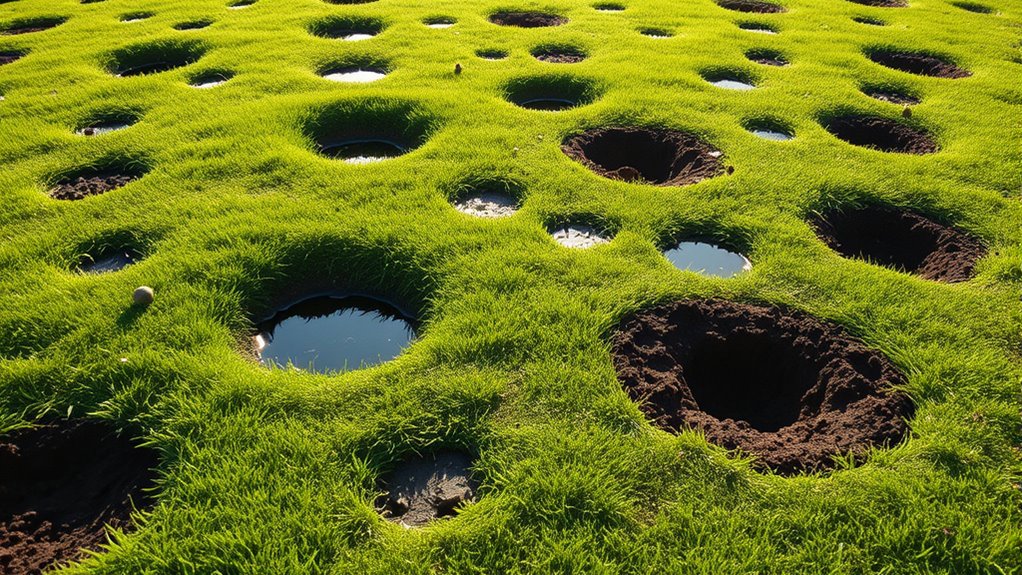
When you walk across a muddy field or a freshly plowed golf course, you often encounter holes, puddles, and divots that tell stories about the land’s movement and use. These imperfections can seem like obstacles for traditional lawn care tools, but with modern technology, robot mower sensors are better equipped to handle such lawn surface variations. These sensors are designed to detect changes in terrain, ensuring your mower adapts to uneven grounds without getting stuck or causing further damage. Instead of relying solely on a fixed cutting pattern, the latest robot mowers actively monitor their environment, making real-time adjustments based on what their sensors perceive.
Your lawn isn’t always perfectly flat. It can have dips, mounds, or patches of soft soil—areas that might cause trouble for older or less advanced mowers. But with robot mower sensors, these surface variations are less of a problem. These sensors help the mower identify the height and texture of the grass and soil beneath, allowing it to navigate around or over minor irregularities smoothly. If a puddle appears after a rain, the sensors can detect the change in surface firmness and moisture levels, prompting the mower to avoid the area or adjust its speed accordingly. This prevents the mower from slipping or getting bogged down in muddy patches, which can be common on imperfect lawns.
Robot mower sensors detect surface variations and moisture, helping navigate around minor irregularities and muddy patches smoothly.
Additionally, robot mower sensors provide a level of precision that manual mowing simply can’t match. They can detect small divots and holes, ensuring the mower trims around them carefully without causing further damage. This is especially helpful if your lawn has been heavily used or weathered, as it minimizes the risk of exacerbating existing imperfections. In fact, sensor technology has advanced to enable even better detection and navigation capabilities, making it easier for the mower to handle complex terrain. Over time, the mower’s ability to sense and adapt to lawn surface variations helps maintain a healthier, more even turf. It reduces the need for manual touch-ups or repairing divots, saving you time and effort.
In essence, these sensors turn your lawn from a bumpy, unpredictable landscape into a manageable area that the robot can maintain efficiently. They enable your mower to handle holes, puddles, and divots with greater ease, ensuring a consistent cut and healthier grass. Even if your lawn isn’t perfectly smooth, you don’t have to worry about your robotic helper struggling or causing damage. Instead, it actively works around the imperfections, making lawn maintenance less of a chore and more of a seamless, smart process.
Frequently Asked Questions
How Do Robot Mowers Detect and Avoid Water Puddles?
Robot mowers detect and avoid water puddles using advanced water detection sensors integrated into their systems. These sensors identify moisture or water presence, allowing the mower to recognize puddles early. When water is detected, the mower employs obstacle avoidance algorithms to navigate around the puddle, preventing damage. This proactive approach guarantees your lawn is mowed efficiently while sidestepping water-related issues, keeping your mower safe and your lawn well-maintained.
Can Robot Mowers Repair or Level Uneven Divots Automatically?
Like a skilled gardener tending to a wild garden, your robot mower can’t automatically level or repair uneven divots. While it excels in terrain adaptation, it’s designed mainly for cutting grass, not fixing the landscape. You’ll need to manually address large divots or uneven patches. Think of it as a helpful assistant, but not a landscape artist. For perfect lawns, occasional manual leveling remains essential.
What Maintenance Is Required for Robot Mowers on Uneven Terrain?
You need to regularly inspect your robot mower on uneven terrain to prevent issues like soil erosion and root intrusion. Keep the blades sharp and clean to guarantee efficient cutting, and clear debris or obstacles that could cause uneven mowing. Adjust the mower’s settings if necessary, and consider leveling small divots manually. Proper maintenance helps your robot mower handle rough terrain better and keeps your lawn healthy and neat.
Are Robot Mowers Suitable for Lawns With Frequent Animal Holes?
You might think robot mowers can’t handle lawns with frequent animal holes, but recent models excel at animal hole navigation thanks to advanced sensors and mower adaptability. These features allow them to detect and navigate around holes without getting stuck or damaged. While some uneven terrain can still pose challenges, many robot mowers are designed to adapt to these imperfections, making them suitable for lawns with frequent animal holes.
How Do Robot Mowers Handle Thick or Dense Patches of Grass?
Robot mowers can handle thick grass and dense patches, but they might struggle if the grass exceeds their cutting height or becomes overly tangled. You should regularly trim or mow the dense areas beforehand to guarantee peak performance. The mower’s sensors may also have difficulty steering through very thick or uneven patches, so maintaining a manageable grass height helps keep your lawn tidy and prevents the mower from getting stuck.
Conclusion
Just like a boat navigates choppy waters, robot mowers can handle uneven lawns with some adjustments. While they excel on smooth surfaces, holes, puddles, and divots might pose challenges. But don’t worry—many models now include sensors and adaptive features to tackle these imperfections. With a little care, your mower can glide over your yard’s quirks as easily as a skater on a glassy pond, keeping your lawn neat and tidy no matter the terrain.