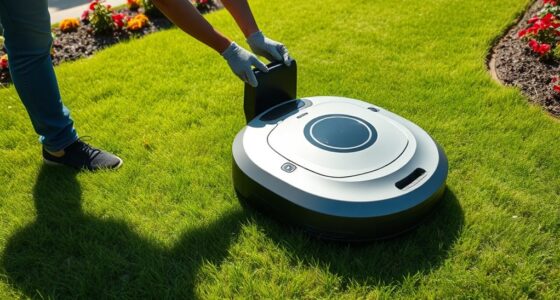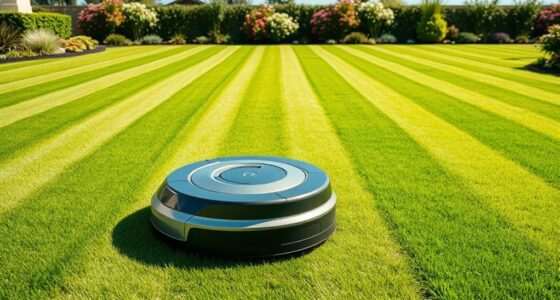

Robotic lawn mowers work by maneuvering your yard using sensors, GPS, and obstacle detection to cut grass automatically. They’re eco-friendly, quiet, and can help maintain a healthier lawn with consistent cuts. While they’re great for many lawns, they may struggle with uneven terrain or thick grass. To get the most out of your mower, you need to contemplate features, maintenance, and warranties. Curious to find out if it’s the right fit for your lawn? Keep exploring to learn more.
Key Takeaways
- Robotic lawn mowers operate autonomously with sensors and GPS for precise, efficient grass cutting.
- They offer eco-friendly, low-noise operation, reducing environmental impact and neighborhood disturbance.
- Limitations include battery lifespan, terrain challenges, and obstacle navigation, requiring regular maintenance.
- Proper calibration, blade upkeep, and warranty coverage are essential for long-term performance and cost savings.
- Routine maintenance and battery management extend mower lifespan, making them a cost-effective lawn care solution.
How Do Robotic Lawn Mowers Work?
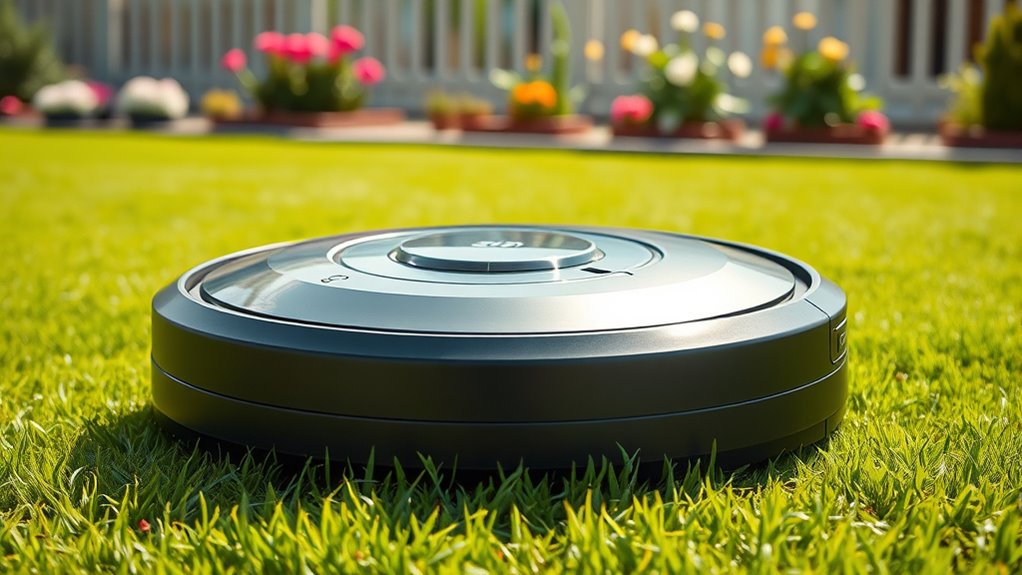
Robotic lawn mowers operate by using built-in sensors and navigation systems to mow your lawn automatically. The core of their operation relies on advanced battery technology, which provides cordless, efficient power for extended mowing sessions without needing frequent recharges. As you set up your mower, you’ll interact with a user interface—usually a digital display or app—that allows you to customize mowing schedules, boundaries, and settings. These interfaces are designed to be intuitive, making it easy to control your mower even if you’re not tech-savvy. The sensors help the mower detect obstacles, edges, and terrain changes, ensuring precise cutting and safe operation. Overall, the combination of reliable battery technology and user-friendly interfaces makes robotic mowers a convenient, hassle-free lawn care solution.
Advantages of Using a Robotic Mower
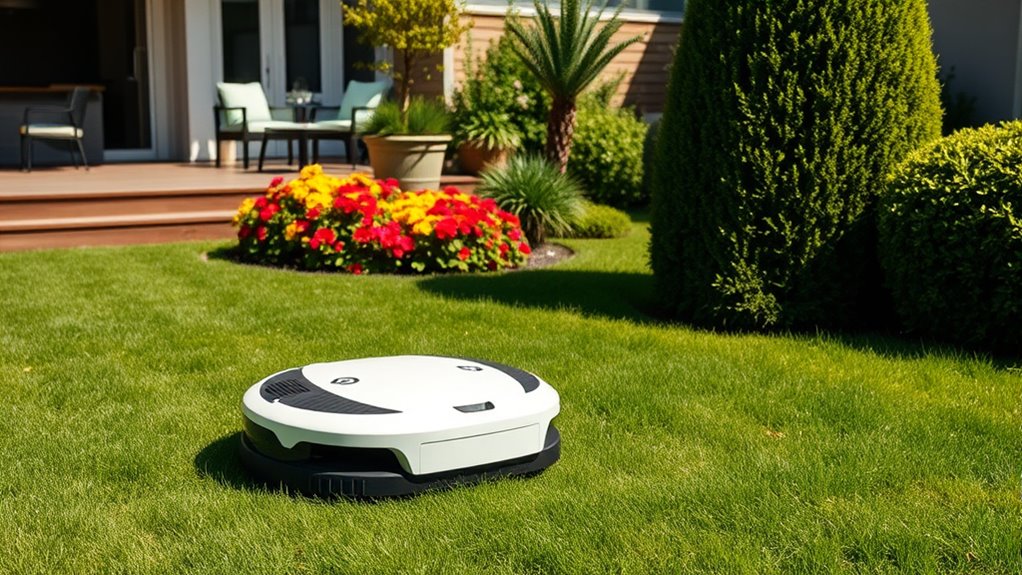
The benefits of using a robotic mower extend beyond just automated operation. With smart technology, it adapts to your lawn’s needs, ensuring consistent cutting and healthier grass. Plus, it’s environmentally friendly, reducing emissions compared to gas-powered mowers. Using a robotic mower also offers these advantages:
Robotic mowers adapt to your lawn, promote healthy grass, and reduce emissions for eco-friendly, effortless yard care.
- Low noise levels, so you can mow without disturbance
- Precise trimming that promotes lawn health
- Reduced energy consumption, supporting eco-conscious choices
These features make your lawn care more efficient and sustainable. You’ll save time and effort while contributing to a greener environment. The smart technology behind robotic mowers allows for seamless scheduling and maintenance, making lawn care effortless. Overall, it’s a smart investment for a beautiful, eco-friendly yard.
Limitations and Challenges to Consider
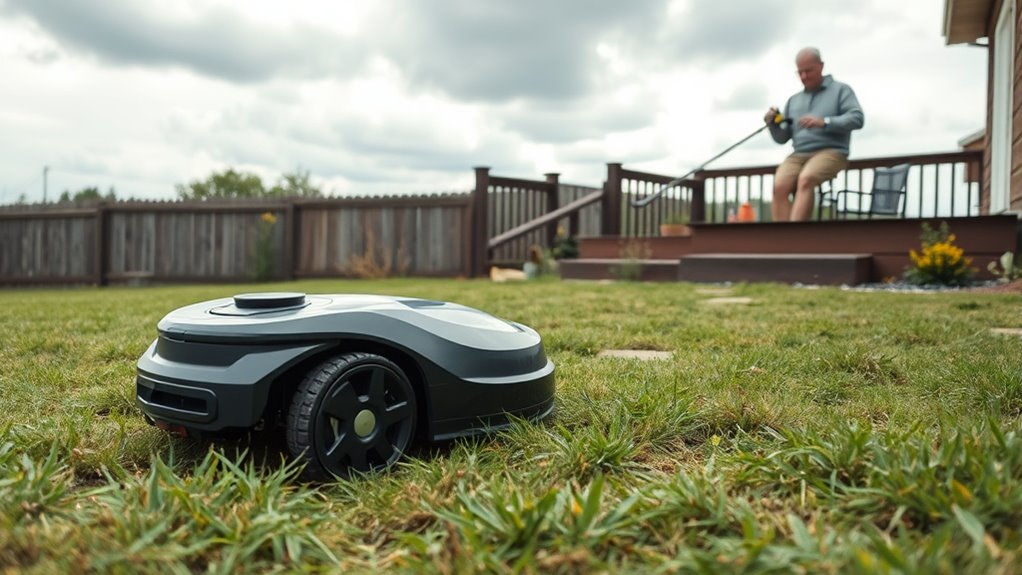
While robotic lawn mowers offer many benefits, they also come with certain limitations and challenges you should consider before making a purchase. One key concern is battery lifespan; over time, batteries degrade, reducing runtime and requiring replacement, which can be costly. Additionally, noise levels vary between models, and some can be louder than you’d expect, potentially disturbing neighbors or affecting your outdoor experience. You’ll also need to ensure the mower can handle complex or uneven terrains, as some models struggle with thick grass or obstacles. Maintenance is another factor—regular cleaning and occasional part replacements are necessary to keep the mower operating efficiently. Considering these limitations now helps you make an informed decision and avoid surprises after your purchase.
Key Features to Look For
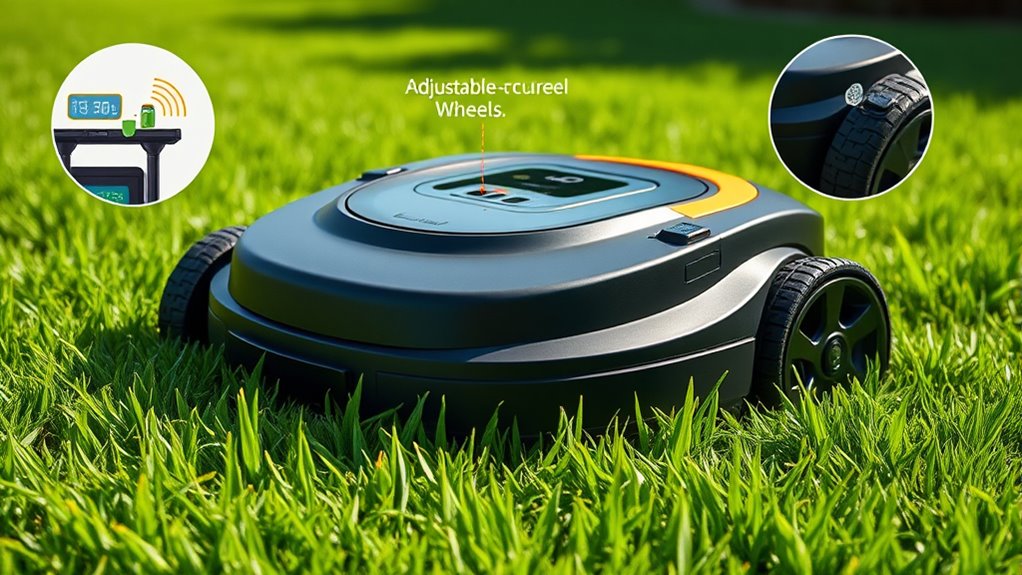
When comparing robotic lawn mowers, you’ll want to focus on navigation capabilities to make certain it can efficiently cover your yard without missing spots. The cutting system quality also matters, as it affects the mower’s ability to deliver a clean, even cut. Prioritizing these features helps you choose a mower that performs reliably and maintains your lawn’s appearance.
Navigation Capabilities
Managing your lawn efficiently is essential for a robotic mower to do its job effectively. Navigation capabilities are key to ensuring thorough coverage and minimal oversight. Look for models with advanced autonomous navigation systems that map your yard and adapt to changes. Obstacle detection is vital—your mower should recognize and avoid trees, furniture, and other barriers. Features to consider include:
- GPS-guided navigation for precise mapping
- Real-time obstacle detection sensors
- Multi-zone or boundary mapping
These features help your mower operate smoothly, reduce the risk of accidents, and improve mowing efficiency. A robot equipped with reliable navigation capabilities will save you time and effort while maintaining a well-kept lawn.
Cutting System Quality
A high-quality cutting system is essential for achieving a clean, even lawn with minimal effort. Look for mowers with blades known for durability, so they stay sharp longer and resist wear. Durable blades maintain cutting precision over time, ensuring your lawn looks uniform and well-kept. Sharp, well-made blades reduce the need for frequent replacements and produce cleaner cuts that promote healthy grass growth. Cutting precision is also influenced by the mower’s ability to adapt to uneven terrain and navigate tight spaces smoothly. A reliable cutting system minimizes missed spots and uneven patches, saving you time and effort. When shopping, prioritize models with robust blades engineered for long-lasting sharpness and precision, so your lawn remains pristine with less maintenance.
Tips for Proper Maintenance and Use

To keep your robotic lawn mower operating efficiently, regular maintenance and proper use are essential. Proper care can prolong battery life and guarantee weather resistance, keeping your mower in top shape. To do this, regularly check the battery health and replace it when needed. Keep the mower’s blades sharp for clean cuts and better performance. Also, clear debris from the charging station and mowing area to prevent malfunctions. Consider these tips:
- Keep the mower’s blades sharp and clean
- Regularly inspect and replace the battery as needed
- Ensure the mower is weather-resistant by checking seals and coverings
Following these steps helps maximize battery life and weather resistance, making sure your mower runs smoothly season after season.
Is a Robotic Mower Right for Your Lawn?

To decide if a robotic mower fits your lawn, consider its size and whether the mower can handle it efficiently. Think about the terrain and obstacles, as tough slopes or thick shrubs might require a different approach. Don’t forget to weigh the ongoing maintenance and costs to guarantee it’s a practical choice for your budget and needs.
Lawn Size Compatibility
Determining whether a robotic mower suits your lawn starts with understanding its size. Most models are designed for specific areas, so match your lawn’s dimensions to the mower’s coverage. Larger lawns require mowers with longer battery life to prevent frequent recharging, ensuring continuous operation. Smaller yards can get by with models that have shorter battery life but still handle grass clippings efficiently. Keep in mind that:
- Mowers for big lawns often include larger batteries and greater cutting capacity
- Smaller areas benefit from compact, lightweight models
- Consider whether the mower can handle your lawn’s shape without missing spots or overworking
Ultimately, choosing a mower with suitable battery life and capacity guarantees your grass stays neat without constant supervision. Proper size compatibility saves time and effort while maintaining a well-manicured lawn.
Terrain and Obstacles
Robotic mowers perform best on flat, even lawns, so if your yard has steep slopes, uneven terrain, or many obstacles, you’ll need to contemplate how these features might impact their effectiveness. Obstacles like garden beds, trees, or furniture can hinder their movement, requiring careful planning or additional boundary wires. Artificial turf areas can sometimes confuse sensors or cause uneven cutting patterns, especially if the turf isn’t well-secured. Seasonal variations also matter—snow, leaves, or mud can impede operation or damage the mower. If your lawn’s terrain is complex or includes many obstacles, a robotic mower might struggle or require frequent adjustments. In such cases, traditional mowing methods or hybrid solutions could be more practical for maintaining a pristine yard.
Maintenance and Costs
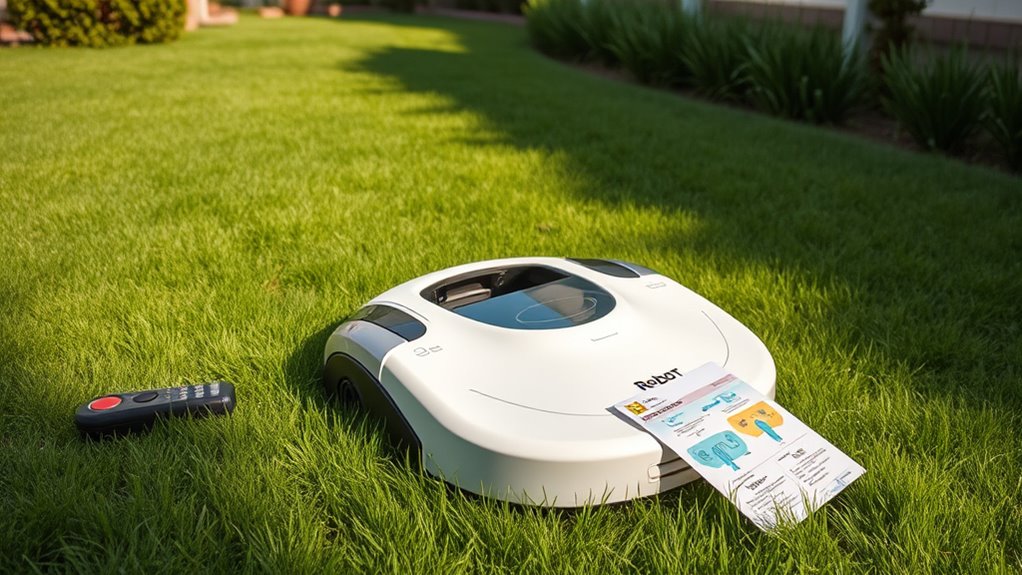
If your lawn has many obstacles or uneven terrain, maintaining a robotic mower can become more complicated and costly. You’ll need to monitor the battery lifespan, as batteries typically last 3-5 years and might need replacement. Regular maintenance includes cleaning blades, checking for wear, and ensuring proper calibration. Warranty coverage varies by brand but often covers defects and certain repairs during the first year. To keep costs manageable, consider these factors:
- Battery replacement costs and lifespan
- Routine blade sharpening or replacement
- Warranty coverage limits and extension options
Being proactive with maintenance can extend your mower’s lifespan and save money long-term. Investing in models with exhaustive warranty coverage offers peace of mind, especially if your lawn has unique challenges.
Frequently Asked Questions
How Long Do Robotic Lawn Mowers Typically Last Before Replacement?
Robotic lawn mowers typically last around 5 to 8 years before needing replacement. Their battery lifespan usually ranges from 2 to 4 years, depending on usage and maintenance. To extend their life, you should regularly clean and check for wear, follow maintenance requirements, and replace batteries when needed. Proper care helps maximize their durability, ensuring you get the most out of your investment before it’s time for a new mower.
Are Robotic Mowers Safe for Children and Pets?
You might wonder if robotic mowers are safe around kids and pets. Rest assured, they’re designed with child safety and pet protection in mind, featuring sensors that stop the blades if anything crosses their path. However, always supervise their use, keep children and pets away during operation, and guarantee safety features are active. While they’re generally safe, your vigilance ensures a worry-free lawn experience for everyone.
Can Robotic Mowers Handle Uneven or Sloped Terrain Effectively?
Robotic mowers can handle uneven or sloped terrain effectively thanks to advanced terrain adaptation and slope handling features. You’ll find many models equipped with sensors and adjustable blades that navigate inclines safely, preventing tipping or missed patches. However, it’s crucial to select a mower rated for your specific terrain, especially if your yard has steep slopes or irregular surfaces, to guarantee maximum performance and safety.
Do Robotic Lawn Mowers Require Wi-Fi or Internet Connectivity?
No, many robotic lawn mowers don’t require Wi-Fi connectivity to operate, but some models do. If you want remote monitoring and control, look for mowers with Wi-Fi capability, which lets you adjust schedules or check status via an app. Without Wi-Fi, your mower still mows effectively but lacks remote features. Decide based on whether remote monitoring and app control are important to you before choosing a model.
What Is the Average Noise Level of a Robotic Lawn Mower?
You’ll find that the average noise level of a robotic lawn mower ranges from 60 to 70 decibels, which is much quieter than traditional mowers. When considering noise comparison, these mowers are ideal for sound regulation, especially in noise-sensitive neighborhoods. Their sound remains consistent during operation, so you won’t be disturbed, making them a convenient and eco-friendly alternative that respects your outdoor environment and neighbors’ peace.
Conclusion
While robotic lawn mowers offer convenience and efficiency, they aren’t perfect for every yard. You might enjoy their quiet operation and time-saving benefits, but small or complex lawns can pose challenges. Ultimately, whether they’re right for you depends on your lawn’s size and terrain. Embrace the innovation, but stay aware of limitations—after all, technology works best when it complements your needs, not replaces them entirely.