Robot mowers can work in wet weather, but their performance depends on weather conditions and your mower’s features. Rain can cause blades to clog, reduce traction, and increase the risk of slipping or damage to electronics. Many models have rain sensors or limited waterproofing, so it’s best to follow manufacturer guidelines and avoid mowing during heavy rain. For tips on protecting your mower in wet weather, keep exploring the key considerations.
Key Takeaways
- Many robot mowers have rain resistance but are not fully waterproof, so they may operate in light rain but not heavy rain.
- Wet grass and muddy terrain can clog blades, reduce traction, and increase mechanical and electrical risks.
- Following manufacturer guidelines and using rain sensors helps ensure safe and efficient mowing in wet conditions.
- Heavy rain or very wet grass generally necessitates postponing mowing to prevent damage and safety hazards.
- Protecting the mower with covers and maintaining blades and sensors enhances durability during wet weather.
How Rain Affects Robot Mower Performance

Rain can considerably impact how well your robot mower performs, especially if it’s not designed to handle wet conditions. The rain impact on mower efficiency is significant because wet grass and muddy terrain can cause the blades to clog or slip. When the ground is wet, the mower might struggle to maintain traction, leading to uneven mowing or delays in completing its task. Excess moisture can also damage sensitive electronic components, reducing overall performance and lifespan. Additionally, mowing in the rain can increase the risk of the blades dulling faster or causing uneven cuts. If your mower isn’t waterproof or weather-resistant, its ability to operate efficiently drops sharply during rainy days. To keep your mower running smoothly, it’s best to avoid mowing in wet weather whenever possible.
Safety Considerations for Mowing in Wet Conditions

Operating your robot mower in wet conditions requires careful attention to safety. Rain safety is essential because wet grass and surfaces can cause the mower to slip or lose control. Check that your mower has good mower stability; unstable units are more likely to tip or slide on damp terrain. Always avoid mowing during heavy rain or when the grass is very wet, as this increases the risk of electrical issues and mechanical failure. Keep the mower on stable ground and steer clear of slopes or uneven patches that could compromise stability. Regularly inspect your mower’s blades and sensors to guarantee they function properly in moist conditions. Prioritizing safety helps prevent accidents and prolongs your mower’s lifespan when mowing in wet weather.
Manufacturer Guidelines and Waterproof Features
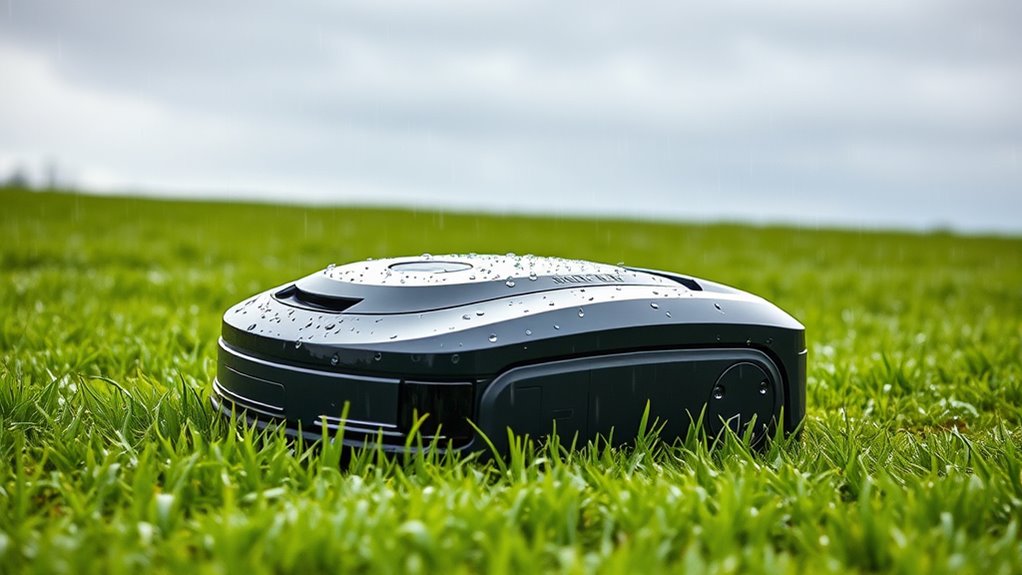
Following your manufacturer’s guidelines is crucial to guarantee your robot mower performs safely and effectively in wet conditions. Many models feature rain resistance, but this doesn’t mean they’re fully waterproof. Check if your mower has a waterproof design or specific instructions for wet weather operation. Manufacturers often specify the maximum weather conditions suitable for your mower, such as light rain or heavy downpour. Ignoring these guidelines can lead to damage or malfunction. Always review the user manual for detailed information on waterproof features and recommended usage in wet conditions. Proper understanding of your mower’s rain resistance and waterproof design helps you avoid accidents and ensures your equipment stays in good shape, even during unexpected rain showers.
Tips for Mowing During Light or Heavy Rain
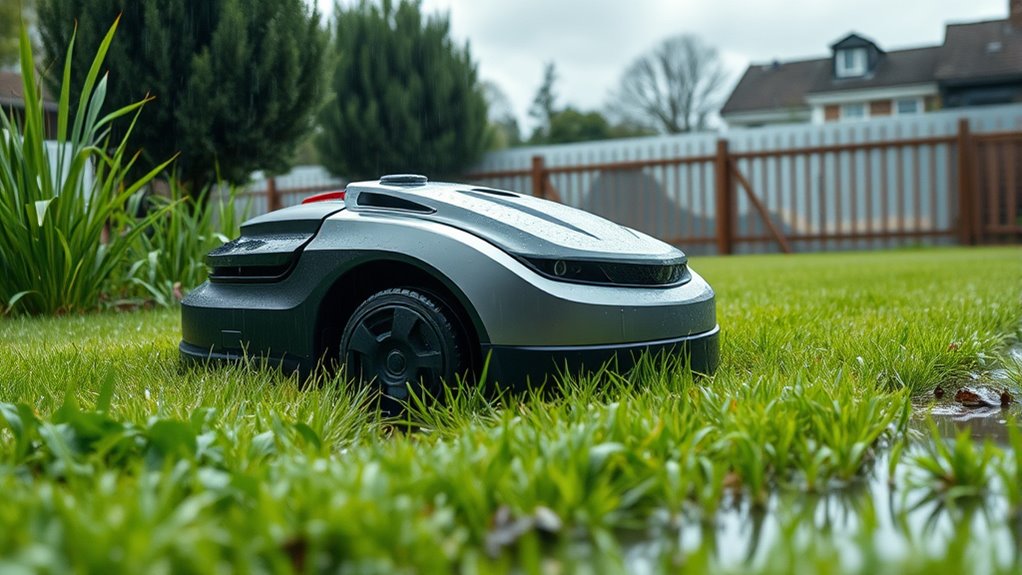
While manufacturer guidelines clarify when it’s safe to mow in wet conditions, understanding how to handle different levels of rain can help you maintain your mower’s performance. Light rain may not severely impact your mower’s operation, but it’s best to adjust your mowing schedule accordingly to prevent excessive moisture buildup. Heavy rain, on the other hand, can cause the rain impact to be too high, making mowing unsafe and potentially damaging your mower. If rain is forecasted or ongoing, consider postponing mowing or scheduling it during dry periods. Keep an eye on the weather and adapt your mowing schedule to avoid working in saturated grass or muddy conditions. Proper timing helps ensure your robot mower functions efficiently and prolongs its lifespan.
Best Practices for Protecting Your Robot Mower in Wet Weather

To safeguard your robot mower during wet weather, it’s vital to take proactive steps that prevent damage and guarantee safe operation. First, verify your mower’s rain sensor technology is functioning properly, allowing it to detect rain and stop mowing automatically. This helps protect the robot mower durability by avoiding unnecessary exposure to heavy rain. Regularly inspect weather forecasts and manually pause mowing sessions during heavy or prolonged rain. Consider installing a protective cover or garage for added protection when not in use. Keep the mower’s blades and sensors clean and well-maintained, as dirt and moisture can impair performance. By following these best practices, you extend your mower’s lifespan and confirm it operates efficiently, even in unpredictable weather conditions.
Frequently Asked Questions
Can Robot Mowers Operate on Wet Grass Without Damage?
You can operate your robot mower on wet grass if it has rain-resistant features, but it’s not perfect regularly. Wet conditions can reduce mower blade durability and increase the risk of slipping or clogging. Always check your mower’s specifications and avoid heavy rain, as prolonged exposure can damage components. Using rain-resistant models or accessories helps protect your mower, but dry mowing is best for longevity and peak performance.
How Does Rain Impact the Battery Life of Robot Mowers?
Ever wondered if rain affects your robot mower’s battery life? Rain can lower solar efficiency, reducing the energy your mower’s battery absorbs, which might cause more frequent charges. Constant exposure to moisture accelerates battery degradation, shortening its lifespan over time. So, does wet weather impact battery performance? Absolutely. To keep your mower running smoothly, consider sheltering it from rain and maintaining its battery regularly.
Are There Specific Models Designed for All-Weather Use?
Yes, some robot mowers are designed for all-weather use. You’ll find models with all weather durability and rain resistant features, so they can handle wet conditions without issues. These mowers often have specialized sensors and sealed components that prevent water damage. When choosing, look for those with clear rain resistance ratings and robust construction, ensuring your mower keeps working efficiently, rain or shine.
What Maintenance Is Required After Mowing in Rainy Conditions?
After mowing in rainy conditions, you should clean the blades to remove wet grass and prevent rust. Check and sharpen the blades if needed, as wet grass can dull them quickly. Also, inspect and calibrate sensors to guarantee they work properly in damp weather. Keep the mower dry and store it in a sheltered area when not in use, which helps maintain ideal performance and longevity.
Do Robot Mowers Have Sensors to Detect and Avoid Water Hazards?
No, robot mowers generally don’t have sensors specifically for water detection, so their sensor limitations mean they can’t reliably detect water hazards. You should avoid mowing in wet conditions because the sensors can’t distinguish water from the grass or obstacles. Rely on weather forecasts and manual checks to prevent your mower from encountering water hazards, ensuring safe operation and avoiding damage.
Conclusion
So, next time rain threatens your mowing schedule, remember: your robot mower might just surprise you. Will it handle the downpour without a hitch, or will wet weather reveal its limits? The decision is in your hands—careful planning and awareness could be the key. Stay alert, follow guidelines, and stay tuned—because when the skies open up, your mower’s true resilience might just be put to the test. Are you ready to face what’s coming?